This post contains affiliate links and is a member of the Amazon Services LLC Associates Program. If you make a purchase using one of these affiliate or Amazon links, I may receive compensation at no extra cost to you.
15 Fall Pillow Combinations That Work With the Sofa You Already Own

A few new pillow covers can change the whole feel of your living room. The tricky part is finding colors that look as good next to your couch as they do in the product photo.
Start with the upholstery you already have. A cream sofa gives deeper colors room to stand out, while navy and brown couches often need a little contrast so the pillows don’t disappear.
These 15 fall pillow combinations give you specific colors, patterns, and textures to try, along with small styling details that make each arrangement easier to pull together.
1. Burgundy, Oatmeal, and Brown Check on a Cream Sofa
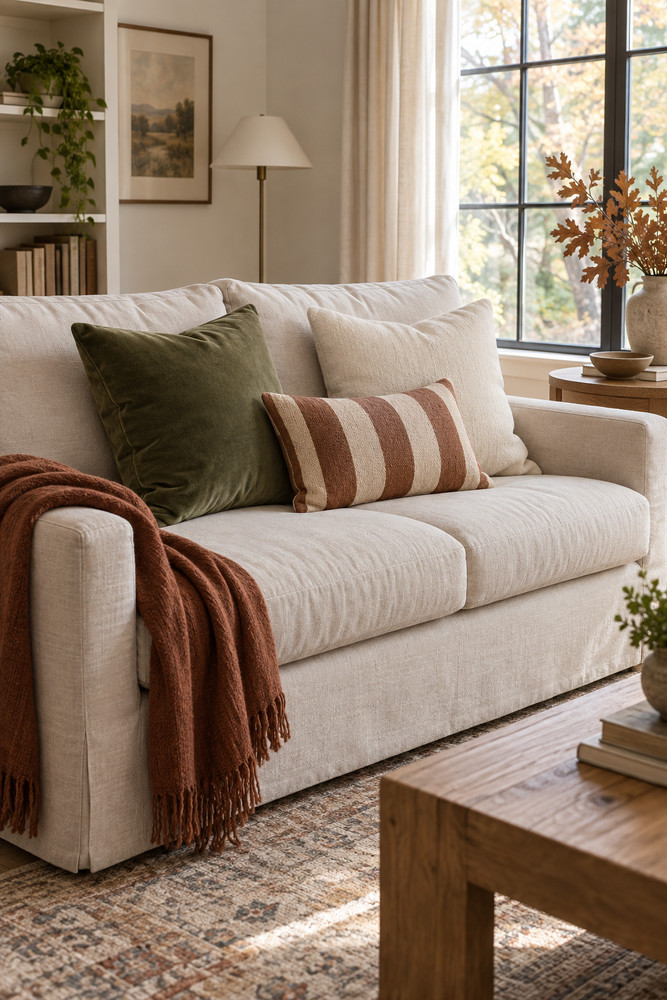
Burgundy brings a cream sofa into fall quickly, especially when the shade has a little brown in it. Pair one velvet square with an oatmeal woven pillow, then add a smaller brown-and-cream checked lumbar.
The different textures keep the arrangement interesting without needing more colors. Smooth velvet, a substantial weave, and a small check each contribute something different.
Keep the checked pillow’s background close to your sofa’s warmth. A bright white check can look unexpectedly stark against buttery cream upholstery.
Already have an oatmeal pillow? Keep it. The burgundy cover is the first thing to add, and you can decide afterward whether the check is necessary.
2. Cinnamon, Flax, and Charcoal Stripes on a Gray Sofa
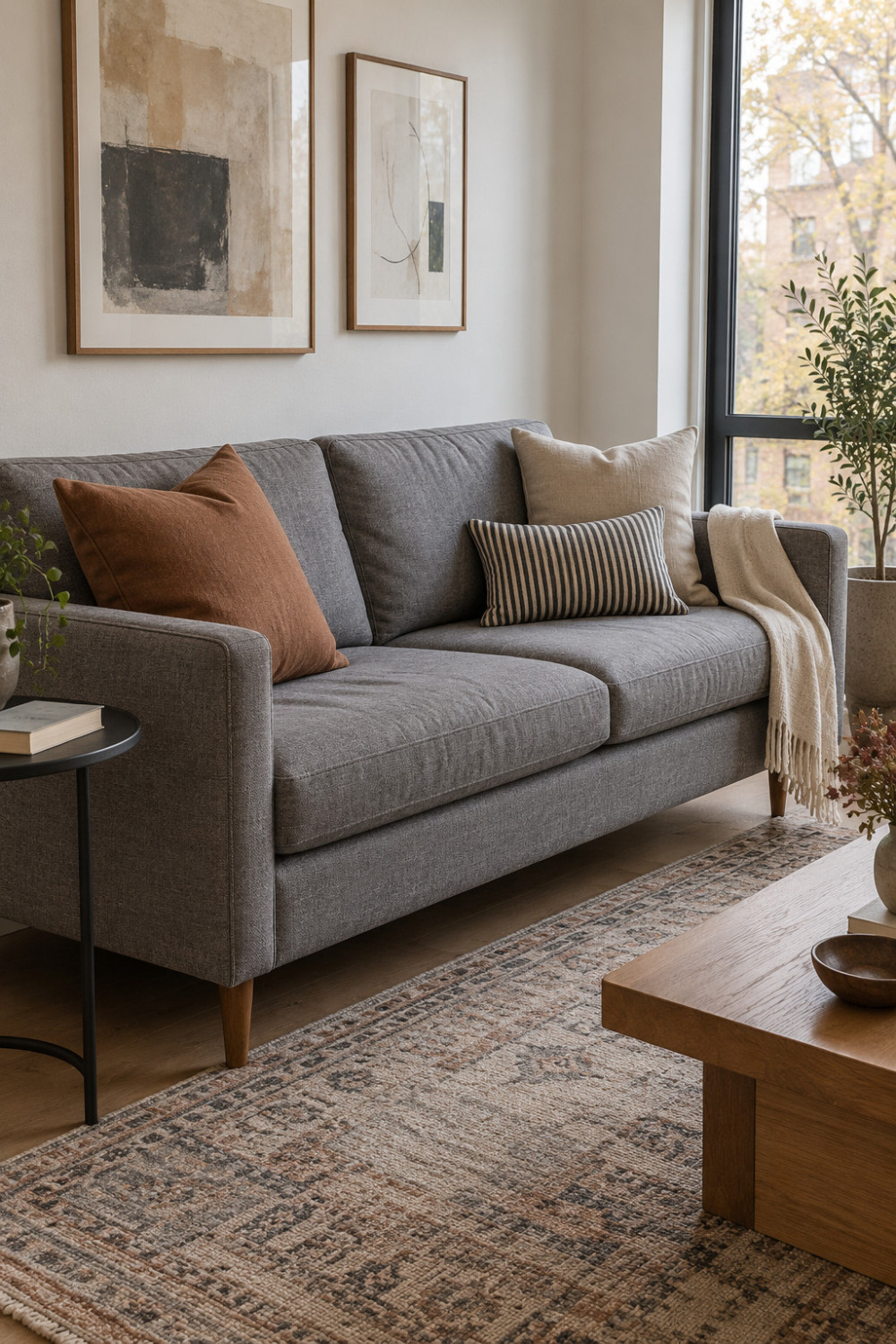
A dusty cinnamon pillow adds warmth to gray without the brightness of pumpkin orange. Combine it with natural flax and a narrow charcoal stripe to connect the new colors back to the couch.
Choose a matte cotton or brushed fabric for the cinnamon pillow. A highly shiny finish can make the color look much stronger than you intended.
If your gray sofa has a blue cast, compare a few flax shades against it. A pale, slightly grayish linen may sit more comfortably beside the upholstery than a golden beige.
Keep the cinnamon to one pillow initially. That small amount may be all the seasonal color the room needs.
3. Tobacco, Ivory, and a Faded Floral on a Navy Sofa
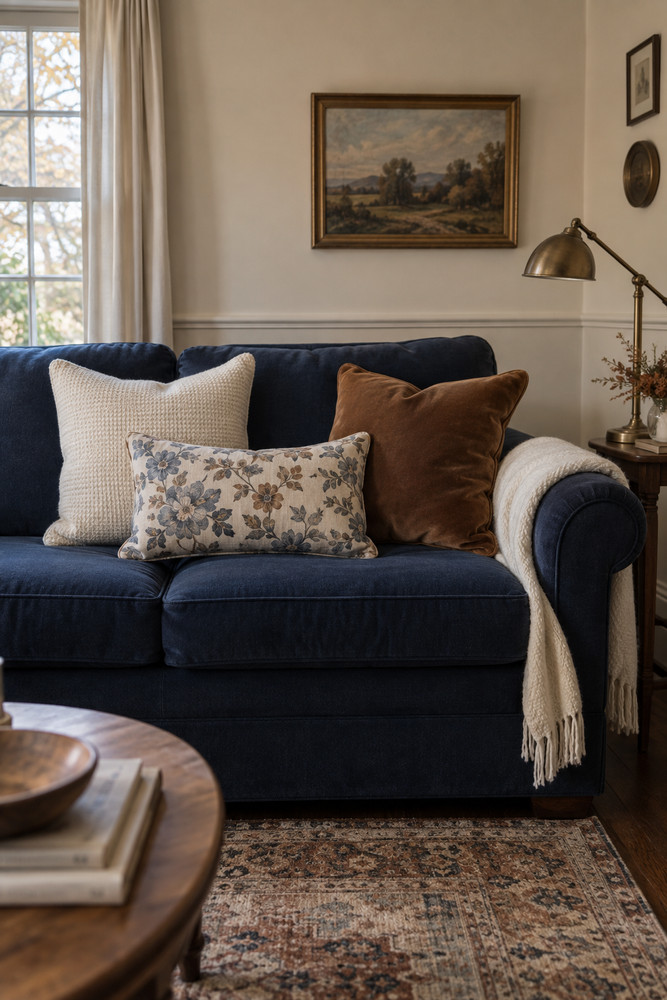
Navy already gives you a rich background, so bring in ivory before adding another deep color. A tobacco velvet pillow supplies warmth, while an ivory floral lumbar helps the whole combination feel connected.
Look for a floral containing small amounts of blue and brown. The blue doesn’t need to match your sofa exactly; a faded shade can make the arrangement feel less coordinated and more relaxed.
The important detail is the print’s background. Plenty of visible ivory keeps the lumbar from disappearing against dark upholstery.
If your rug already has a busy pattern, swap the floral for an ivory pillow with a subtle tobacco stripe.
4. Dusty Blue, Chocolate Plaid, and Ecru on Camel Leather
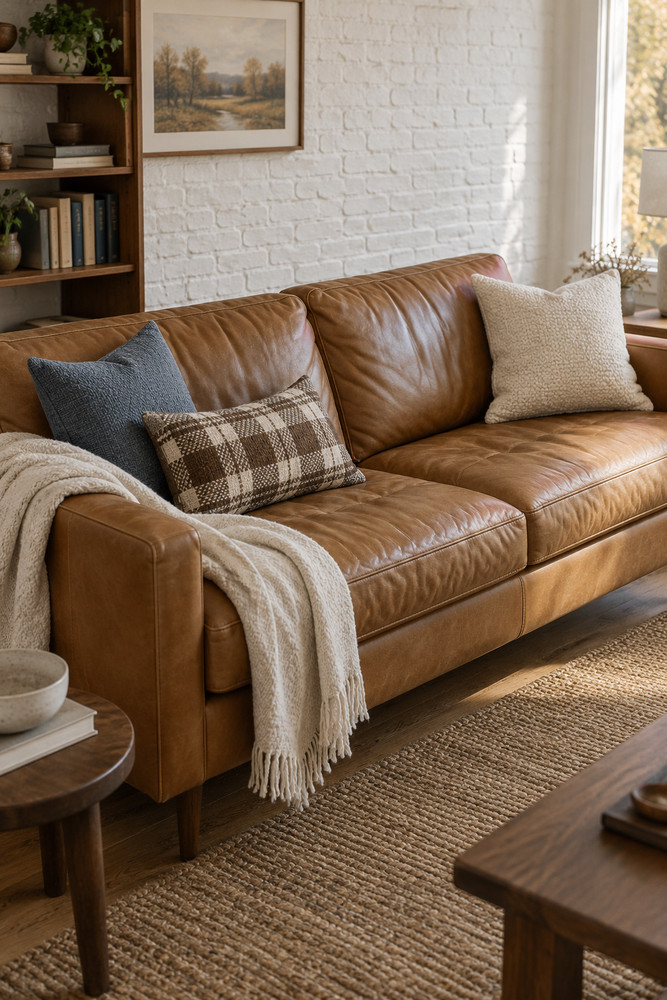
Camel leather supplies plenty of warmth on its own. Dusty blue balances it, while chocolate plaid gives the combination a more autumnal feel.
Choose a blue closer to worn denim than turquoise. Add an ecru pillow with some texture, then use a brown-and-cream plaid lumbar to bring in pattern.
Pay attention to the back of the covers, too. Slippery fabric can slide around on smooth leather, even when the front looks beautifully textured. A soft throw underneath the grouping may help, but try the arrangement before buying several identical covers.
Leave some leather exposed. Its natural creasing is part of what makes this combination work.
5. Ochre, Cream, and a Light Botanical on a Brown Sofa
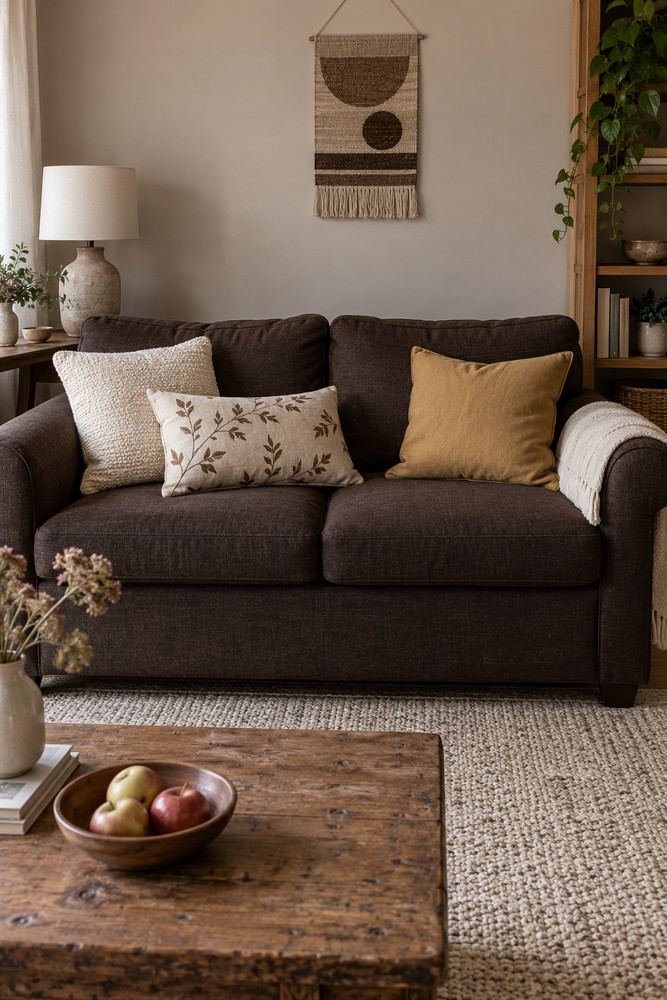
Dark brown upholstery can swallow up a collection of chocolate and deep rust pillows. Give it a generous amount of cream, then introduce one ochre accent.
Look for a yellow that resembles dried golden leaves rather than fresh lemon. It adds a fall note without feeling overly bright.
A cream lumbar with a loose brown botanical print repeats the sofa color while remaining easy to see. Place it in front of the larger cream pillow, with ochre at the opposite end.
If the arrangement still feels heavy, add a light throw before buying another pillow. Sometimes the missing piece is simply a larger area of pale fabric.
6. Muted Plum, Mushroom, and Fine Stripes on an Olive Sofa
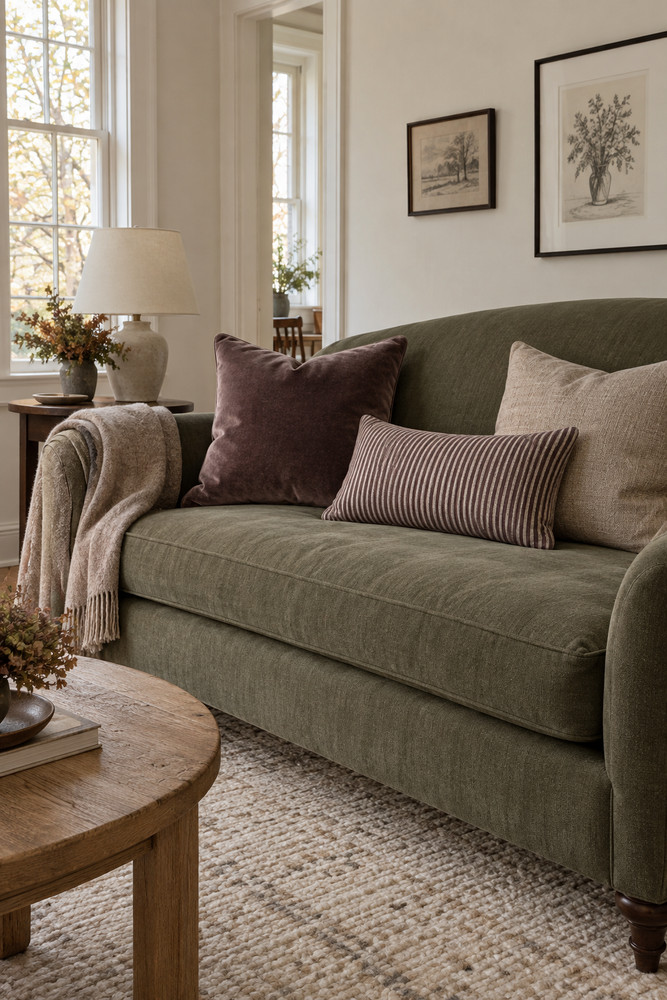
Muted plum gives olive upholstery a deeper fall feel. Mushroom keeps the two colors from becoming overwhelming, particularly in a smaller living room.
Use a plum velvet square, a mushroom linen-look square, and a lumbar with fine plum-and-taupe stripes. Keep the stripe delicate so it adds detail without competing with the velvet.
The shade of plum matters. A dusty, brownish version feels quieter here than a clear purple.
For a very dark olive couch, make the mushroom pillow lighter. You want to see the individual pillows from across the room, not just a cluster of dark colors.
7. Moss Green, Rust Stripes, and Ivory on a Cream Sofa
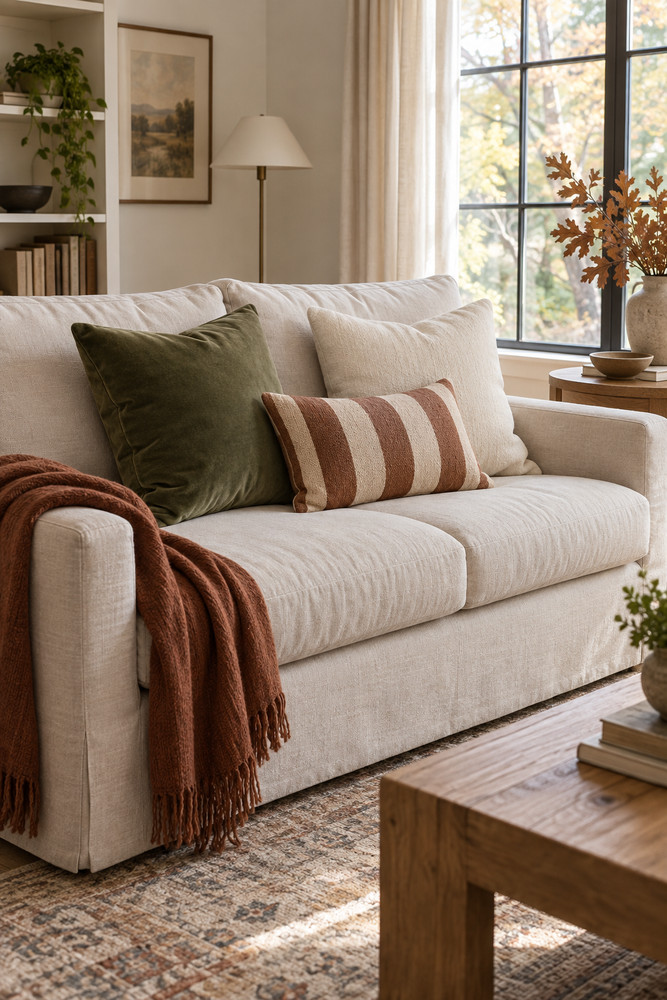
This combination has familiar fall colors, but the cream sofa and ivory pillow keep it feeling fresh.
Start with a moss-green velvet square. Add a warm ivory pillow, then bring in rust through a striped lumbar instead of another large solid. The smaller amount of rust makes the palette easier to live with.
A wide stripe works especially well when the rest of the room is fairly simple. If you have patterned curtains or a detailed rug, choose a narrower stripe.
Repeat the rust in a throw only if you want a stronger seasonal look. An oatmeal blanket will keep the same arrangement more subdued.
8. Chocolate, Cable Knit, and Camel Herringbone on a Beige Sofa
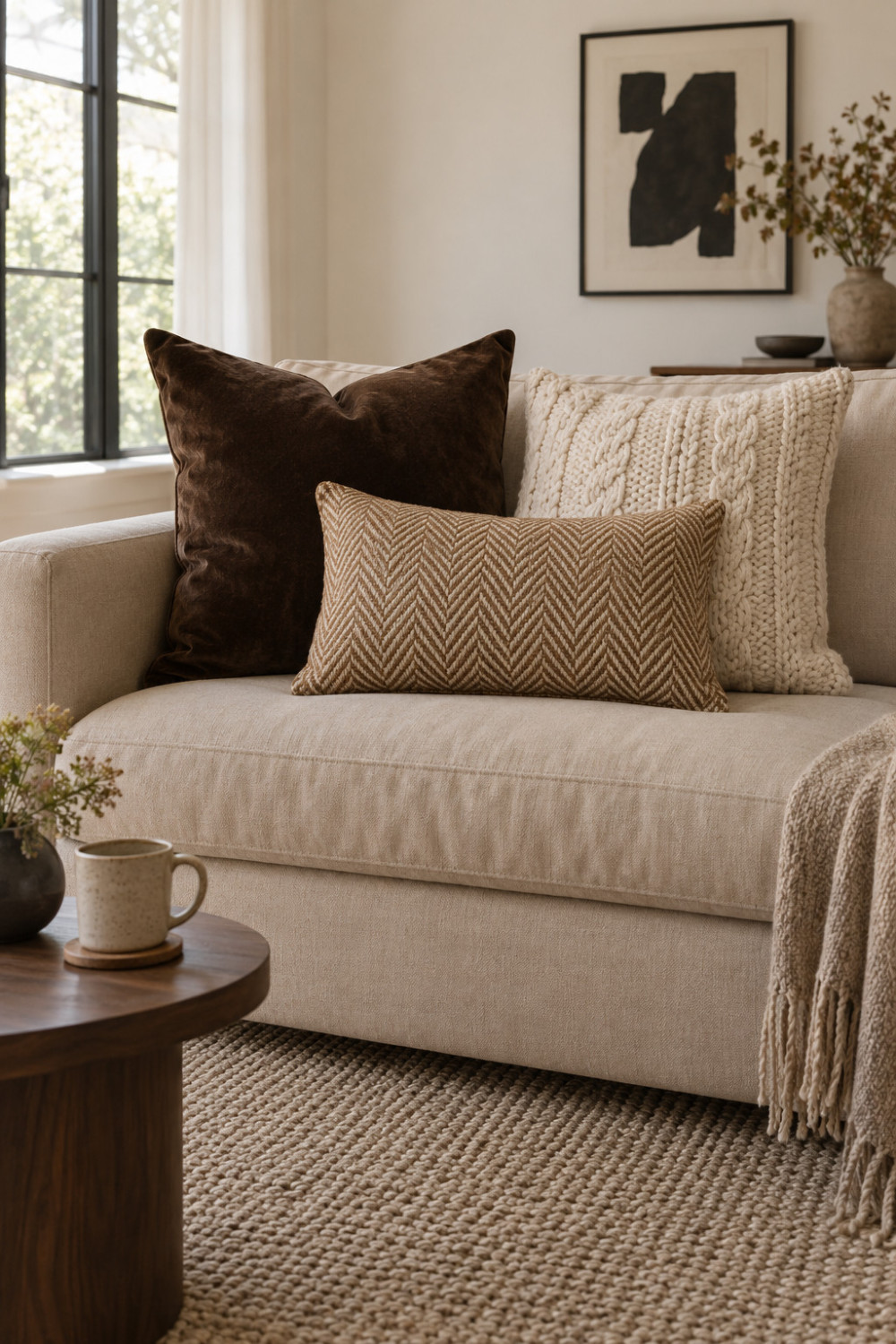
You can make a beige sofa feel ready for fall without adding orange, red, or green. Use chocolate velvet for depth, oatmeal cable knit for softness, and camel herringbone for a little pattern.
The contrast between the chocolate pillow and the upholstery is important. If every fabric is almost the same beige, the arrangement can look flat despite the different textures.
Keep the herringbone smaller than the knit’s raised cables so the patterns remain distinct.
This is also an easy palette to carry into winter. For more ways to extend those colors around the room, browse our neutral fall decor ideas.
9. Dusty Mauve, Ivory, and Plum Botanicals on a Light Gray Sofa
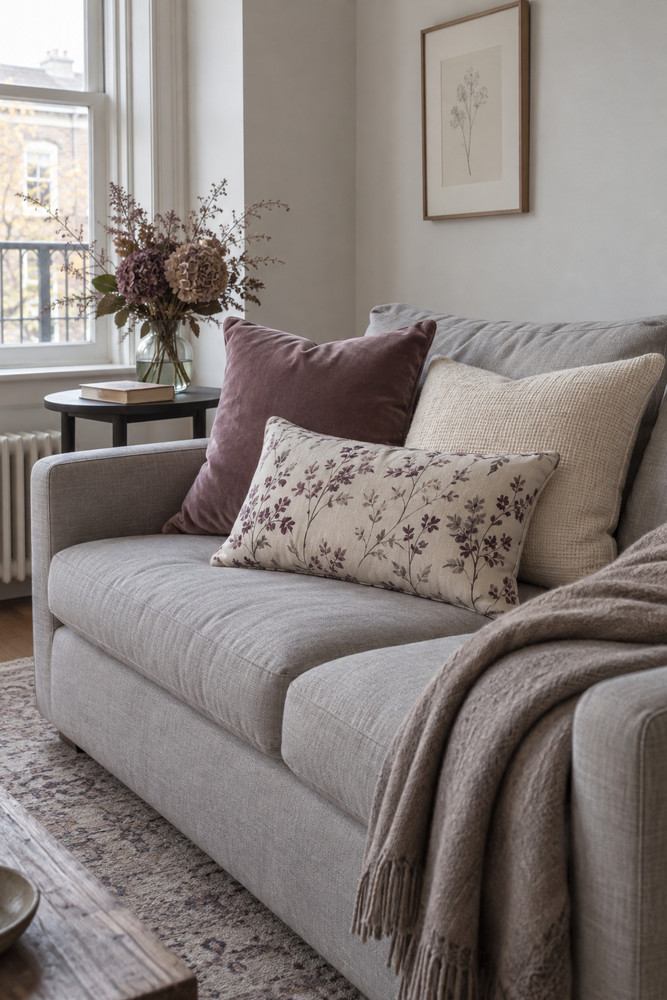
If orange never looks quite right against your gray sofa, try dusty mauve. It creates a softer fall palette, especially alongside ivory and a small plum botanical print.
Choose a mauve with some gray or brown in it. A clean pastel pink will take the combination in a different direction.
The botanical pillow should repeat the mauve or plum rather than introduce several unrelated flower colors. A pale background keeps the print light enough for the sofa.
Finish with a plain taupe throw. With velvet and a floral already involved, another patterned textile probably isn’t necessary.
10. Camel, Ivory Windowpane, and Oatmeal on a Charcoal Sofa
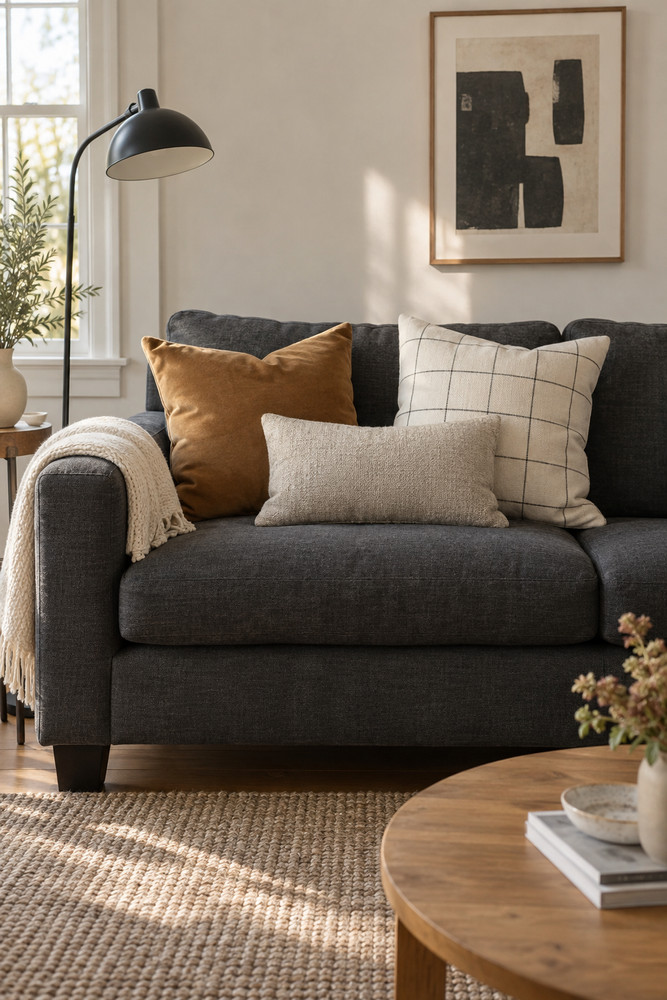
Camel is a useful way to warm up charcoal while keeping the overall look neutral. Pair it with an ivory windowpane pillow and a plain oatmeal lumbar.
Choose a windowpane with thin dark lines and plenty of open ivory space. That gives you a graphic element without the heavier look of a large black-and-white buffalo check.
The oatmeal lumbar softens the grid and works especially well in a slightly fuzzy woven fabric.
If the room already contains black frames or a dark floor lamp, the windowpane can repeat those details. You don’t need to add more black accessories just to make the pillows match.
11. Terracotta, Sand, and Blue Ticking Stripes on a Navy Sofa
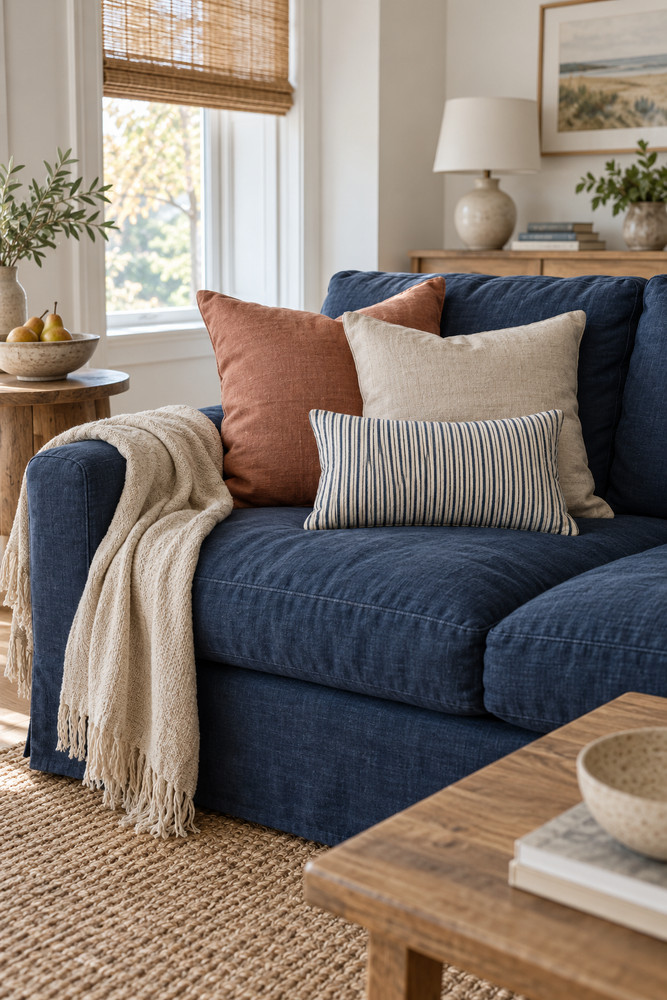
Terracotta gives a navy sofa a warmer seasonal look while sand keeps the contrast gentle. A blue-and-cream ticking stripe connects the pillow arrangement to the upholstery.
Look for a terracotta fabric with a washed, slightly faded finish. Strong orange against strong blue can feel much louder than this combination needs to be.
This is a good direction for a room that already has light wood, woven shades, or relaxed coastal details. Keep those pieces and change the textiles.
For early fall, linen-look covers are enough. You can bring in a heavier cream throw later without changing the pillow palette.
12. Forest Green, Cream, and Traditional Plaid on Leather
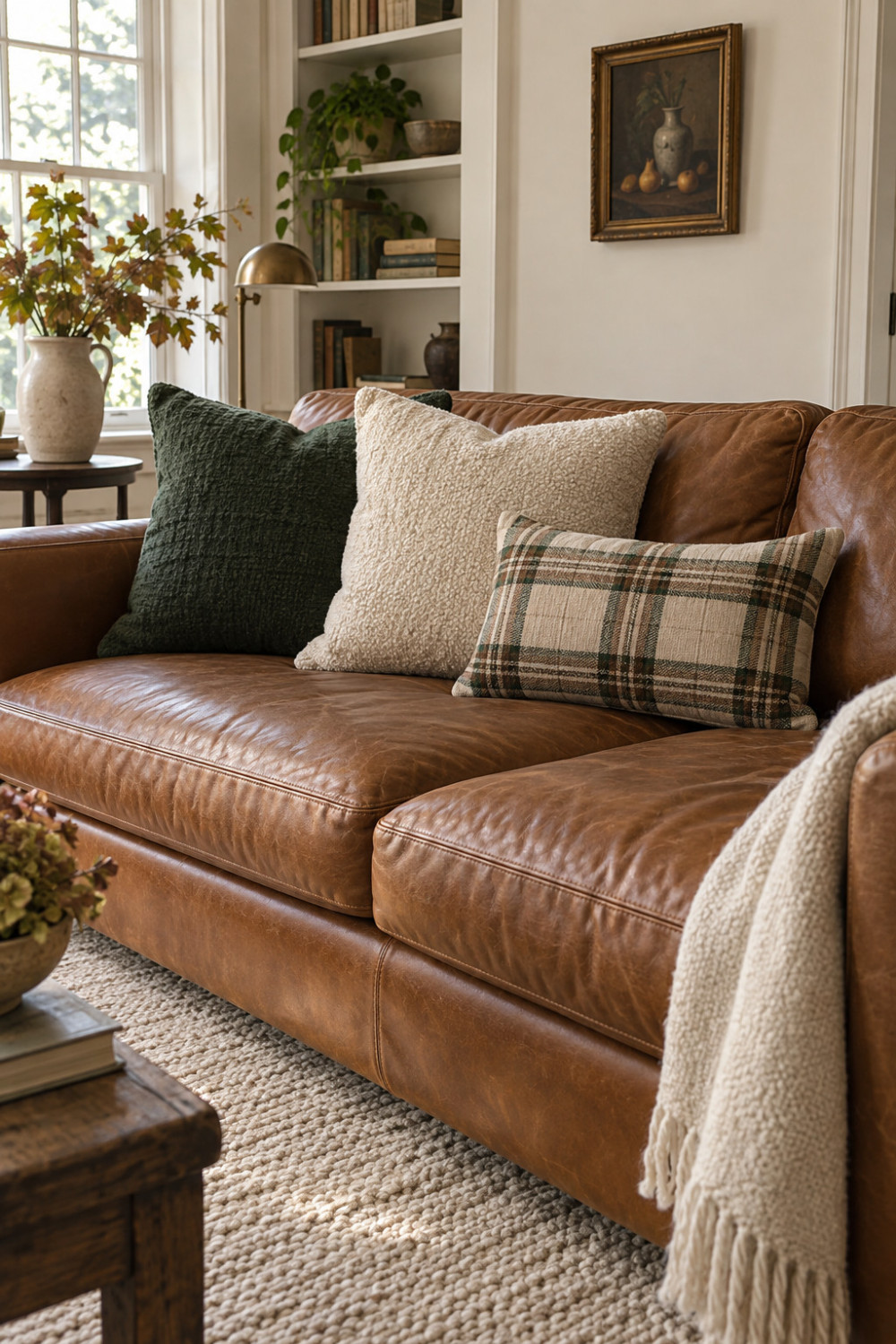
Forest green gives camel leather a cozy, traditional feel. A cream pillow lightens the arrangement, and a smaller plaid ties the green and brown together.
Choose a plaid with a cream background if you want the pattern to stay clearly visible. A mostly dark tartan can feel heavier, especially in a room with dark wood furniture.
Use a textured woven green pillow for a relaxed look. Velvet will make the same colors feel a little dressier.
Keep the surrounding decor simple. The leather, green fabric, and plaid already provide plenty of character, so a plain throw and one ceramic vase are enough nearby.
13. Sage, Flax, and Brown Stripes on a Dark Brown Sofa
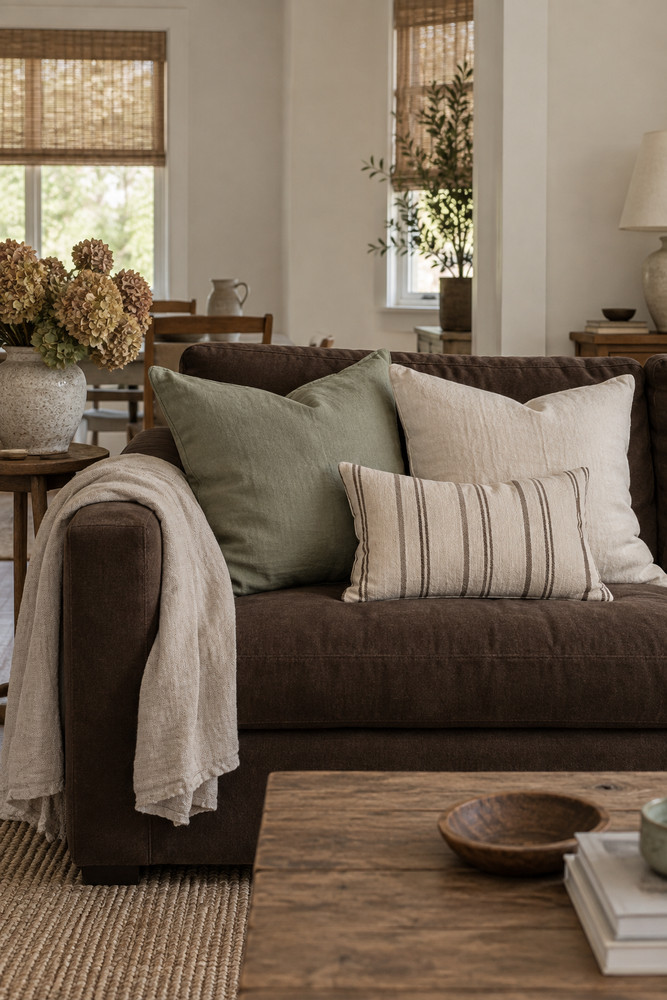
Sage is a softer alternative to ochre or rust on a brown couch. Choose a shade noticeably lighter than the upholstery, then pair it with flax and a restrained brown stripe.
The green should feel dusty rather than minty. That slight grayness helps the palette stay subdued.
A cream lumbar with brown stripes repeats the sofa color in a smaller dose. Keep the larger flax pillow plain so the combination doesn’t become busy.
Dried hydrangeas or a simple wooden bowl can continue these colors on a nearby table. Our fall vignette ideas offer ways to create a small arrangement without taking over the surface.
14. Soft Clay, Ivory, and Block-Print Florals on an Olive Sofa
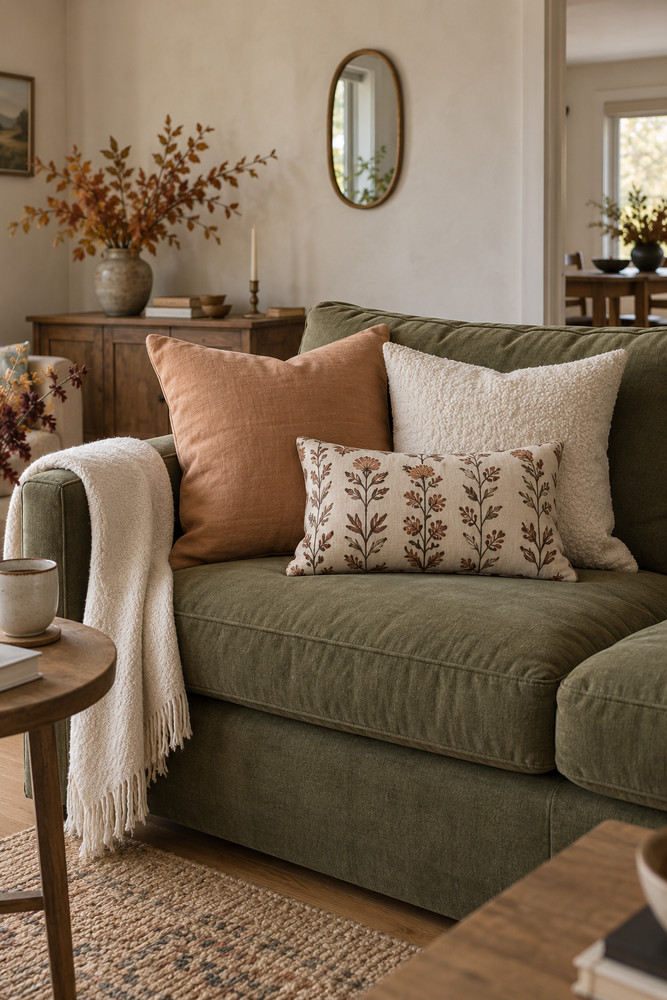
Soft clay makes an olive sofa feel warmer while keeping the overall palette lighter than a plum combination.
Look for an apricot-brown shade with a muted finish. Pair it with ivory and a cream botanical lumbar containing small touches of clay and brown.
A loose block-print-style pattern suits this combination because it feels relaxed beside linen and textured upholstery. Leave some open background around the flowers rather than choosing a densely packed print.
If your olive sofa is strongly yellow-green, compare several clay shades in the room. A browner version may feel more balanced than one that leans distinctly pink.
15. Mustard, Aubergine, and a Connecting Floral on a Cream Sofa
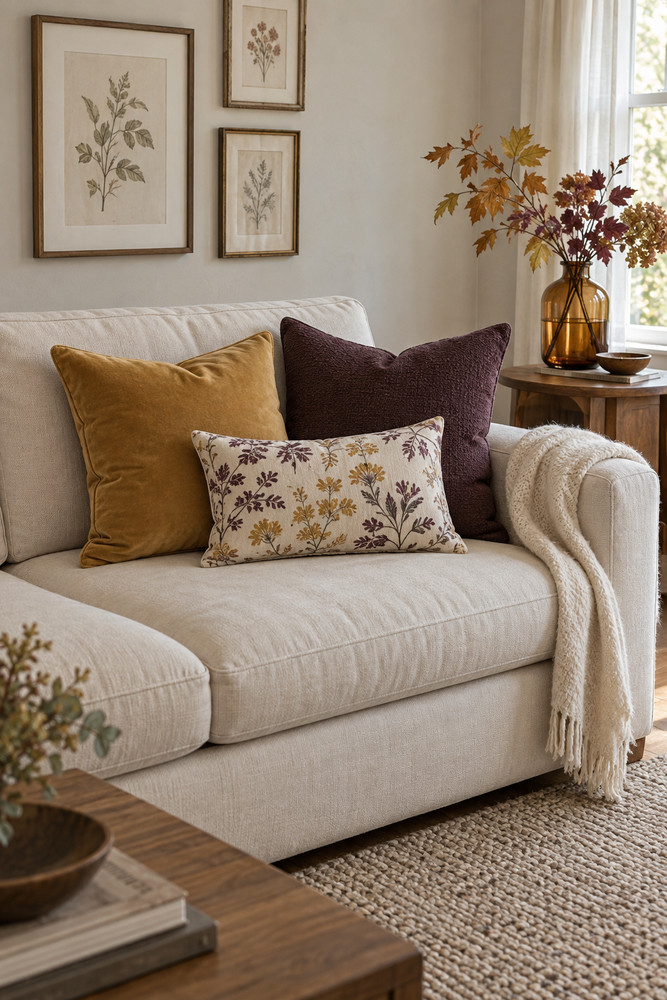
Mustard and aubergine make a richer combination for a cream sofa. The easiest way to pull them together is with a floral that contains both colors.
Find the patterned pillow first, then choose the solids from its smaller details. That gives you a clearer starting point than trying to coordinate three separate online product photos.
Keep the mustard muted and the aubergine deep. A cream background in the floral leaves some breathing room between them.
If two large colored pillows feel like too much, keep one solid cream and use aubergine only in the print. You’ll still get the same palette in a quieter version.
A Few Details That Make Any Pillow Combination Look Better
Check the size before ordering covers. Two 20- or 22-inch squares and a smaller lumbar are a useful starting point for many sofas, but shallow seats and low backs may need smaller pillows. Measure a pillow you already find comfortable.
Vary the pattern scale. A fine stripe beside a larger floral is generally easier to distinguish than two equally dense prints. If your rug already supplies plenty of pattern, use more solid pillows.
Reuse the inserts you have when they fit. Follow the cover maker’s sizing recommendations rather than automatically forcing a larger insert inside. The fabric shouldn’t strain at the zipper or seams.
Look at the fabrics in your actual lighting. A cream that looks neutral online may appear yellow beside your sofa. Compare the covers in daylight and with your evening lamps on before removing tags.
Leave room to sit. Group pillows where they’re useful, and keep some upholstery visible. If you move most of them onto the floor every evening, the arrangement probably needs one less.
Once the sofa feels right, repeat one pillow color elsewhere in the room. A throw, a ceramic bowl, or a small branch arrangement can be enough. These summer-to-fall decorating ideas can help you choose the next small change.