This post contains affiliate links and is a member of the Amazon Services LLC Associates Program. If you make a purchase using one of these affiliate or Amazon links, I may receive compensation at no extra cost to you.
Low-Maintenance Landscaping Ideas That Actually Look Good | The Mixxery
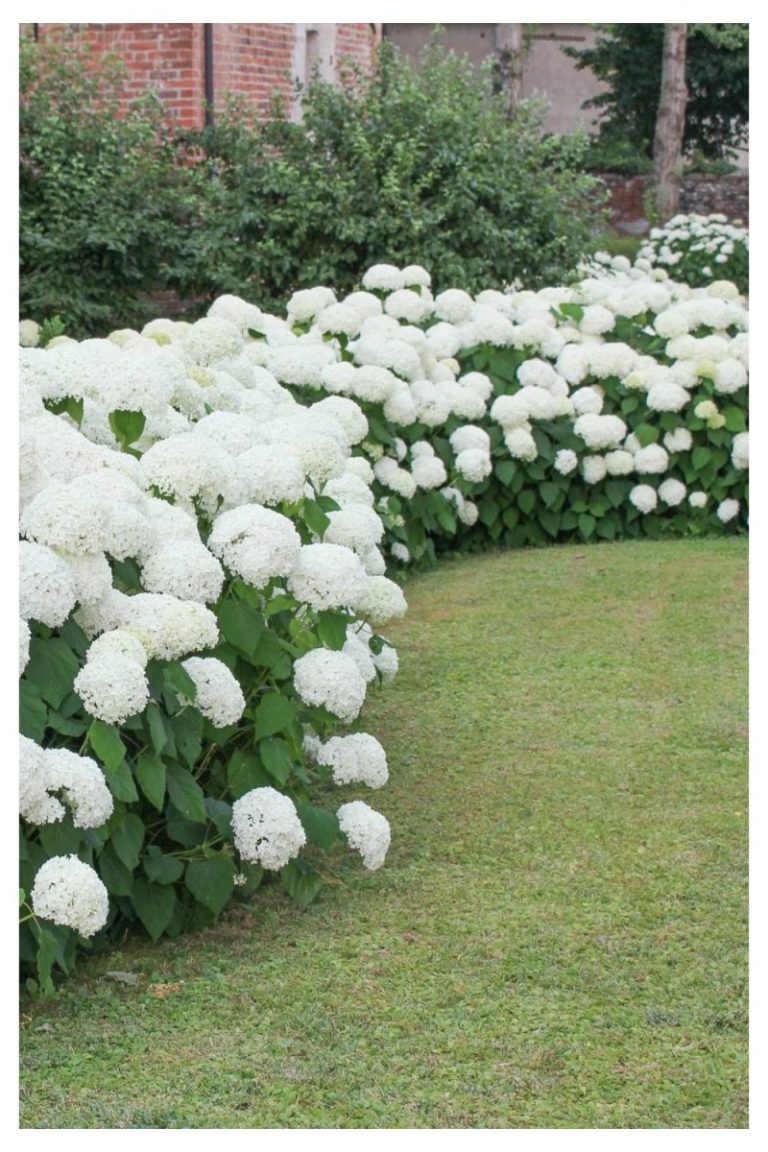
There’s a specific kind of guilt that comes with walking past your own front yard and pretending you don’t see it. The overgrown beds, the patchy grass, the hanging basket you swore you’d water every morning. We’ve all been there.
But here’s the thing — a beautiful yard doesn’t require a weekend sacrifice. It doesn’t need a landscaping crew on retainer or an obsessive watering schedule. It just needs the right design choices from the start.
These are the low-maintenance landscaping ideas that actually deliver on the promise. Less work, more curb appeal, and a whole lot more time to do literally anything else with your Saturday.
What’s Inside
Table of Contents
01. | Go Native (Your Yard Will Thank You)
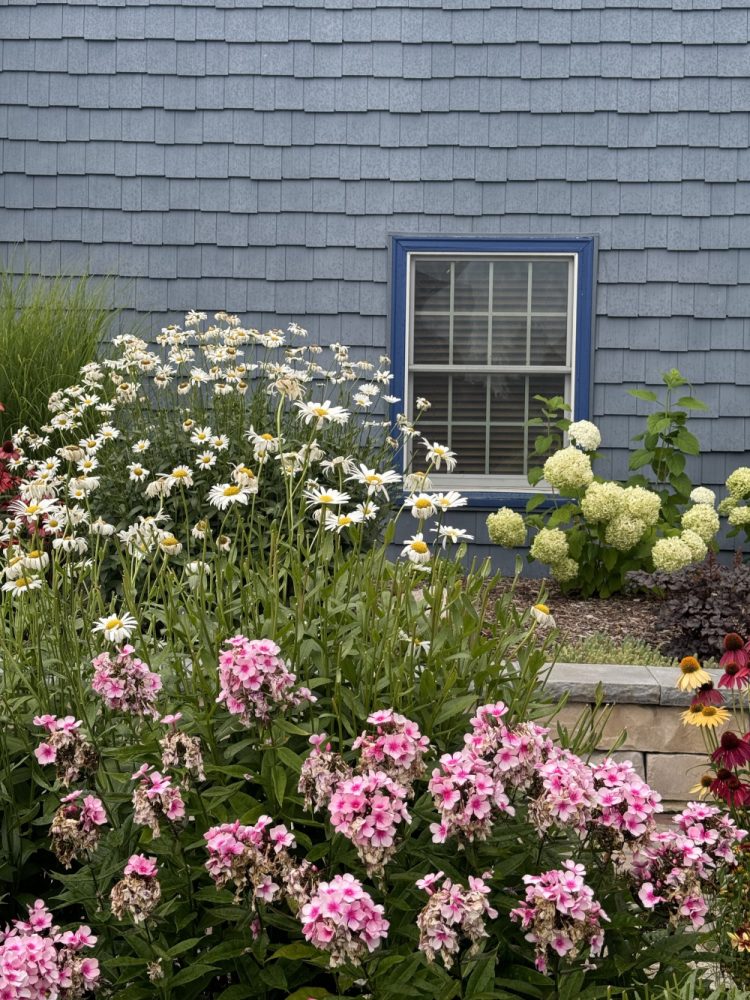
Native plants are the closest thing to a landscaping cheat code. They’ve already figured out your soil, your rainfall patterns, and your climate — so they don’t need you hovering over them with a watering can every evening.
They also happen to attract butterflies, bees, and other pollinators, which means your yard ends up doing something good for the local ecosystem while you’re inside watching TV. Hard to argue with that math.
Where to Start:
- Full sun: Black-eyed Susans, coneflowers, yarrow, or ornamental sage
- Partial shade: Coral bells, wild columbine, or native ferns
- Dry climates: Agave, desert marigold, or penstemon
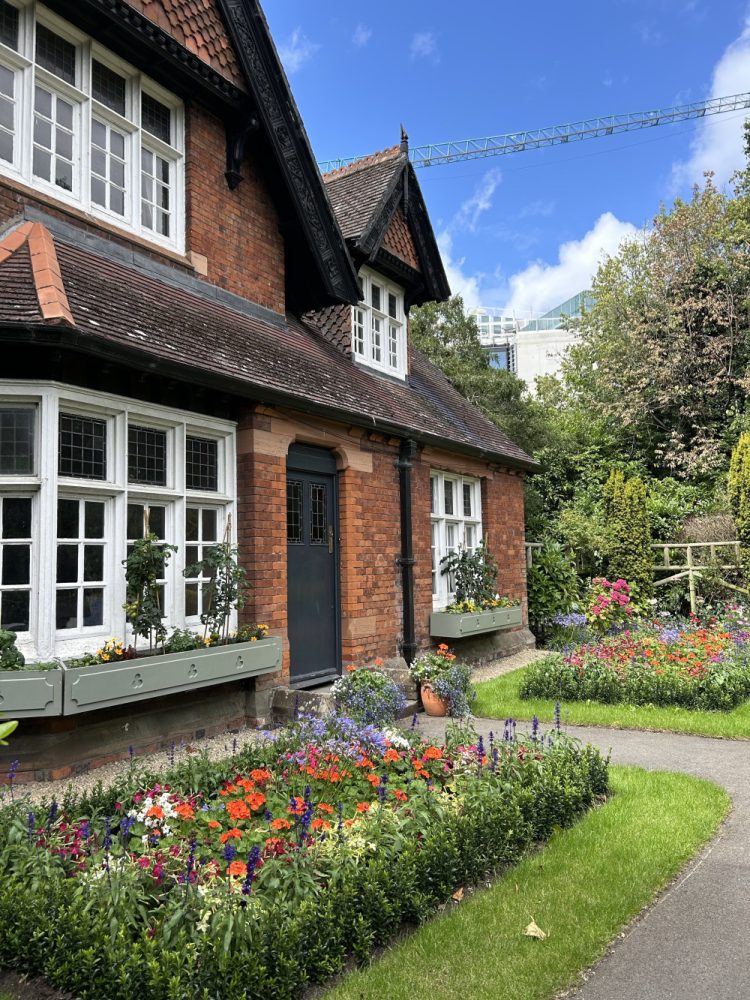
Design Tip: Pair native plants with a clean mulch border or river rock edging for a look that reads as intentional and polished — not like you just let things grow wild.
02. | Perennials Over Annuals, Every Time
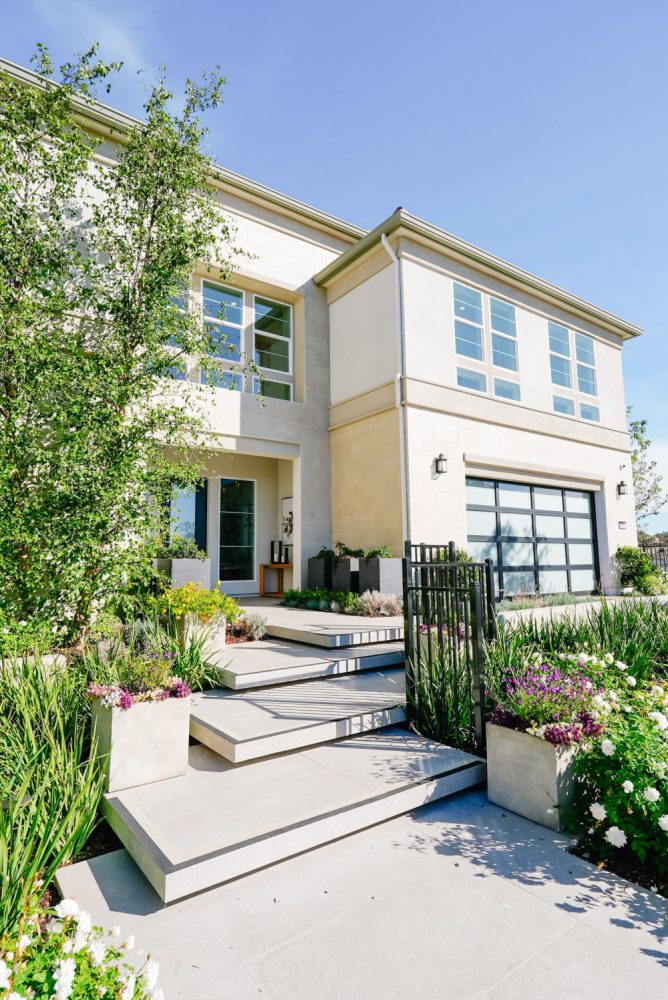
Annuals are beautiful for about three months, and then they die and you have to start all over again. Perennials, on the other hand, come back year after year. Plant them once, and they just keep showing up — like that reliable friend who always remembers your birthday.
Many perennials are also more drought-tolerant than their annual counterparts, which means less watering, less replanting, and fewer trips to the garden center where you inevitably spend $80 on things you didn’t come for.
Best Low-Maintenance Perennials:
- Daylilies — nearly indestructible and available in every color imaginable
- Sedum (stonecrop) — thrives on neglect, which is honestly the best quality a plant can have
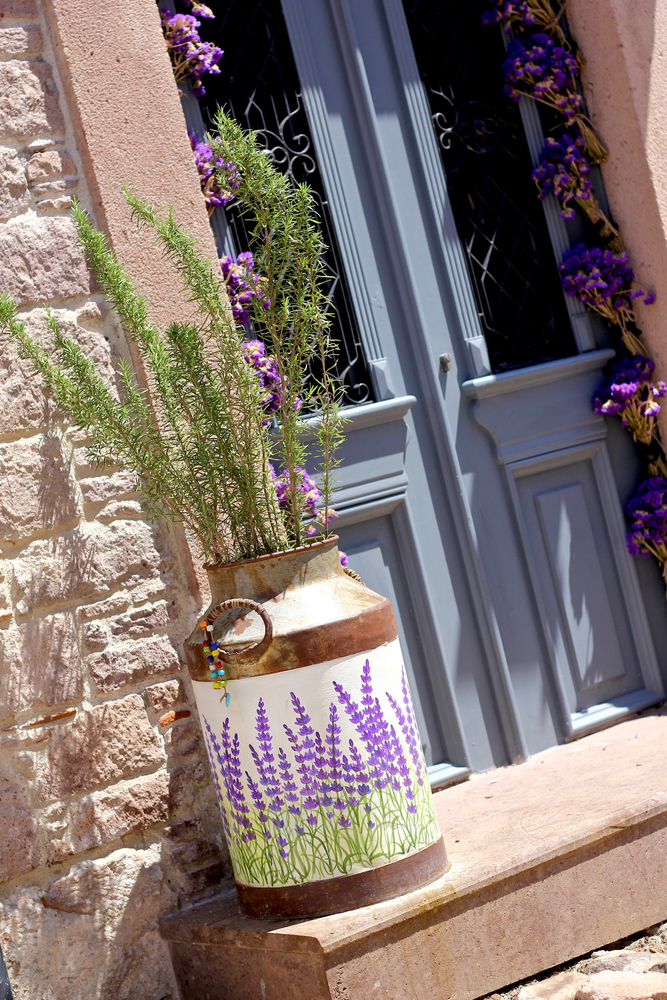
- Lavender — gorgeous, fragrant, and doesn’t need much water once established
- Russian sage — tall, wispy, and completely unbothered by drought
- Catmint — soft purple blooms that last for months with zero input from you
Pro Tip: Mix early, mid, and late-season perennials together so something is always blooming from spring through fall. It takes a little planning upfront but pays off every single year after.
03. | Mulch Does More Than You Think
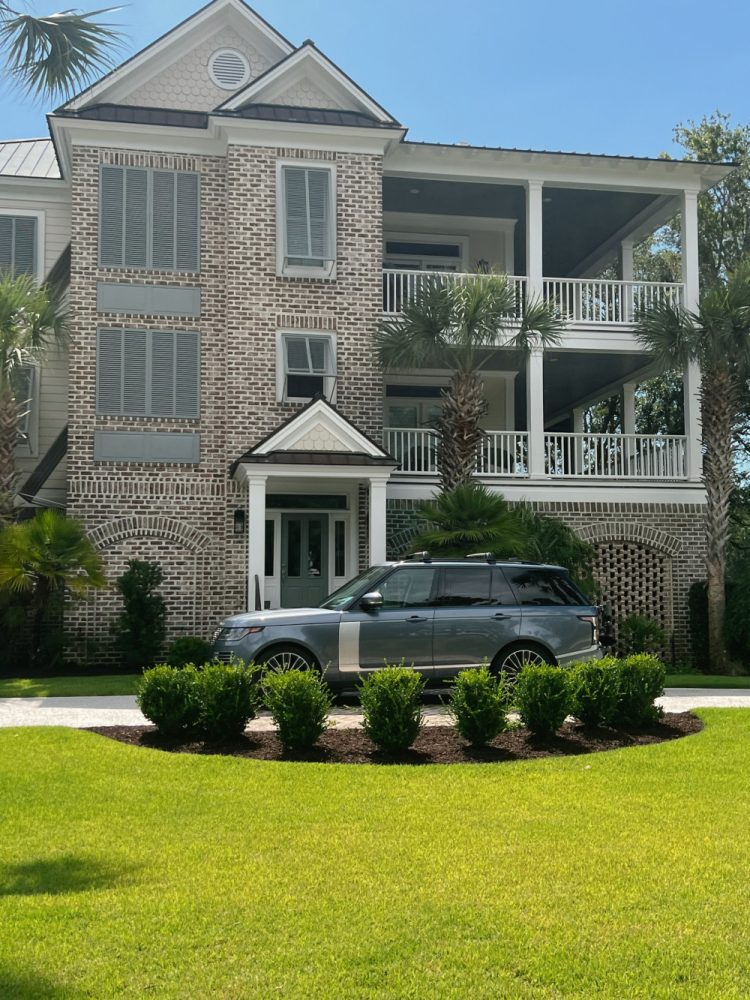
Mulch is one of those things that looks purely decorative but is secretly doing a tremendous amount of behind-the-scenes work. It suppresses weeds, holds moisture in the soil, regulates root temperature, and slowly breaks down to feed your plants over time. And it makes everything look immediately more polished — the landscaping equivalent of a fresh coat of paint.
Organic mulch (bark, wood chips, shredded hardwood) is the go-to for most garden beds. It’s safe around kids and pets, it smells good, and it improves your soil as it decomposes.
Quick Mulch Guide:
- Apply 2–3 inches deep around plants, keeping it pulled back from stems and trunks
- Refresh once a year in early spring for the cleanest look
- Choose a mulch color that complements your home’s exterior (dark brown reads rich and modern, natural cedar reads warm and organic)
04. | Ground Cover Instead of Grass

A traditional lawn is one of the most high-maintenance elements in any yard. It needs mowing, edging, fertilizing, aerating, overseeding, and an alarming amount of water. If you’re looking to cut your outdoor workload in half, reducing (or replacing) your lawn is the single most impactful move you can make.
Ground cover plants spread to fill in space the way grass does, but they don’t need mowing and most of them need far less water. Some even bloom, which is more than your fescue has ever done for you.
Ground Cover Options Worth Trying:
- Creeping thyme — fragrant, walks well underfoot, and blooms in soft purple
- White clover — stays green with almost no water, fixes nitrogen in your soil, and bees love it
- Sedum (low-growing varieties) — succulent-like, drought-proof, and available in greens, reds, and golds
- Mondo grass — dark green, tidy, and perfect for filling in between stepping stones
Design Tip: You don’t have to go full lawn replacement. Even swapping out a side yard, a hell strip (that patch between the sidewalk and street), or a shady corner where grass never grew well anyway can make a real difference in your weekly maintenance load.
05. | Hardscaping That Earns Its Keep

Every square foot of hardscaping is a square foot you never have to mow, weed, water, or worry about. Stone patios, flagstone paths, gravel areas, and paved seating zones all reduce the amount of plantable (read: maintainable) space in your yard while adding serious style and function.
The trend in 2026 is leaning toward natural materials — limestone, warm-toned pavers, and reclaimed wood — rather than the stamped concrete of years past. The vibe is organic, textured, and a little imperfect.
Hardscaping Ideas That Work:
- A small gravel patio with a weather-resistant bistro set and string lights
- A flagstone or natural stone walkway connecting your back door to a seating area
- A pea gravel fire pit area with simple wooden benches or Adirondack chairs
- Raised stone planters that double as seating walls
06. | The Gravel Garden (It’s Having a Moment)
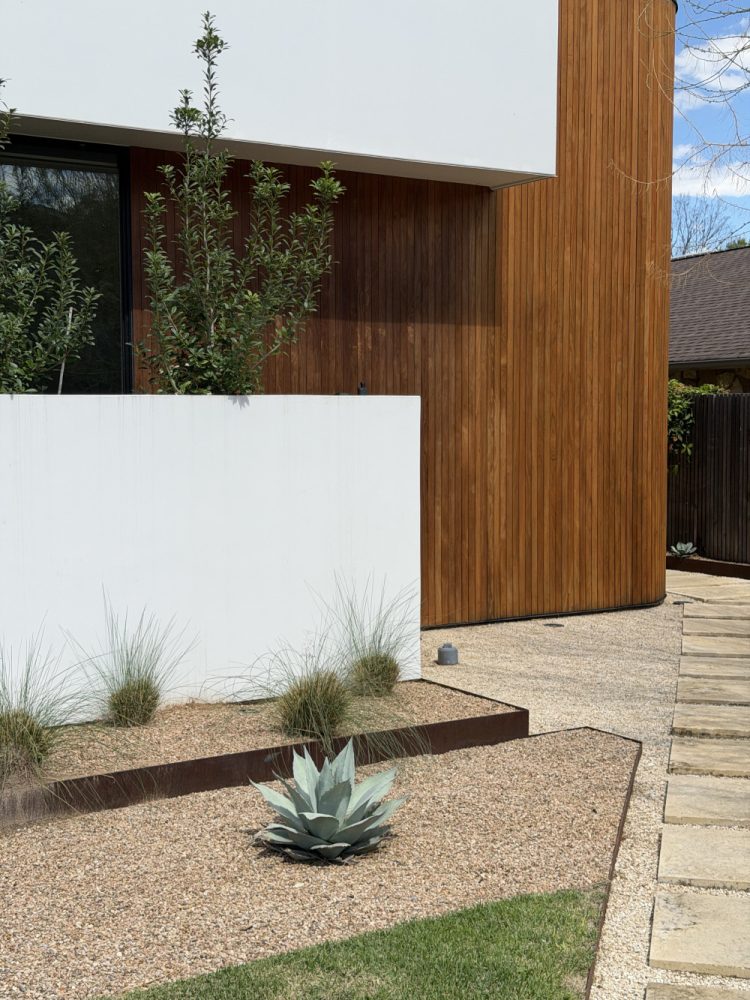
Gravel gardens are everywhere right now, and for good reason. They require almost no irrigation, they suppress weeds naturally (especially with a landscape fabric base), and they give any yard a clean, contemporary look that photographs incredibly well. It’s the kind of landscaping that makes people think you hired a designer when really you just made a smart material choice.
The key is not to make it look like a parking lot. Mix in drought-tolerant plants, ornamental grasses, and a few well-placed boulders to keep things interesting. The contrast between the soft gravel and the structured plants is what makes it feel like a garden and not a construction site.
Plants That Love Gravel:
- Lavender, rosemary, and other Mediterranean herbs
- Ornamental grasses like blue fescue or Mexican feather grass
- Agave and yucca for a desert-modern look
- Euphorbia or santolina for texture and year-round structure
07. | Define Zones Like You Would Inside Your Home
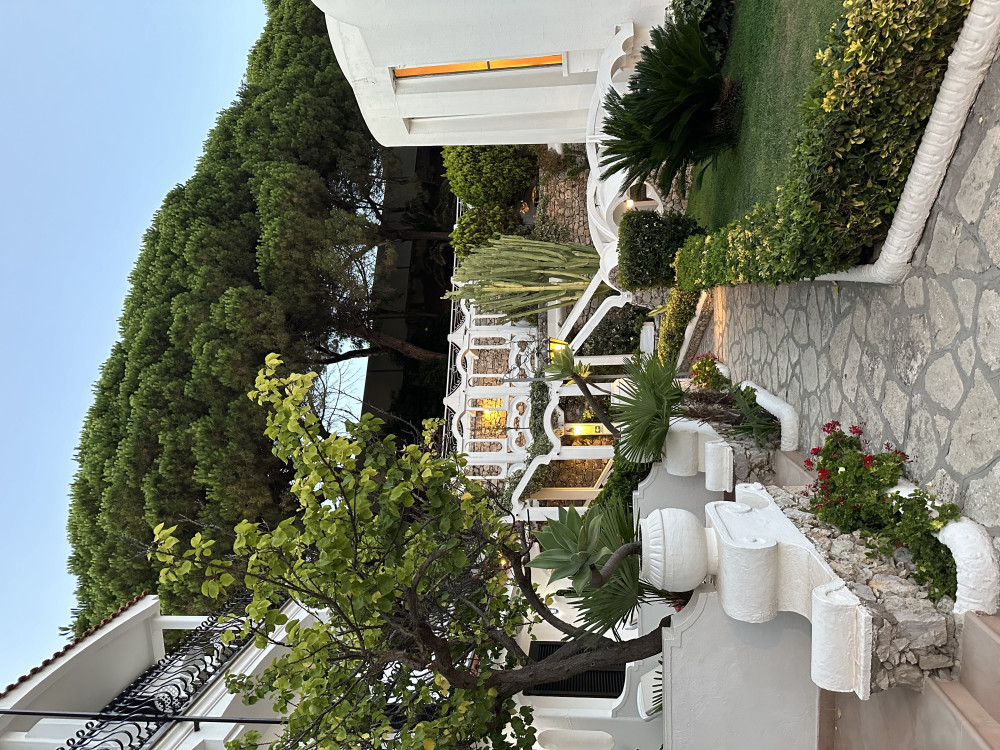
One of the biggest design shifts happening in outdoor spaces right now is the idea of treating your yard the way you’d treat your floor plan inside — with distinct zones for different purposes. Instead of one big open lawn that doesn’t really serve any function, you create smaller areas with clear intentions. A dining space here. A reading nook there. A play zone tucked along the fence line.
Zoning your yard makes it easier to maintain because each area is designed for a specific purpose, and you can tailor the level of upkeep to match. Your entertaining patio might be all hardscaping and potted plants (low effort). Your garden corner might have a raised bed or two (medium effort). And the play area might just be turf or rubber mulch (no effort).
Easy Ways to Define Outdoor Zones:
- Use ornamental grasses or low hedges as soft natural dividers
- Change materials underfoot — gravel in one zone, pavers in another, turf in a third
- Add an outdoor rug and weather-resistant seating to carve out a lounge area
- Install a simple pergola or shade sail to anchor a dining space
08. | Go Vertical When You’re Short on Space (or Patience)
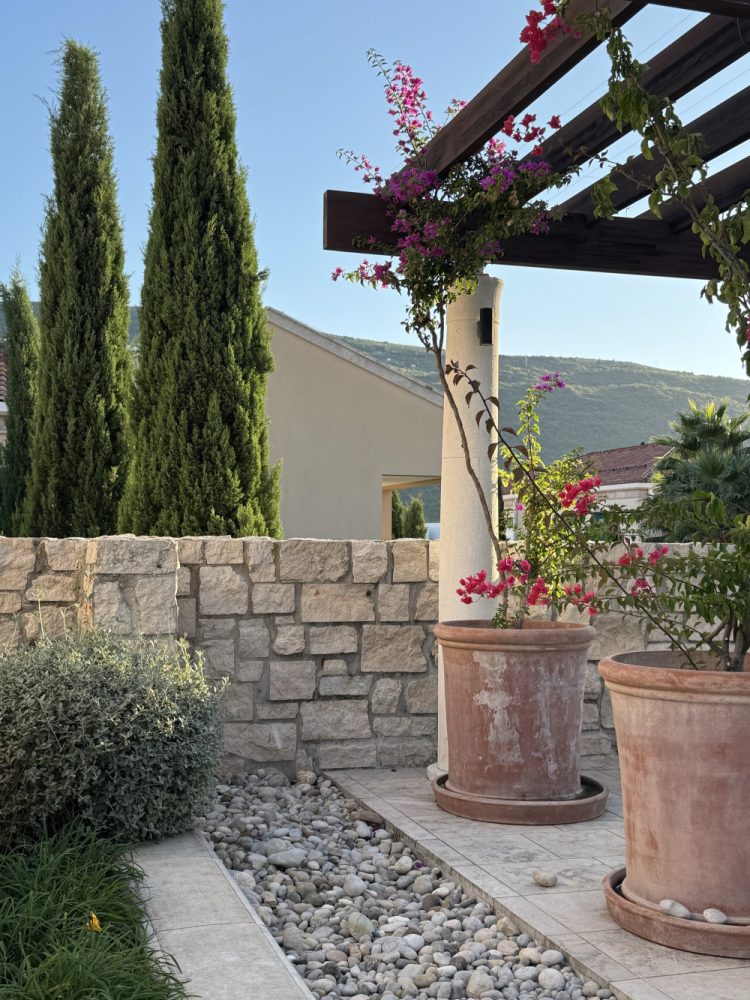
Not every low-maintenance yard needs to spread out. Vertical gardens — trellises, hanging planters, wall-mounted pots, living walls — let you bring in greenery without giving up ground space. They’re especially useful in small yards, patios, and townhouse setups where square footage is at a premium.
Vertical plantings also happen to be some of the easiest to maintain because you can reach everything without kneeling, there’s less weeding involved, and many climbing or trailing plants are naturally low-maintenance once they’re established.
Vertical Ideas to Try:
- A freestanding trellis with jasmine, clematis, or climbing hydrangea
- Wall-mounted herb pots near your outdoor kitchen or grill area — basil, rosemary, thyme, and mint all do well
- Hanging planters with trailing plants like string of pearls, ivy, or sweet potato vine
- A living wall panel as an accent feature on a patio wall or fence
Design Tip: A single large-scale trellis with one type of climbing plant will always look more intentional than a dozen small pots scattered randomly. When in doubt, go bigger and simpler.
09. | Automated Irrigation — Set It and Forget It
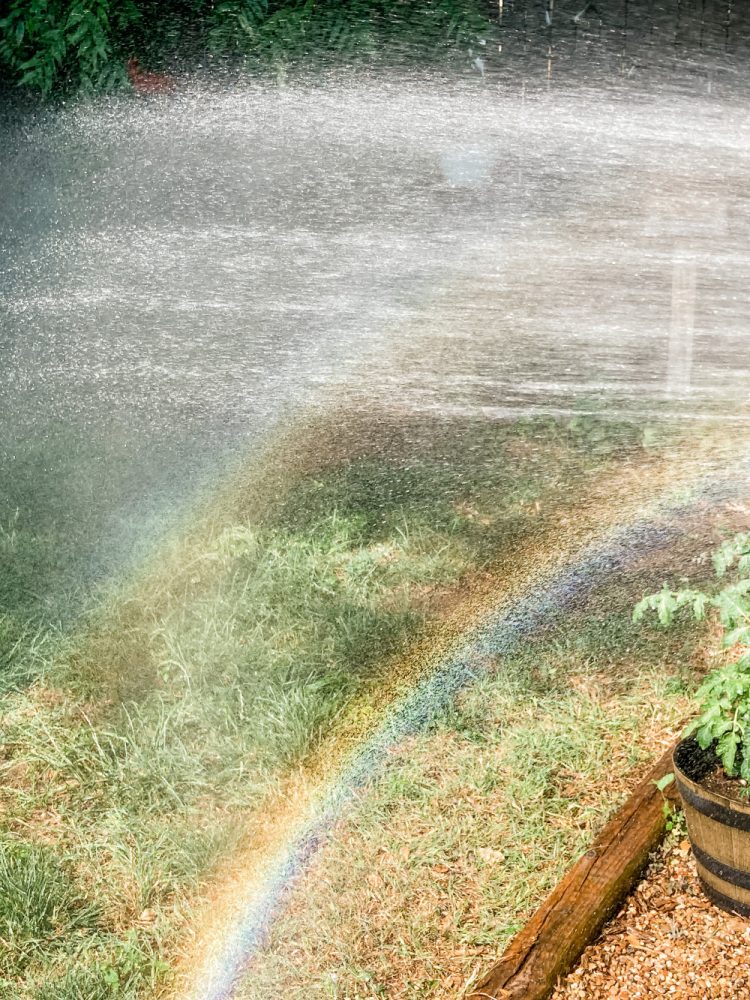
If you’re still dragging a hose around the yard every other evening, this is your sign to stop. A drip irrigation system delivers water directly to the root zone of your plants — slowly, efficiently, and without you standing outside in the heat holding a nozzle like it’s 1997.
Drip systems use significantly less water than sprinklers, they reduce disease by keeping foliage dry, and they can be put on a simple timer so the entire thing runs on autopilot. You can set one up for a single garden bed in an afternoon with basic DIY supplies, or have a pro install a whole-yard system if you’re ready to fully outsource the task of remembering to water.
Budget-Friendly Options:
- Soaker hoses — the simplest option, perfect for running through garden beds
- Drip irrigation kits — available at most hardware stores, easy to customize for your layout
- Smart timers — connect to your phone and adjust watering based on local weather data
10. | Container Gardens for Flexibility
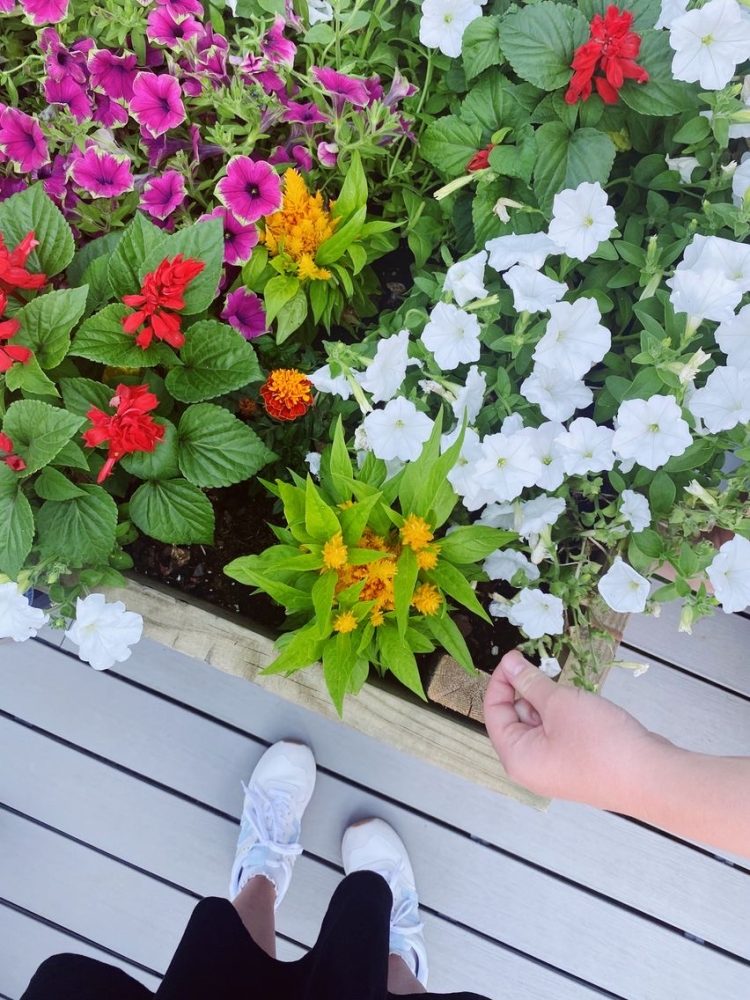
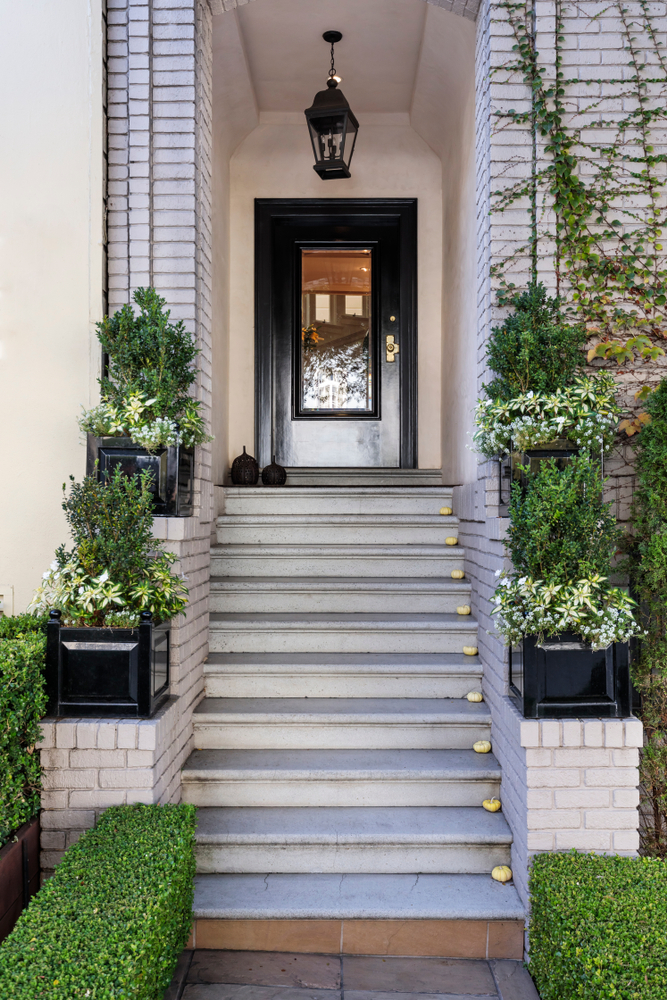
Container gardens give you all the visual impact of a planted bed with a fraction of the commitment. You can move them, swap them out seasonally, group them for effect, and replace anything that doesn’t work without tearing up an entire garden bed. They’re also a great way to add greenery to patios, balconies, front stoops, and any other hard surface that could use some life.
The trick is choosing the right containers and the right plants. Bigger pots hold more soil, which means they retain moisture longer and need less frequent watering. And self-watering planters are worth every penny if you want to truly set it and forget it.
Low-Maintenance Container Plant Picks:
- Succulents and sedums (practically self-sufficient)
- Ornamental grasses for height and movement
- Dwarf evergreen shrubs for year-round structure
- Hardy herbs like rosemary, sage, and thyme
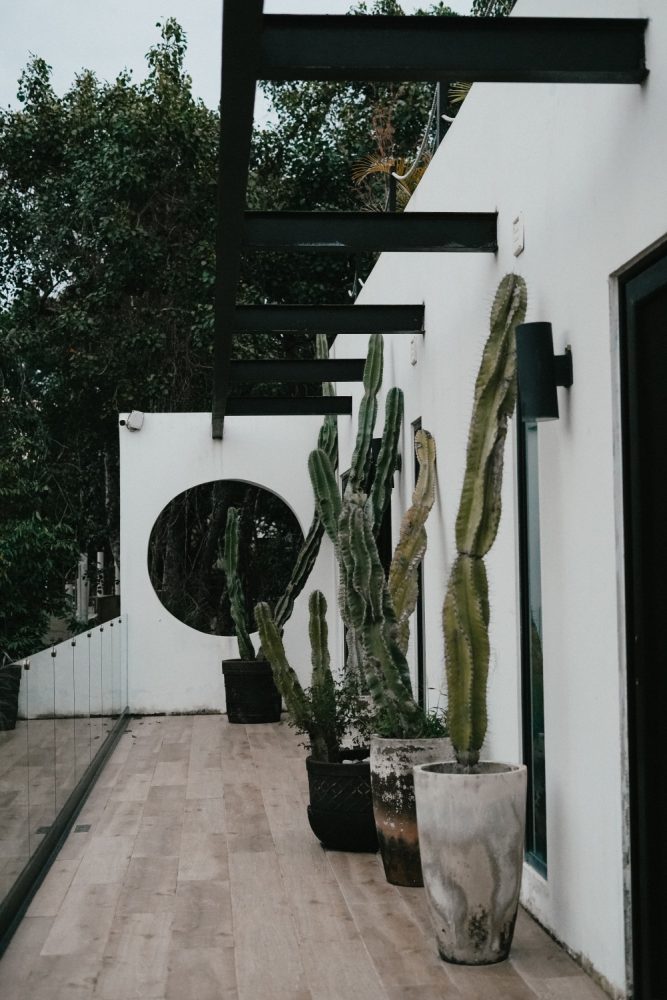
Pro Tip: When grouping containers, use odd numbers (3 or 5) and vary the heights. It looks more natural and visually interesting than a straight line of matching pots.
11. | Plan for Year-Round Interest
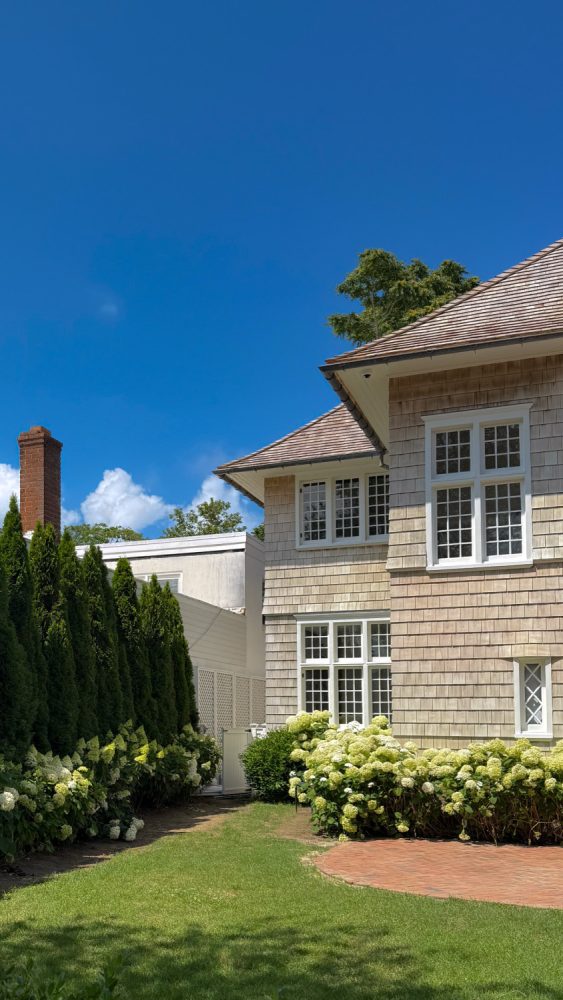
A yard that only looks good in June and July is really only serving you for about eight weeks out of the year. The smarter move is to plant with all four seasons in mind, layering evergreens, textured bark, ornamental grasses, and winter-interest plants so your landscape always has something going on — even when everything else has gone dormant.
This doesn’t mean your yard needs to bloom year-round. It means thinking about structure, texture, and form as much as flowers. A well-placed evergreen shrub does more for your winter curb appeal than an entire bed of summer annuals that turned to mush in October.
Year-Round Interest Cheat Sheet:
- Spring: Early bulbs (crocuses, daffodils), flowering shrubs (forsythia, azalea)
- Summer: Perennials at peak bloom, ornamental grasses filling in
- Fall: Grasses turning golden, sedum in bloom, fall foliage from deciduous shrubs
- Winter: Evergreen structure, interesting bark (river birch, crepe myrtle), dried grass seed heads
12. | Outdoor Furniture That Can Handle Neglect
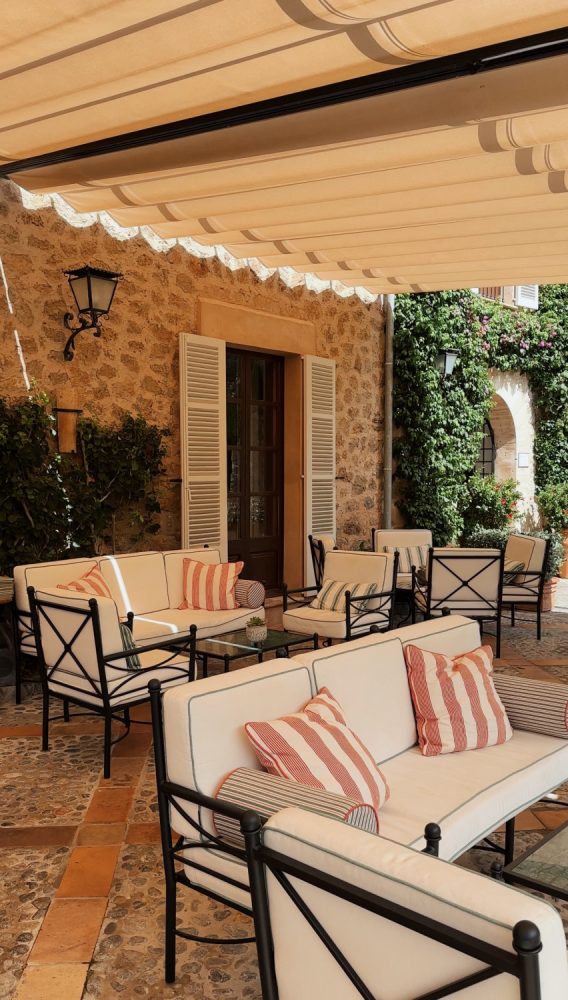
The best outdoor furniture is the kind you don’t have to think about. No dragging it inside before every rainstorm, no hand-washing cushion covers every other week, no rust spots after one season. Look for materials that are built to take a beating and still look good — because the whole point of a low-maintenance yard is that everything in it earns its spot by not requiring constant attention.
Materials That Hold Up:
- Teak — weathers to a beautiful silvery gray if you leave it alone (or maintain it with annual oil if you prefer the warm tone)
- Aluminum — lightweight, rust-proof, and easy to move around
- Resin wicker — looks like natural wicker but can sit outside in every season without falling apart
- Concrete or stone accent tables — heavy enough to stay put and tough enough to handle anything
Pro Tip: Invest in cushions with Sunbrella or similar UV-resistant, water-repellent fabric. They cost more upfront but they won’t fade, mildew, or fall apart after one summer — which means you’re not replacing them every year.
The Bottom Line on Low-Maintenance Landscaping
A low-maintenance yard isn’t about doing less because you don’t care. It’s about designing smarter so your outdoor space works with you instead of against you. The right plant in the right spot. Hardscaping where it makes sense. Systems that handle the boring stuff so you can actually sit in the chair you bought and enjoy the view.
Start with one or two of these ideas and build from there. You don’t have to overhaul everything at once — even small changes add up over time, and every square foot of yard that stops demanding your attention is a win.
Which idea from this list are you trying first? Drop a comment below — and if this was helpful, share it with someone else who’s tired of spending every weekend in the yard. Don’t forget to save or pin this post so you can come back to it when you’re ready to get started.
More Ideas You’ll Love
- 7 Easy DIY Mailbox Landscaping Ideas to Amp up Your Curb Appeal
- 15 Garden Flower Bed Ideas That Will Instantly Upgrade Your Yard
- 15 Bird Bath Ideas That Make Any Garden Feel Like a Secret Escape