This post contains affiliate links and is a member of the Amazon Services LLC Associates Program. If you make a purchase using one of these affiliate or Amazon links, I may receive compensation at no extra cost to you.
Trellis Ideas That Look Amazing on a House or Garden
Look. We need to talk about trellises.
Because somewhere along the way, the word “trellis” became code for “that flimsy white diamond lattice panel leaning against the side of my house doing absolutely nothing.” And that’s a shame. Because when a trellis is done right — when the vines have had time to do their thing and the structure actually fits the architecture — it’s one of those rare exterior details that makes a house look like it belongs somewhere beautiful. Like it grew there on purpose.
So if you’re scrolling at midnight looking for trellis ideas that don’t look like they came out of a 2009 Better Homes & Gardens sidebar, you’re in the right place. Every idea here comes from real spaces. Just actual trellises doing actual work on actual buildings.
Let’s get into it.
1. The Bougainvillea Canopy Over a Seating Area
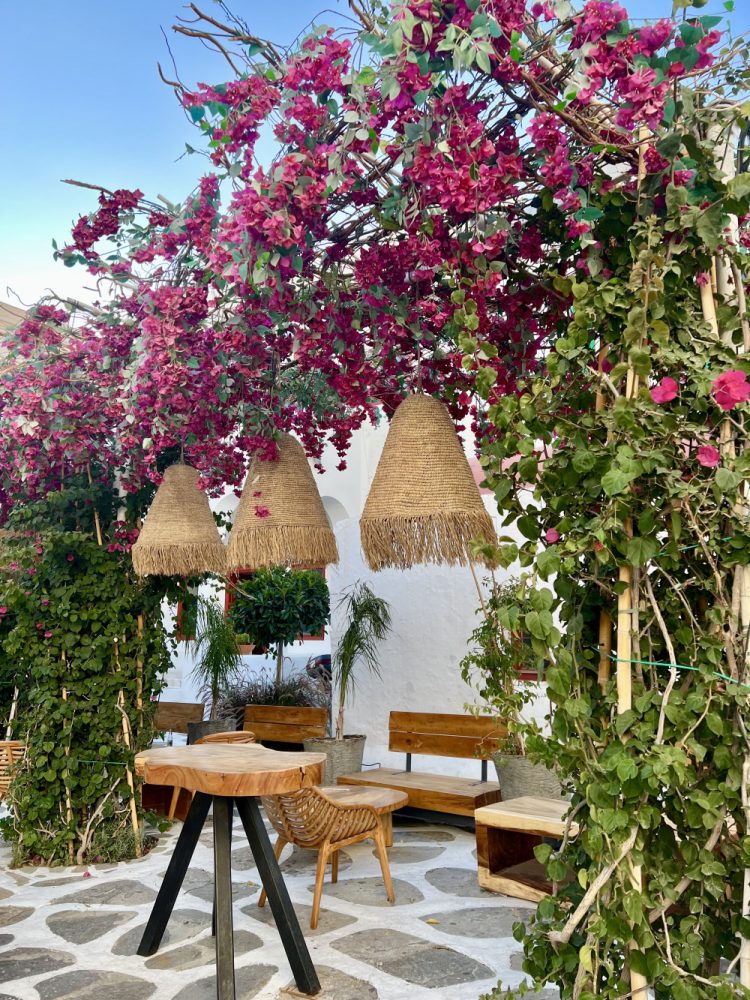
This is what happens when you let bougainvillea completely take over a bamboo trellis structure and just… commit to it. The trellis here isn’t some delicate little accent piece. It’s a full overhead framework — bamboo poles running vertically on both sides with horizontal supports across the top — and the bougainvillea has consumed it so thoroughly that the structure itself has become invisible.
That’s the move. The trellis disappears. You just see a canopy of deep magenta blooms creating this wild, shaded outdoor room underneath. Woven rattan pendant lights hang from it. There’s a stone patio below with wood furniture. The whole thing reads like a Mediterranean courtyard you’d stumble into on a side street and immediately want to sit in for three hours.
The takeaway for your house: if you’re building a trellis over a patio, a pergola extension, or even a side yard hangout area, go with natural materials like bamboo and pick a vine that’s aggressive enough to actually fill the space. Bougainvillea is the obvious choice in warm climates. It grows fast, it’s dramatic, and once it fills in overhead, you’ve got a living ceiling that no pergola fan or shade sail can compete with.
2. Bougainvillea Cascading Down a White Facade

This one is dead simple and maybe the most recreatable idea on this entire list. A white stucco building. A staircase with a dark green iron railing. And bougainvillea cascading down from the upper level, spilling over the roofline and draping across the wall like it just showed up uninvited and made the whole place better.
There’s no visible trellis at all here. That’s the point. The vine is trained along the roofline and allowed to cascade downward, using the building’s own architecture — the gutter line, the edge of the balcony, maybe a single wire or two — as its support. The result is this effortless waterfall of hot pink against bright white, and it makes the entire facade look like something you’d see on a Greek island.
This is one of the best trellis ideas for anyone with a white or light-colored house who wants maximum impact with minimum infrastructure. You don’t need a big built-out trellis panel. You need a healthy bougainvillea, a couple of masonry anchors with wire along the roofline, and about two growing seasons of patience. The vine does the rest.
3. The Full Floral Frame Around a Window
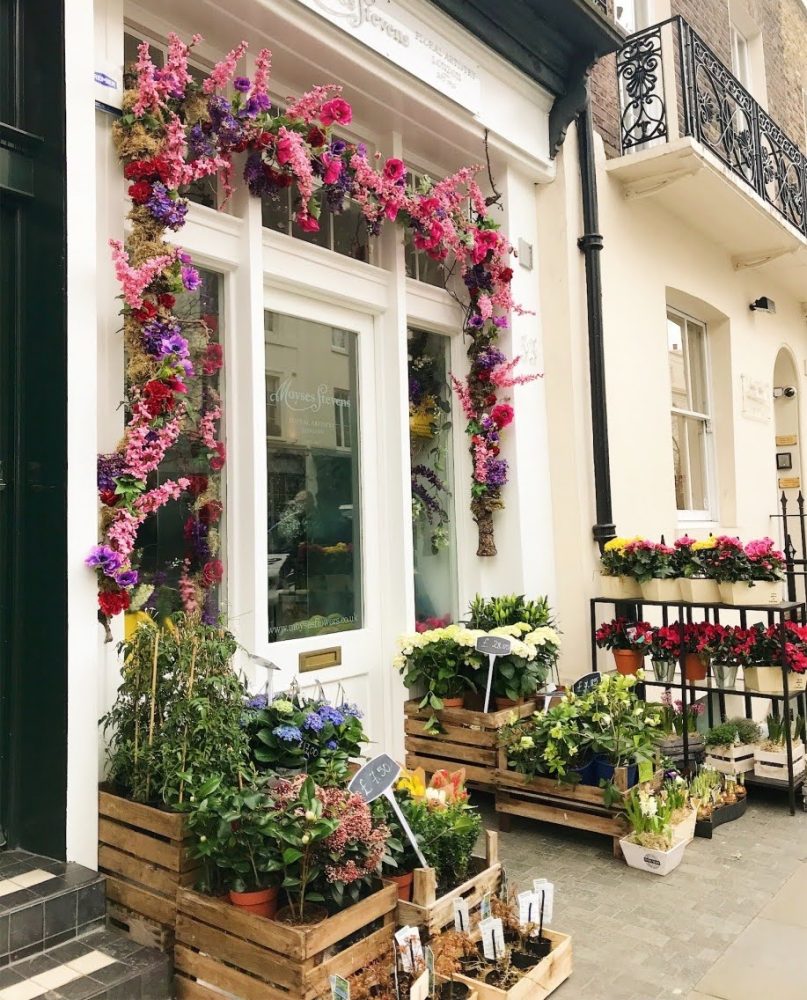
Okay so this is technically a shop front, but the concept translates directly to a house — especially if you have large front-facing windows or a picture window situation you want to draw attention to.
What’s happening here is a dense, lush arrangement of climbing roses, trailing greenery, and mixed blooms trained to grow in an inverted U-shape around the entire window frame. Pinks, deep reds, purples, and bits of dried moss all woven together. It’s thick. It’s layered. It’s not trying to be neat. And it works because the building behind it is simple — white trim, clean lines, classic proportions. The floral frame becomes the focal point precisely because everything else stays quiet.
For a house, you’d build a narrow trellis frame that follows the outline of your window — up one side, across the top, down the other — and train climbing roses or a mix of flowering vines along it. The key to making this look intentional and not chaotic is keeping it tight to the window trim. It should hug the architecture, not float randomly on the wall.
4. Climbing Roses Over a Wrought Iron Gate
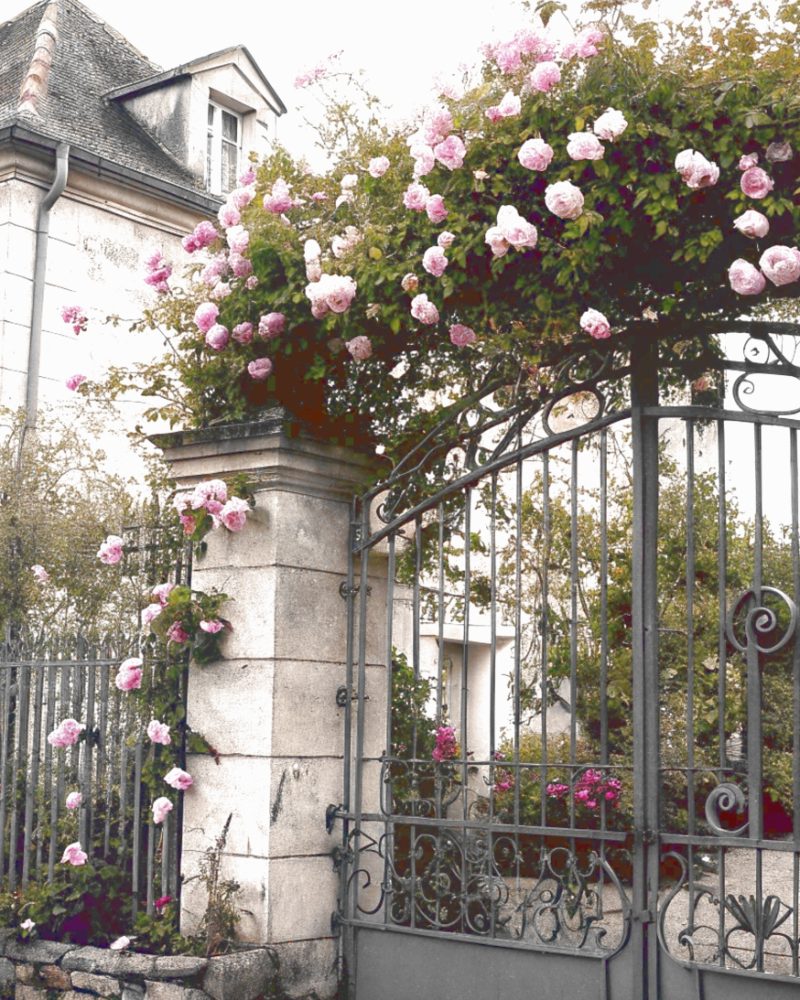
There’s something about pale pink roses spilling over a wrought iron gate that just stops you in your tracks. This is old-world, French countryside energy. A stone pillar anchors one side, the iron gate curves in a gentle arch at the top, and the roses have been trained to grow up and over the arch so they cascade from above.
The trellis here is the gate itself. That’s what makes it so effective. The wrought iron scrollwork gives the canes something to weave through as they climb, and the stone column provides a solid vertical surface for the base of the plant to establish. The roses drape over the top and tumble down both sides, and the whole thing looks like it’s been there for decades.
If you have a gate at your property entrance — or even a garden gate between your front yard and side yard — this is one of those trellis ideas on a house that instantly adds character without any new construction. Train a climbing rose up the hinge side, let it arch over the top, and let gravity do the styling for you. David Austin varieties like the soft pink ones shown here are perfect for this because they bloom in heavy clusters that naturally nod downward.
5. Faux Blossom Branches on an Interior Ceiling Trellis
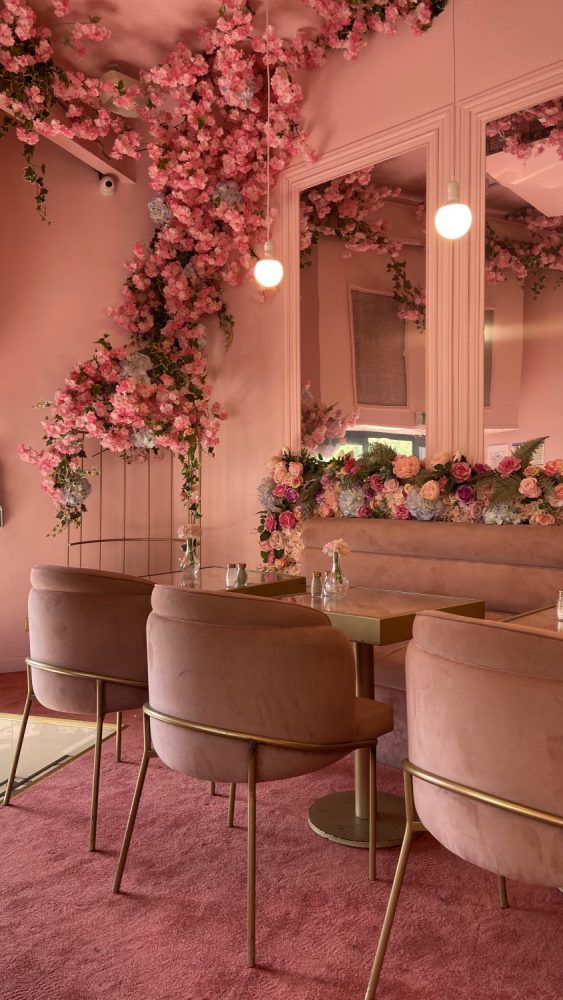
This one breaks the rules a little because it’s an interior space. But hear me out — this concept works incredibly well for covered porches, screened lanais, and pool house ceilings.
The idea is a ceiling-mounted trellis structure (or even just a grid of thin wire) with faux blossom branches cascading down from it. In this space, soft pink cherry blossom branches crawl across the ceiling and down one wall, mixed with trailing ivy. Underneath, everything is tonal — blush velvet seating, gold-legged tables, a dense floral arrangement along the back wall. It’s a full mood.
You’re not going to recreate this exact pink-on-pink situation in your house (probably). But the concept of mounting a trellis grid on a porch ceiling and running faux flowering branches across it is genuinely underused. If you have a covered front porch or a screened-in back porch that feels flat and boring overhead, a simple wire grid with realistic faux wisteria or blossom branches gives you that lush, garden-room ceiling without waiting five years for a live vine to fill in. And because it’s covered, you don’t have to deal with the maintenance nightmare of real vines dropping leaves into your outdoor living space.
6. Wisteria Trained Up a Building Facade
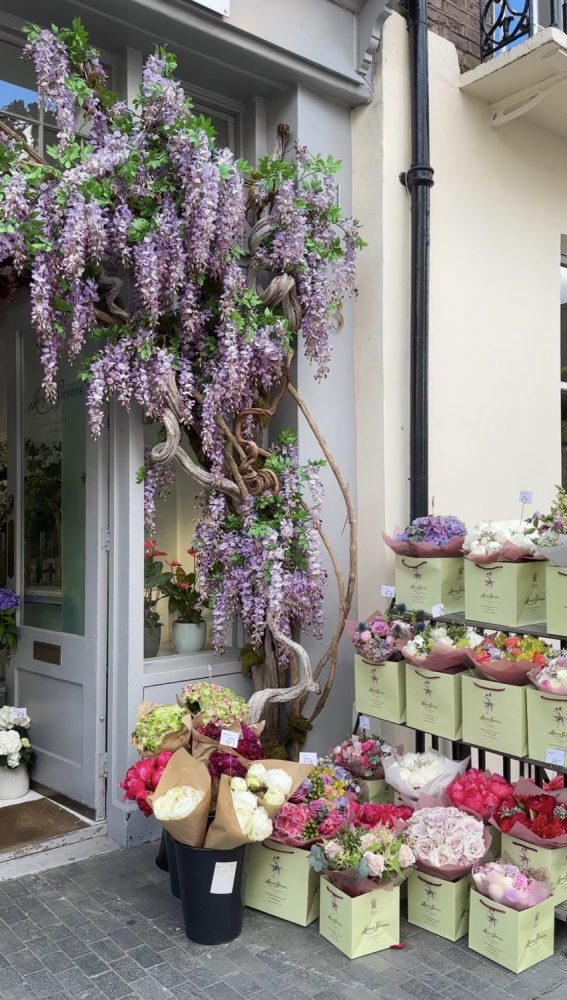
Wisteria is one of those plants that makes people lose their minds on Pinterest and for good reason. When it’s trained up the front of a building, it looks like a living sculpture. The thick, gnarled trunk twists upward and the drooping purple flower clusters hang in these long, elegant racemes that catch every bit of light.
In this shot, a mature wisteria vine climbs a grey-painted facade, its trunk anchored at the base and its branches spreading out across the upper portion of the wall. The lavender blooms hang down in front of the door and window, softening the hard lines of the building without covering them up entirely. You can still see the architecture. The wisteria is an accent, not a takeover.
This is a strong trellis idea for anyone with a two-story house or a tall single-story facade. You mount your trellis wires or a narrow wooden framework against the wall, plant the wisteria at the base, and train it upward. The trick with wisteria is that it takes a few years to establish before it blooms reliably, and you need to prune it aggressively twice a year or it will eat your gutters. But when it finally does its thing — that first spring where the whole front of your house is dripping in purple — you’ll understand why people put up with it.
7. Plumbago Vine Framing an Entryway Door
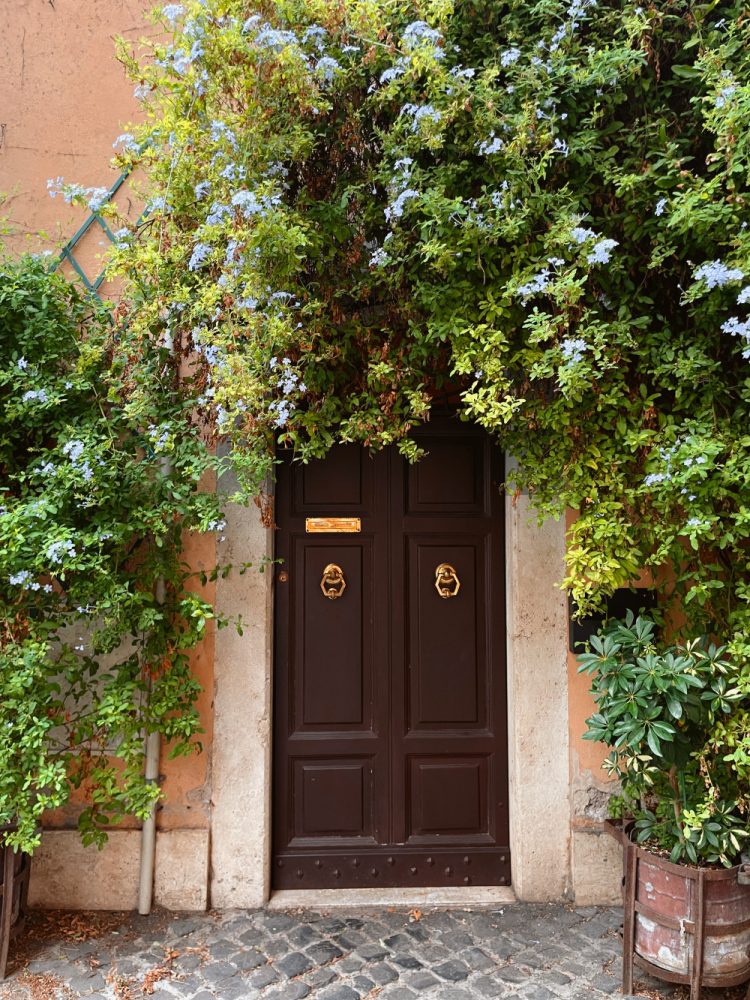
This might be the most underrated trellis idea in this entire roundup. A dark-painted front door, warm terracotta-colored stucco walls, stone door surround, and a massive plumbago vine (the soft blue-flowering one) trained on a small diamond-pattern trellis on one side and allowed to grow up and completely over the top of the doorway. The blue flowers and green foliage create a living archway that frames the entrance.
What makes this work so well is the color contrast. That pale periwinkle blue against the warm orange-pink of the wall and the dark chocolate brown of the door. It’s not trying to match anything. It’s letting the plant be its own thing, and the house is better for it.
For a practical version of this at home, mount a narrow trellis on one or both sides of your front door and plant plumbago (in warm climates) or clematis (in cooler zones) at the base. As the vine matures, guide it up and across a small arch or horizontal wire above the door frame. Within a couple of seasons you’ve got a framed entryway that looks like it belongs in a travel magazine.
8. The Full-Coverage Flowering Vine Facade
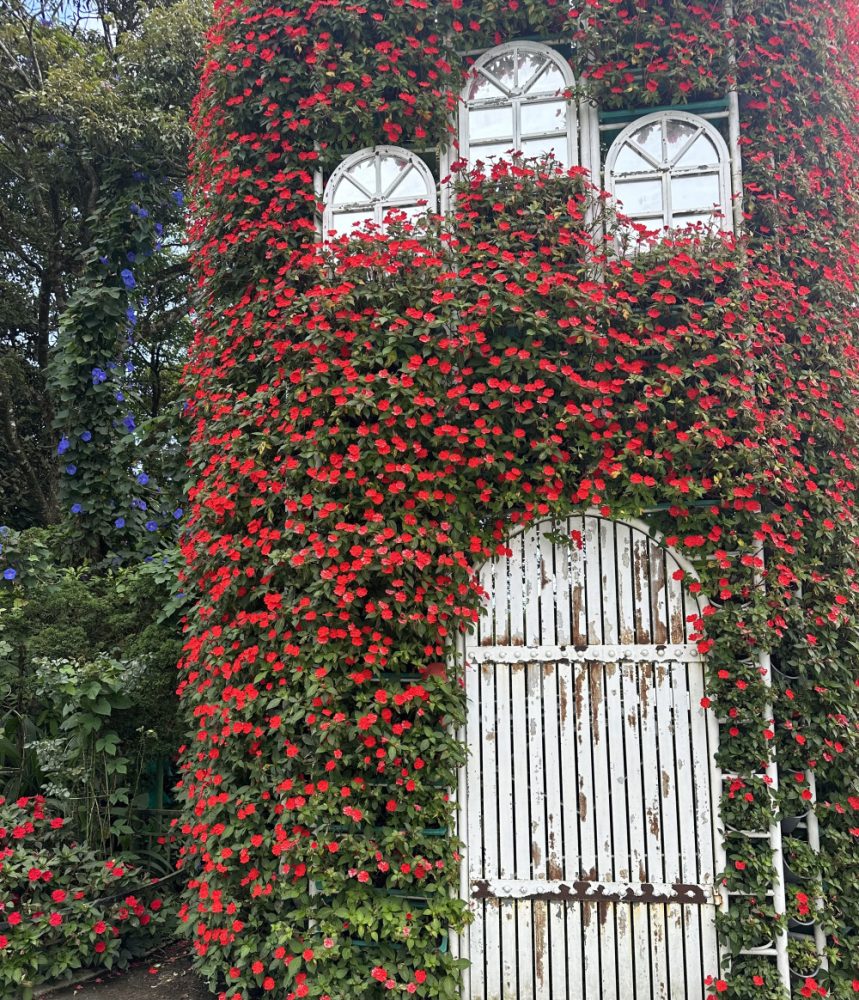
This is the maximalist option. And it’s spectacular.
An entire building face covered — and I mean covered — in a red flowering vine. Hundreds and hundreds of bright red blooms blanketing the wall from the roofline down to the gate. A few white arched windows peek through the foliage, and there’s a weathered white gate at ground level that’s half-swallowed by the growth. Off to one side, blue morning glories are doing their own thing, adding a second color to the madness.
This is not a beginner project. This is years of growth on a comprehensive trellis system — likely a full grid of galvanized wire anchored to the masonry at regular intervals so the vine has something to cling to across the entire surface.
But here’s the real lesson from this photo: if you’re going to let a vine cover your house, commit. The halfway version of this — patchy coverage with bare spots and visible hardware — looks unfinished. The fully consumed version looks intentional. Pick a fast-growing flowering climber, give it a proper support system across the whole wall, and let it go. The windows will stay clear as long as you do a trim pass once or twice a year.
9. Vine-Covered Overhead Trellis Walkway Between Buildings
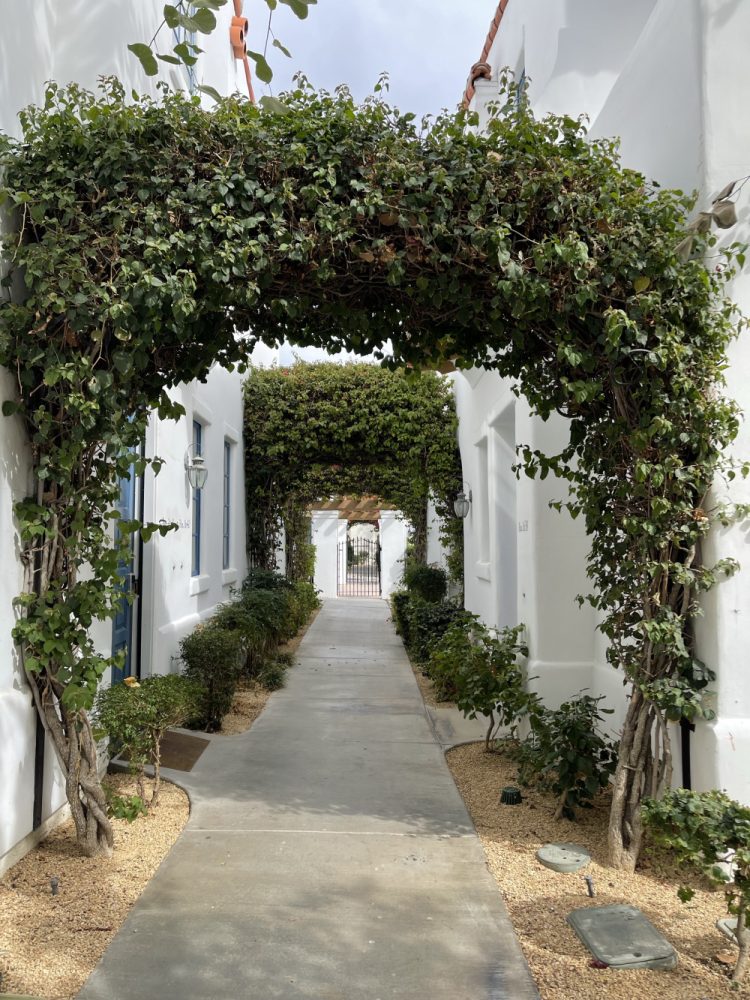
If you have a breezeway, a side-yard walkway, or a path between your house and a detached garage, stop what you’re doing and look at this.
This is a series of overhead trellis arches spanning a narrow walkway between two white stucco buildings. The trellises are simple — they look like metal or wood frames connecting the two structures — and the vines have grown over them to create a continuous green tunnel. Crushed shell or gravel lines the ground on either side of a concrete path, with low boxwood hedging along the edges. At the far end, a wrought iron gate. The whole thing looks like a private courtyard passageway you’d find in the south of France or along the coast of Florida.
This trellis idea works for any house with a narrow passage between structures. Side yards are usually dead zones — you walk through them to get to the backyard and that’s about it. But add three or four simple arch trellises overhead, plant a hardy climbing vine at the base of each one, and suddenly that boring side yard becomes a garden corridor. The overhead coverage makes it feel intimate and intentional, not like an afterthought between two walls.
10. Bougainvillea Spilling Over a White Pergola Entry
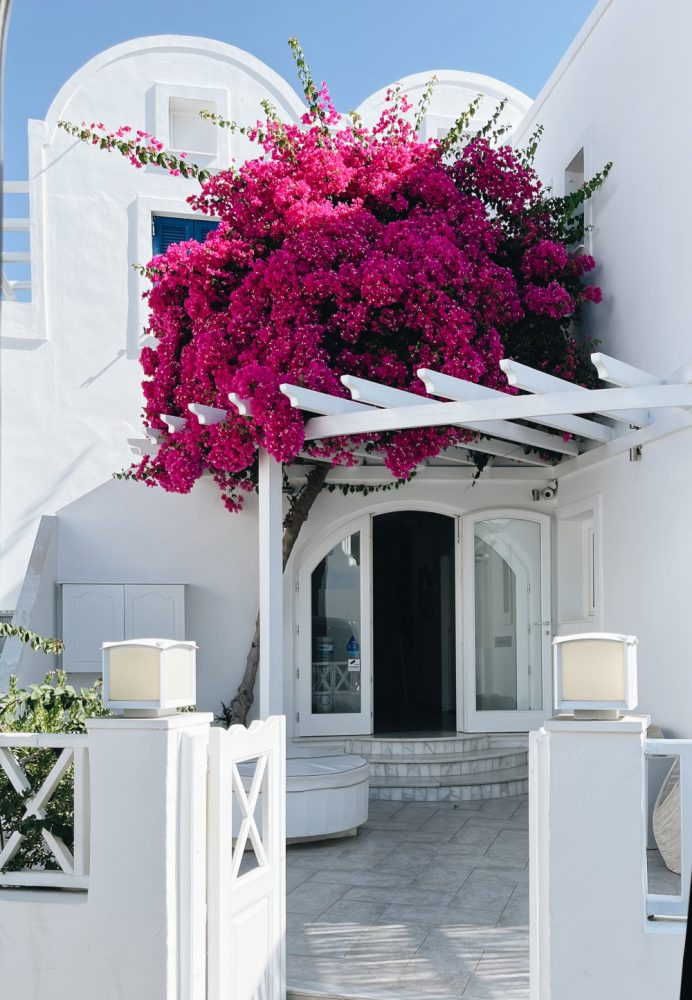
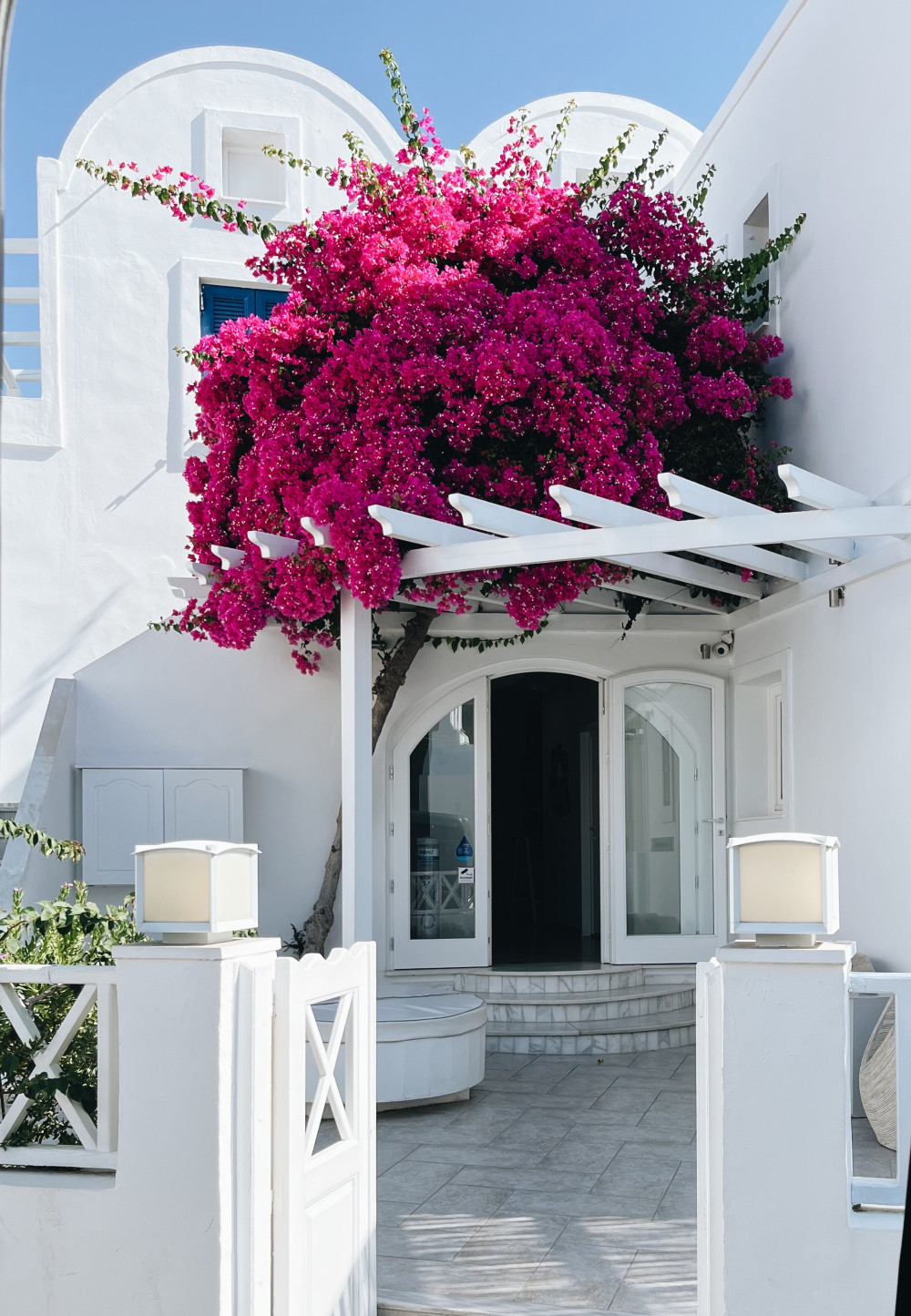
White on white on hot pink. This is the Santorini look, and it’s one of the most pinned trellis aesthetics for a reason.
A white stucco building with curved architectural details and a small front pergola with exposed rafter tails. Bougainvillea has been planted behind the pergola and has grown up and over it, creating a massive burst of vivid magenta right above the arched double-door entry. Two square lantern-style post lights sit on white X-pattern railings flanking the entrance. The bougainvillea is so dense and vibrant against the all-white architecture that it reads like the house’s entire personality.
This is one of the easiest trellis ideas on a house to pull off if you already have a small entry pergola, a porch overhang, or even a simple horizontal beam above your front door. Plant the bougainvillea at the base of the structure, on the sunny side, and train it up and over. In zones 9 and above, it’ll establish quickly. Within a couple of years you’ve got that explosion of color right where everyone sees it — at your front door.
11. The Green Tunnel Trellis Walkway
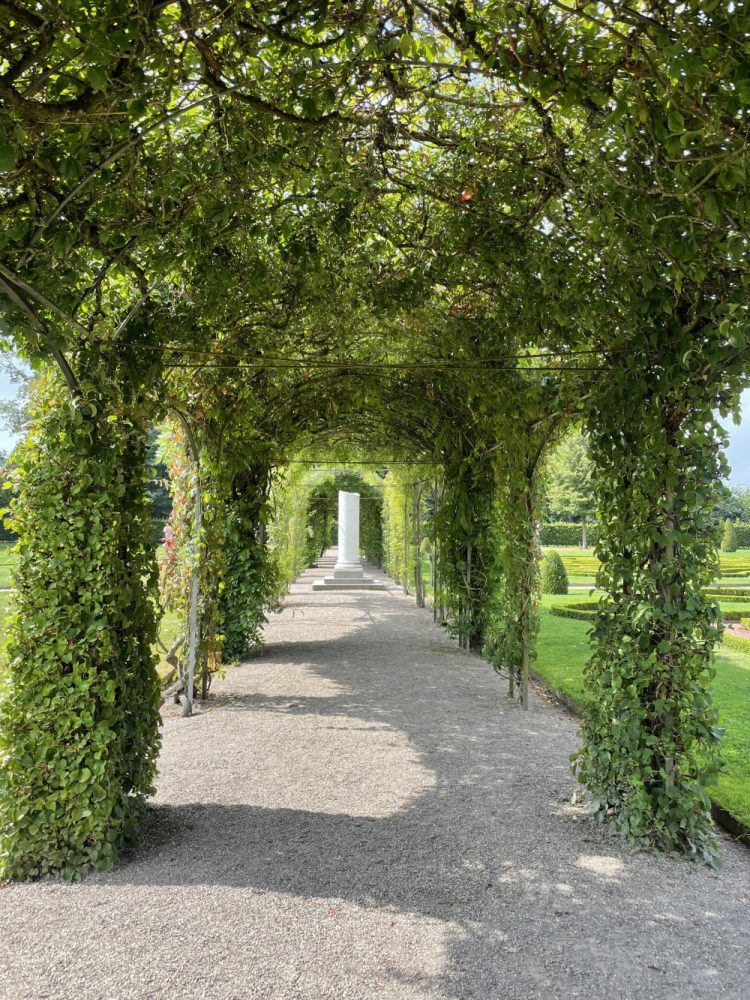
This is the estate version of the breezeway concept from earlier, and it’s stunning even without a single flower.
A long gravel path stretches out under a series of tall, arched trellises that have been completely consumed by green leafy vines. The arches repeat one after another into the distance, creating a tunnel effect with dappled sunlight filtering through the canopy overhead. On one side, a manicured formal garden with geometric boxwood hedging is visible. A white column stands at the far end as a focal point.
The structure here is all about repetition. Each arch is identical in height and spacing, and the uniform vine coverage ties them together into one continuous element. It doesn’t read as individual trellises. It reads as an outdoor hallway.
For a residential version, you could do this on a smaller scale along a garden path, a driveway border, or even the walkway from your driveway to your front door. Three to five matching arched trellises, spaced evenly, with a vigorous green climber like confederate jasmine, crossvine, or even a simple grape vine. The key is keeping the arches identical and the spacing consistent so it feels planned, not random. You want that tunnel rhythm.
How to Actually Pick the Right Trellis Idea for Your House
All of these look incredible in photos. But the one that’s going to work for your house depends on a few things that have nothing to do with aesthetics.
Your climate zone matters more than your Pinterest board. Bougainvillea is a showstopper but it’s not surviving a winter in zone 7. Wisteria is gorgeous but it’s an aggressive grower that can damage structures if you’re not staying on top of pruning. Plumbago is low-maintenance in warm zones but it’ll die back to the ground in a hard freeze. Match the vine to your zone first, then figure out the trellis style.
Your wall material dictates your attachment method. Stucco, brick, wood siding, and hardie board all require different anchoring approaches. Masonry screws with standoff brackets for brick or stucco. Stainless steel screws into studs for wood. You need an air gap between the trellis and the wall — usually 2-3 inches — so the vine has room to grow behind the support and air can circulate to prevent moisture damage. Don’t skip this step.
Start with the architecture, not the plant. The best trellis ideas on a house work because the trellis follows the building’s existing lines. It frames a window. It arches over a door. It follows a roofline. It connects two structures. If you slap a rectangular trellis panel in the middle of a blank wall with no relationship to anything around it, it’s going to look like exactly what it is — an afterthought.
The photos in this post aren’t fantasy scenarios. They’re real vines on real buildings that someone planted, trained, and maintained until they looked like this. The only difference between these and the sad lattice panel on your back patio is time, the right plant, and a trellis that was designed to actually work with the house instead of just leaning against it.
Pick one. Commit. Give it two years. You won’t regret it.