This post contains affiliate links and is a member of the Amazon Services LLC Associates Program. If you make a purchase using one of these affiliate or Amazon links, I may receive compensation at no extra cost to you.
12 Dreamy Wallpaper Accent Wall Master Bedroom Ideas Worth Saving

Wallpaper accent wall master bedroom ideas have officially replaced the old shiplap moment, and honestly, it’s about time. There’s something about a single papered wall behind the bed that anchors the whole room in a way paint alone just can’t touch. It draws the eye, creates instant depth, and gives the space a sense of intention that feels genuinely designed rather than assembled piece by piece.
What you’ll find here is a curated set of 12 approaches — from moody botanical prints to soft textural grasscloth — that work across different bedroom aesthetics. Whether you’re working with a primary suite that desperately needs a focal point, a rental you want to make feel like yours, or a room you’ve been staring at too long, there’s something in this list worth stealing. Every idea comes with a real tip so you know how to actually pull it off, not just pin it.
One thing worth knowing upfront: the accent wall behind the bed is almost always the right wall. Not the one with the window, not a side wall. The headboard wall. Start there and the rest of the decisions get a lot easier.
What Designers Are Saying
Right now, the direction most stylists are leaning is away from perfectly matched, matchy-matchy wallpaper-and-bedding combinations and toward something that feels more collected. What keeps showing up in showhouses and well-shot model rooms is a wallpapered accent wall that was clearly chosen because someone loved it — and then built the rest of the room around it rather than going out and buying a coordinated set. That’s a harder thing to do on paper but easier in practice than you’d think: pick the wallpaper first, live with the sample for a week, and let it tell you what furniture and textiles it wants around it.
The other notable shift is in scale. There’s been a move away from small, tight repeating patterns toward either very large-scale prints or purely textural wallpapers with no discernible repeat at all. What designers keep posting about is the idea of a wall that reads as a single composition — something that changes as the light does throughout the day — rather than a pattern that tiles predictably. Oversized botanicals, abstract murals, and woven grasscloth textures all deliver that quality. The small damask repeat, by contrast, has quietly stepped back.
Color-wise, the neutral wallpaper camp is stronger than it’s been in years. Warm putty, aged linen, barely-there sage, and soft terracotta tones are appearing constantly in primary bedroom makeovers because they photograph well, they age well, and they work with the layered, textural approach to bedding that dominates right now. Deep jewel tones are absolutely still in play — inky floral backgrounds and moody forest greens continue to perform — but the appetite for cold, stark contrast in the bedroom seems to have quieted down considerably.
1. Oversized Botanical Print for a Moody Master Bedroom Accent Wall
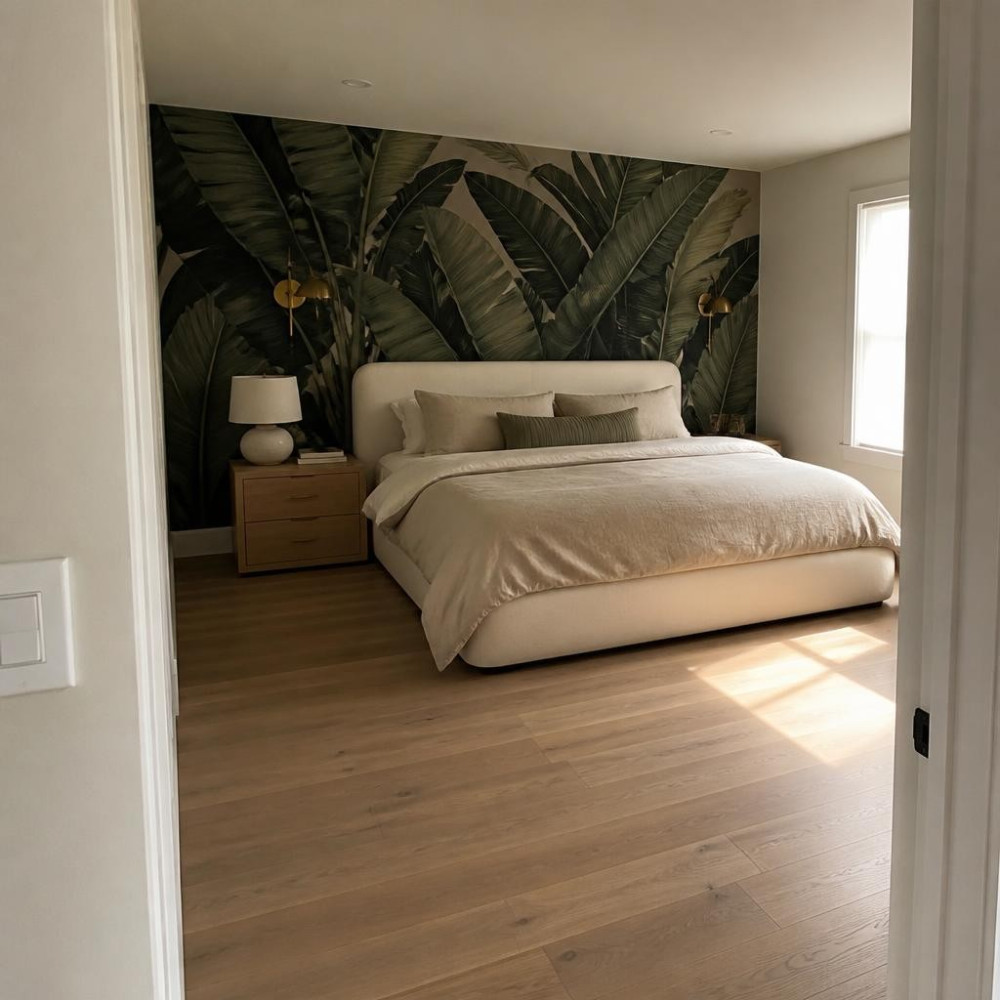
A large-scale botanical or tropical leaf wallpaper on the wall behind your bed creates a lush, almost immersive backdrop without requiring a single actual plant. The scale is key — you want leaves that feel life-size or bigger, not a small repeating pattern that reads busy from across the room. Deep green or inky navy colorways work especially well in bedrooms because they read cozy after dark with warm lamp light bouncing off them. It’s a high-commitment look that pays off every single morning when you wake up to something genuinely beautiful.
Tip: If the print feels overwhelming, keep every other surface — bedding, furniture, rugs — in solid, muted tones so the wall gets to do all the talking.
2. Soft Textured Grasscloth Wallpaper for a Warm Neutral Bedroom
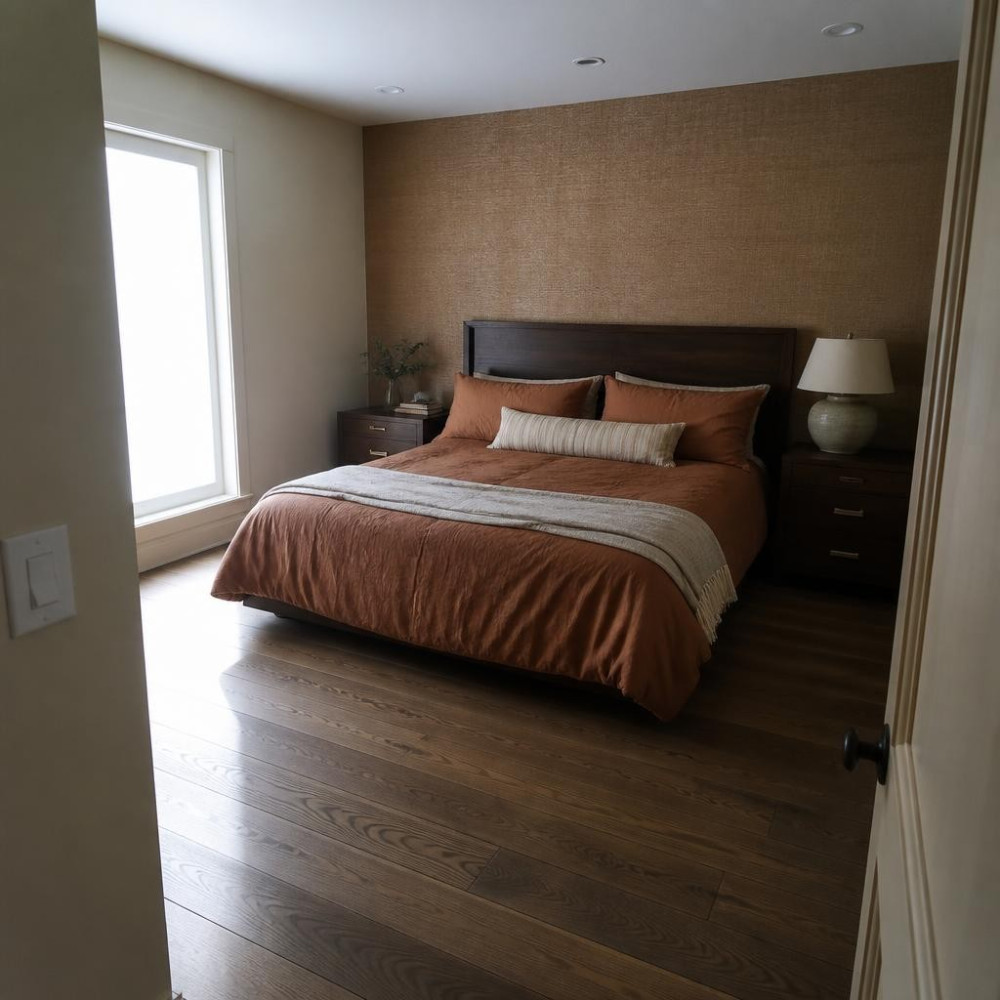
Grasscloth is the wallpaper equivalent of a really good linen shirt — understated, textural, and endlessly flattering next to warm skin tones and natural materials. It doesn’t have a pattern in the traditional sense, which means it can sit comfortably behind almost any style of bed. The woven texture catches light differently throughout the day, so the wall feels alive without competing with anything else in the room. In a neutral master bedroom, it adds the layer of richness that keeps the space from feeling flat.
Tip: Grasscloth shows seams more than printed wallpaper — work with an experienced installer and embrace it as part of the handmade quality, not a flaw.
3. Moody Dark Floral Wallpaper That Makes the Bedroom Feel Like a Hideaway
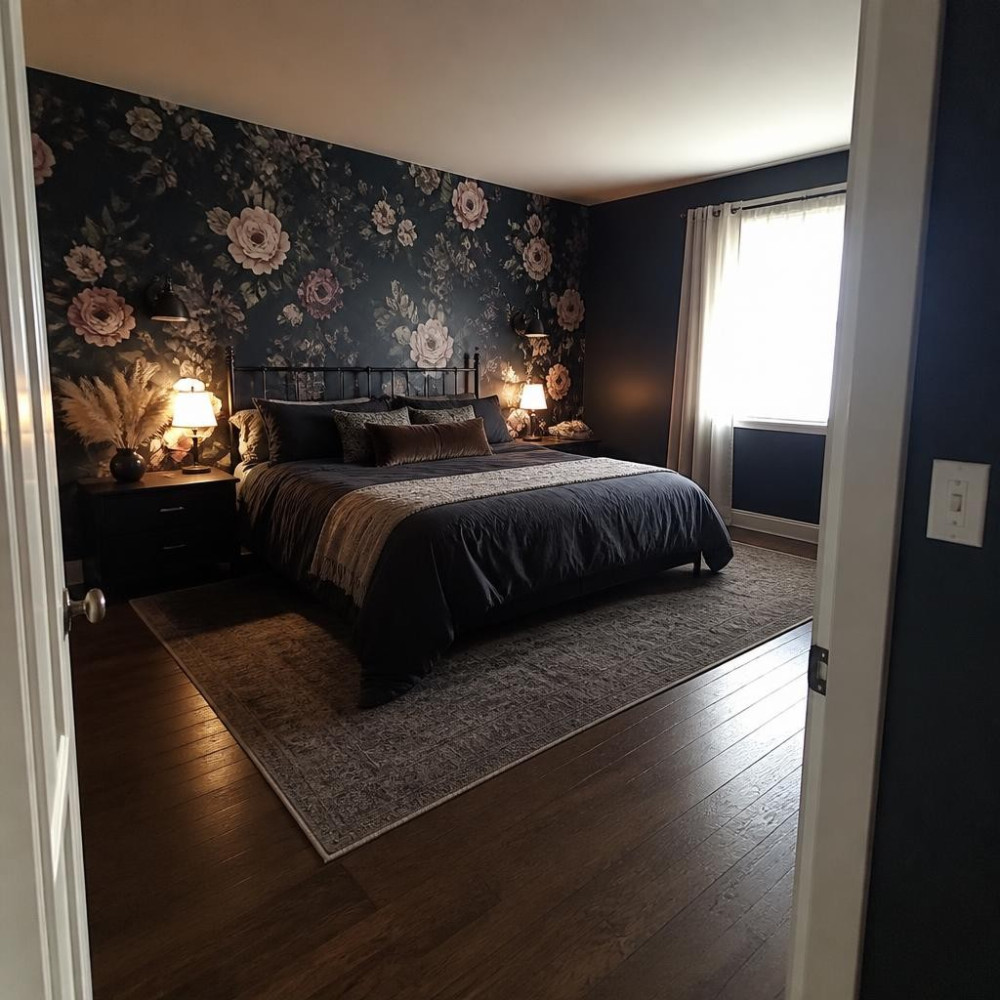
Dark floral wallpaper — think charcoal or forest green backgrounds with painterly flowers in blush, rust, or cream — is having a serious moment in primary bedrooms right now, and it deserves every bit of it. It creates a cocooning effect that makes the bedroom feel genuinely separate from the rest of the house. Pair it with matte black or unlacquered brass hardware and a bed frame in a deep stain, and the whole room starts to feel like a very good boutique hotel. The trick is committing. Half-measures with a dark floral look tentative.
Tip: Pull one secondary color from the wallpaper into your bedding or a throw — that’s how you make the whole room feel intentional rather than accidental.
4. Geometric Wallpaper Pattern for a Minimalist Master Bedroom Look
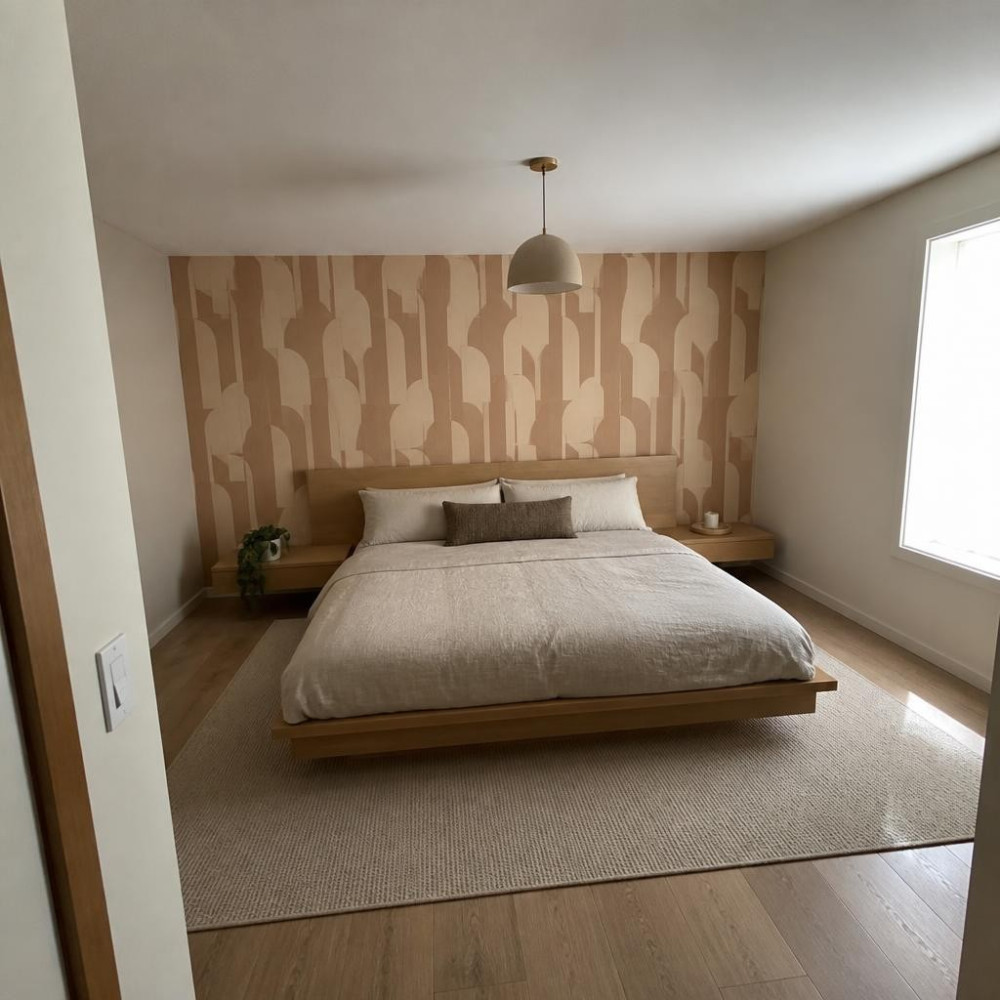
A crisp geometric print — arches, diamonds, thin linear patterns — brings structure to a bedroom that leans minimalist or Scandinavian without adding clutter. It’s a smarter move than most people realize. The pattern gives the eye something interesting to rest on, which means you can keep the rest of the room extremely spare and it still won’t feel empty. Stick to a two-tone colorway for the most timeless result — warm white and clay, sage and cream, or charcoal on white all age beautifully.
Tip: Scale matters enormously with geometrics — choose a repeat that’s proportional to your wall size, not the smallest repeat you can find, or it’ll look like wallpaper meant for a powder room.
5. Chinoiserie Wallpaper for a Timeless, High-Style Bedroom Accent Wall
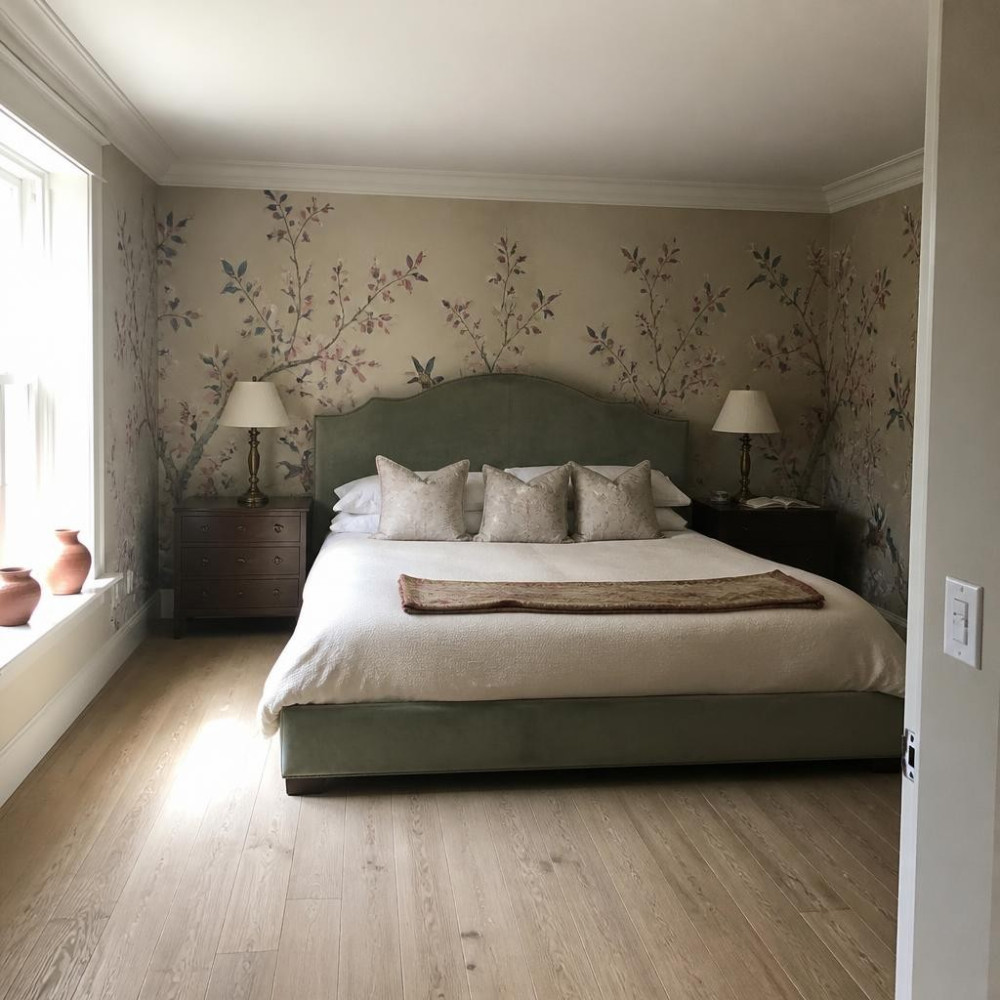
Chinoiserie wallpaper has been around for centuries and it’s not going anywhere, which tells you something. The hand-painted scenes — birds, branches, pagodas, blooms — work in traditional rooms, in maximalist spaces, and even in more contemporary rooms when paired with clean-lined furniture. It reads expensive even when it isn’t, which is part of the appeal. A cream or pale jade background version keeps it lighter and more versatile; a black background version goes full drama and absolutely earns it.
Tip: Chinoiserie is typically a full-scene design, so measure carefully and talk to a wallpaper installer before ordering — you’ll want the focal point of the scene to land right at eye level, not cut off at the ceiling.
6. Linen-Look Paintable Wallpaper Accent Wall for Renters
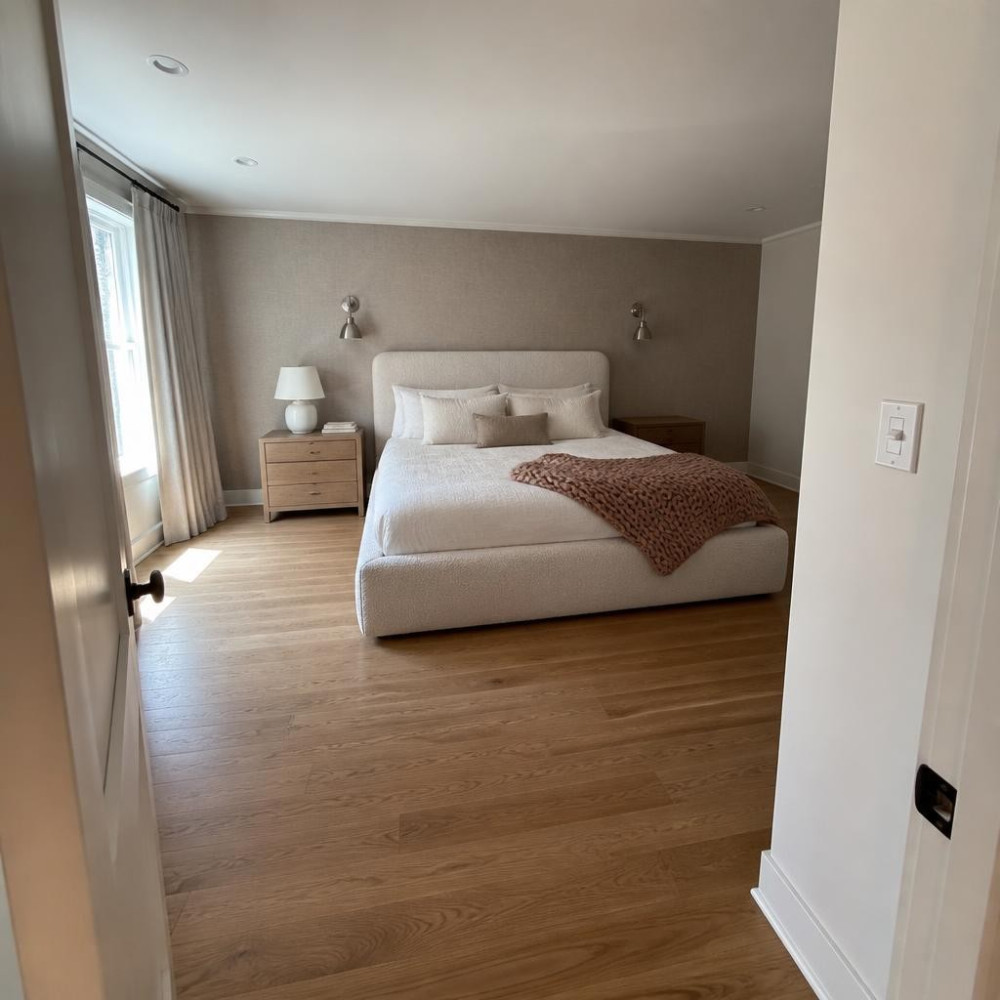
If you’re renting or just not ready to fully commit, a paintable wallpaper with a subtle linen or canvas texture gives you the dimensional wall you’re after without a permanent decision. You can paint it any color you want, repaint it when you’re bored, and take it down more easily than traditional wallpaper. It’s not the most exciting option in the lineup, but it’s genuinely practical — and once it’s painted in a warm clay or soft sage, most people can’t tell it’s not a more involved wall treatment. Peel-and-stick versions in textured finishes have gotten remarkably good in recent years, too.
Tip: Apply two coats of paint and let the texture breathe between coats — rushing this makes the wall look uneven rather than intentionally dimensional.
7. Vertical Stripe Wallpaper to Make Low Ceilings Feel Taller
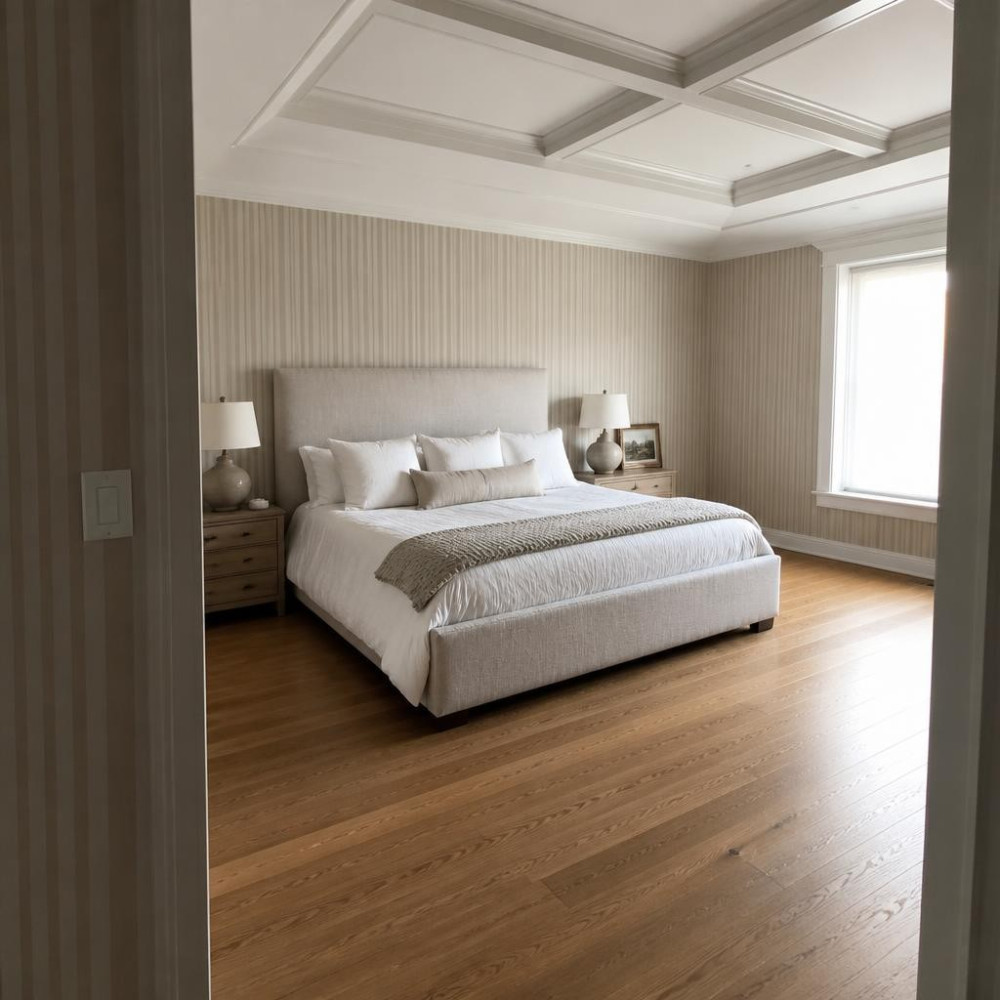
A bedroom with low ceilings is a real design challenge, and vertical stripe wallpaper on the accent wall behind the bed is one of the most effective ways to deal with it. The eye follows the line upward and the room reads taller than it actually is. Thin stripes in two tones that are close in value — rather than high-contrast black and white — feel more elegant and less like a circus tent. It also photographs beautifully, which is a bonus if you ever plan to sell.
Tip: Run the stripes all the way to the ceiling without a chair rail break — any horizontal interruption cuts the visual height you’re trying to create.
8. Abstract Watercolor Wallpaper for an Artistic Bedroom Focal Point
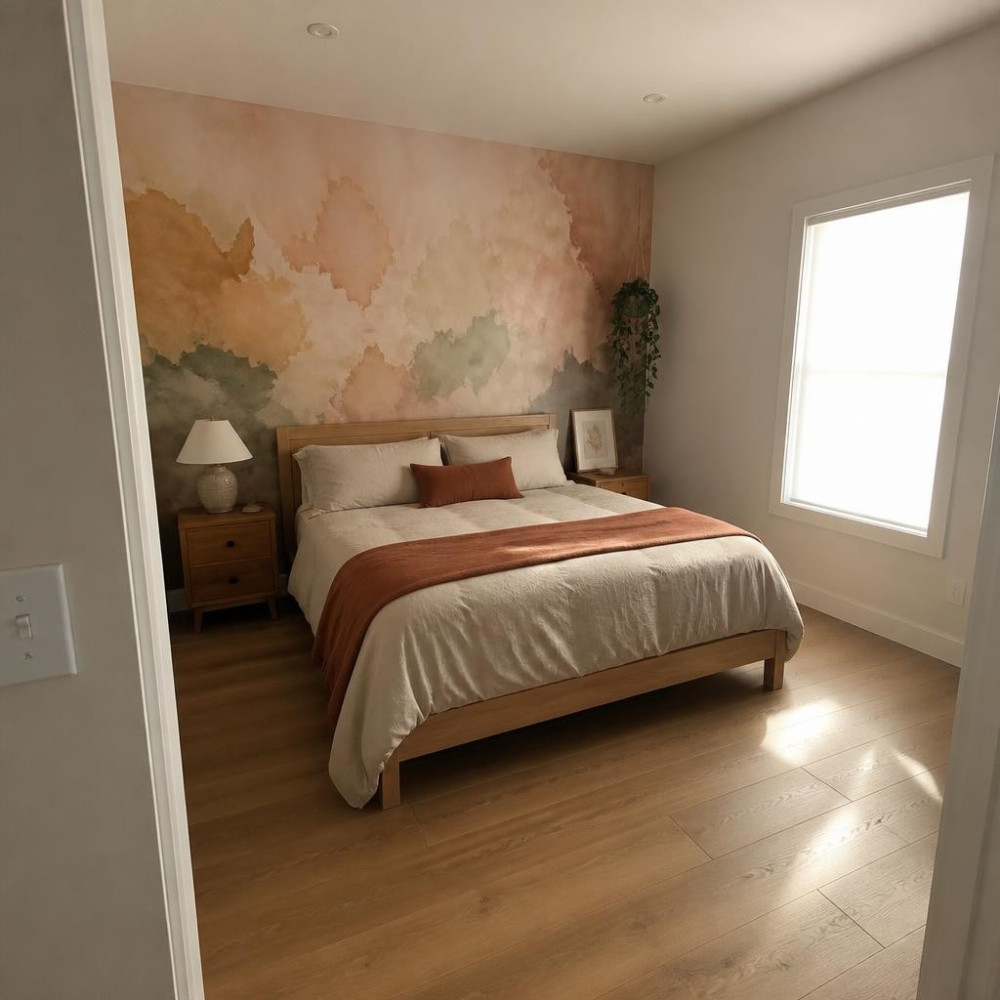
Watercolor-style abstract wallpaper reads more like art than surface treatment, which is exactly why it works so well behind a bed. It brings movement and color to a room without the rigidity of a traditional pattern. The loose, painterly quality feels personal — like you chose it because you loved it, not because it was the safe option. Soft blush, ochre, and sage colorways have the longest legs; they won’t feel dated as quickly as trendy accent colors painted directly on the wall.
Tip: Because watercolor prints are inherently soft, you can layer in bolder furniture without the room feeling cluttered — the wall absorbs rather than fights back.
9. Grasscloth-Style Peel and Stick Wallpaper for a Budget Master Bedroom Refresh
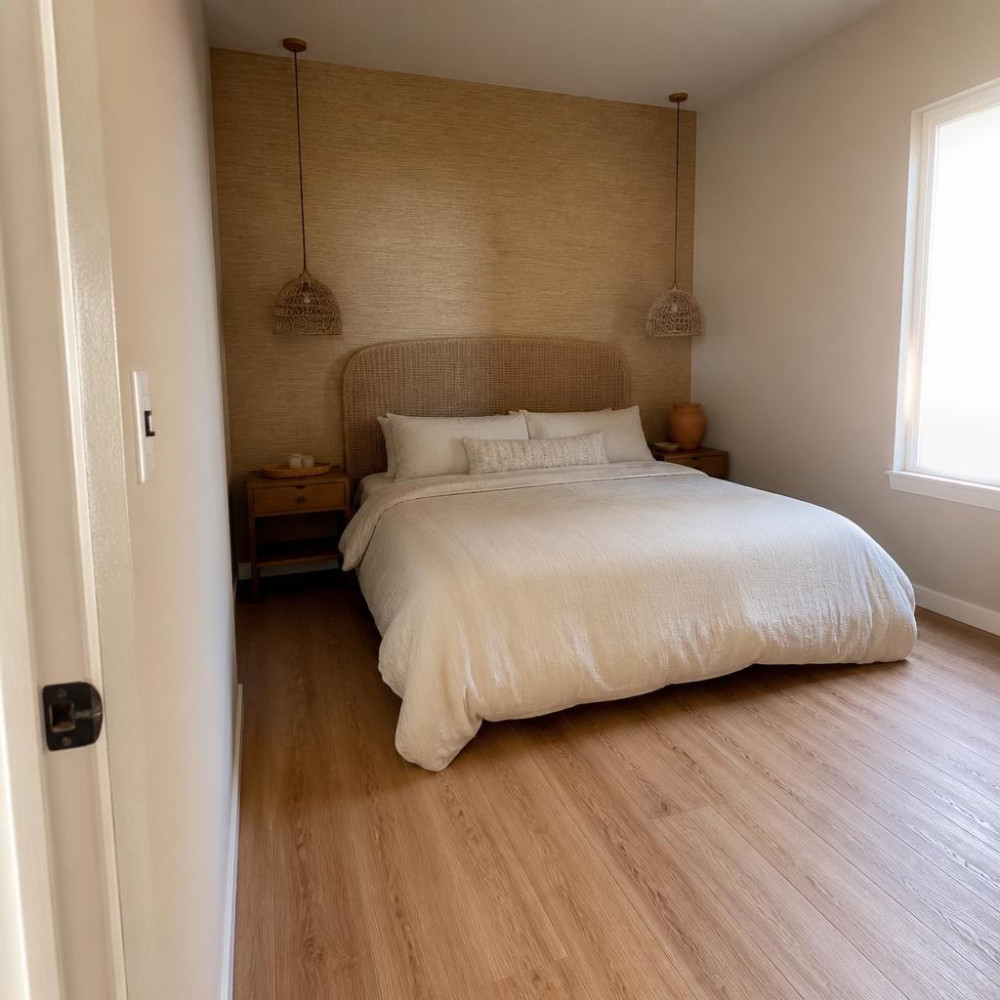
Peel-and-stick wallpaper has crossed the threshold from craft-project territory into genuinely usable design tool. The grasscloth-style versions in particular look remarkably close to the real thing at a fraction of the cost. For a master bedroom accent wall, this is a smart option if you’re not ready to hire a professional installer or if you’re working with a tight budget but still want real visual texture behind the bed. Application matters more than the product itself — work slowly, start from the center, and use a credit card to smooth out air bubbles.
Tip: Test peel-and-stick on an inconspicuous corner of your wall first to check adhesion — some flat paint finishes don’t grip well and you’d rather know before you’re halfway through the wall.
10. Art Deco Wallpaper Pattern for a Glamorous Primary Bedroom
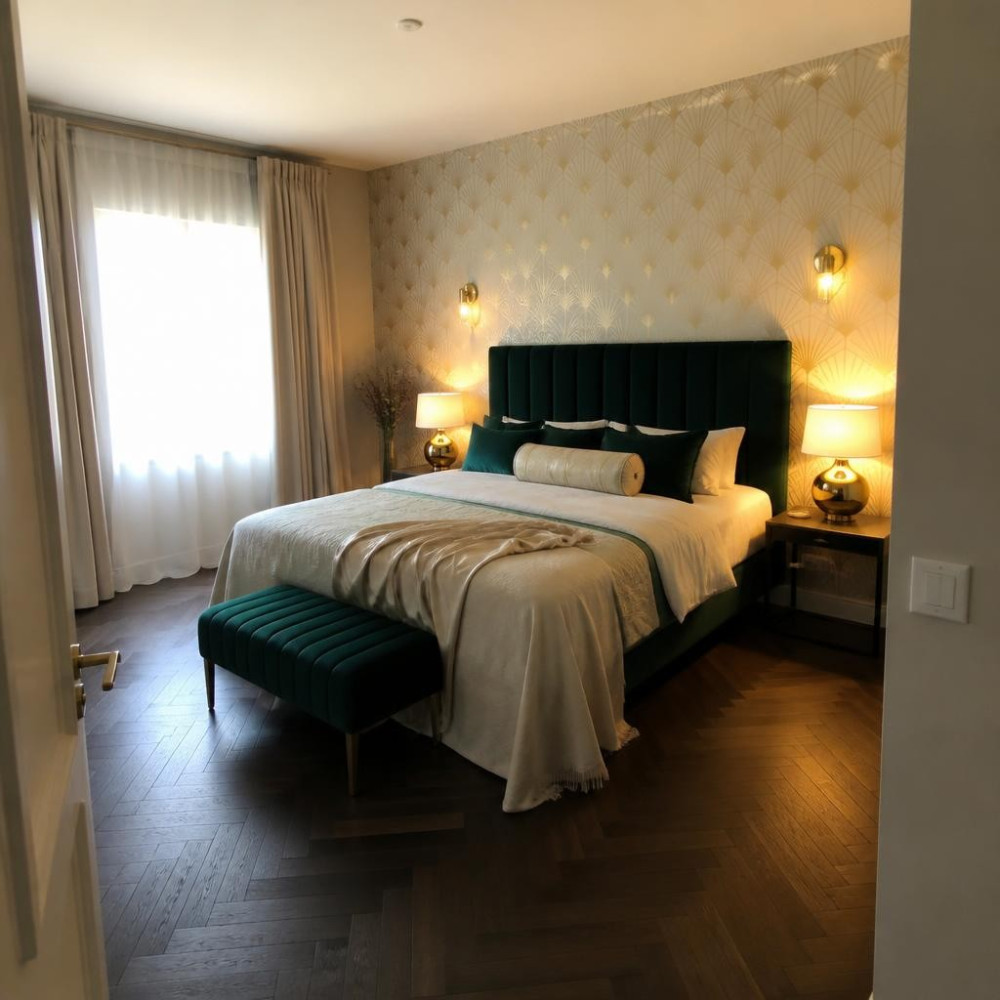
Art Deco wallpaper — fans, sunbursts, gilded lattice — hits a very specific note somewhere between glamour and geometry that’s hard to achieve any other way. It works particularly well in a primary bedroom because the scale of the room can handle the pattern’s confidence. Gold or bronze metallic elements in the print catch lamp light in a way that makes the room feel genuinely luxurious after dark. Pair it with a velvet headboard, layered bedding, and minimal clutter everywhere else.
Tip: In smaller master bedrooms, choose an Art Deco pattern with a white or cream background — it keeps the glamour without closing in the space.
11. Soft Plaid or Ticking Stripe Wallpaper for a Cozy Cottage-Style Bedroom
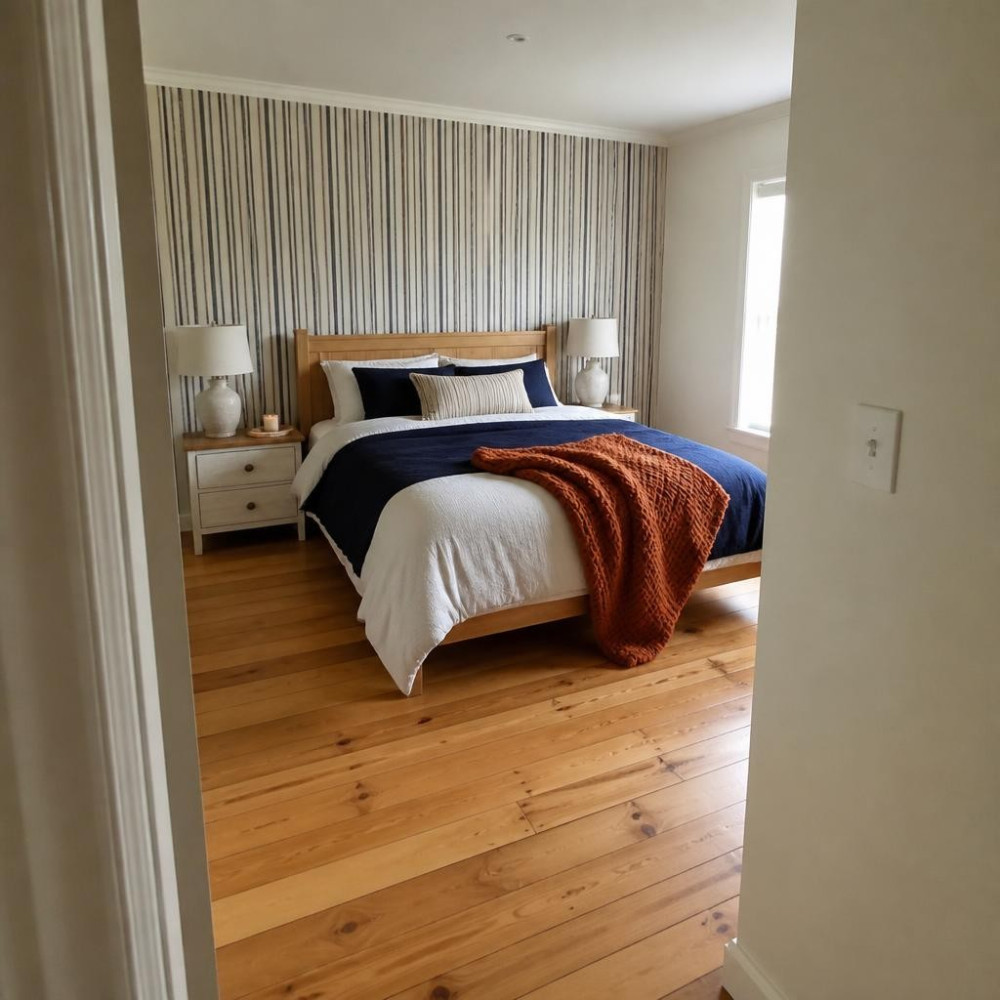
Not every master bedroom needs to feel like a boutique hotel. Sometimes what you’re after is a room that feels like the best version of a weekend cabin — warm, layered, genuinely comfortable. A soft plaid or classic ticking stripe wallpaper gets you there faster than almost anything else. Navy and cream, terracotta and cream, or sage and white all read cozy rather than preppy when paired with linen bedding and natural wood tones. It’s an underrated look that holds up beautifully over time.
Tip: Plaid wallpaper has a pattern repeat that requires careful matching at the seams — factor in at least 15-20% extra wallpaper when ordering so you’re not short at the last panel.
12. Stone or Concrete Look Wallpaper for a Minimalist Master Bedroom Accent Wall
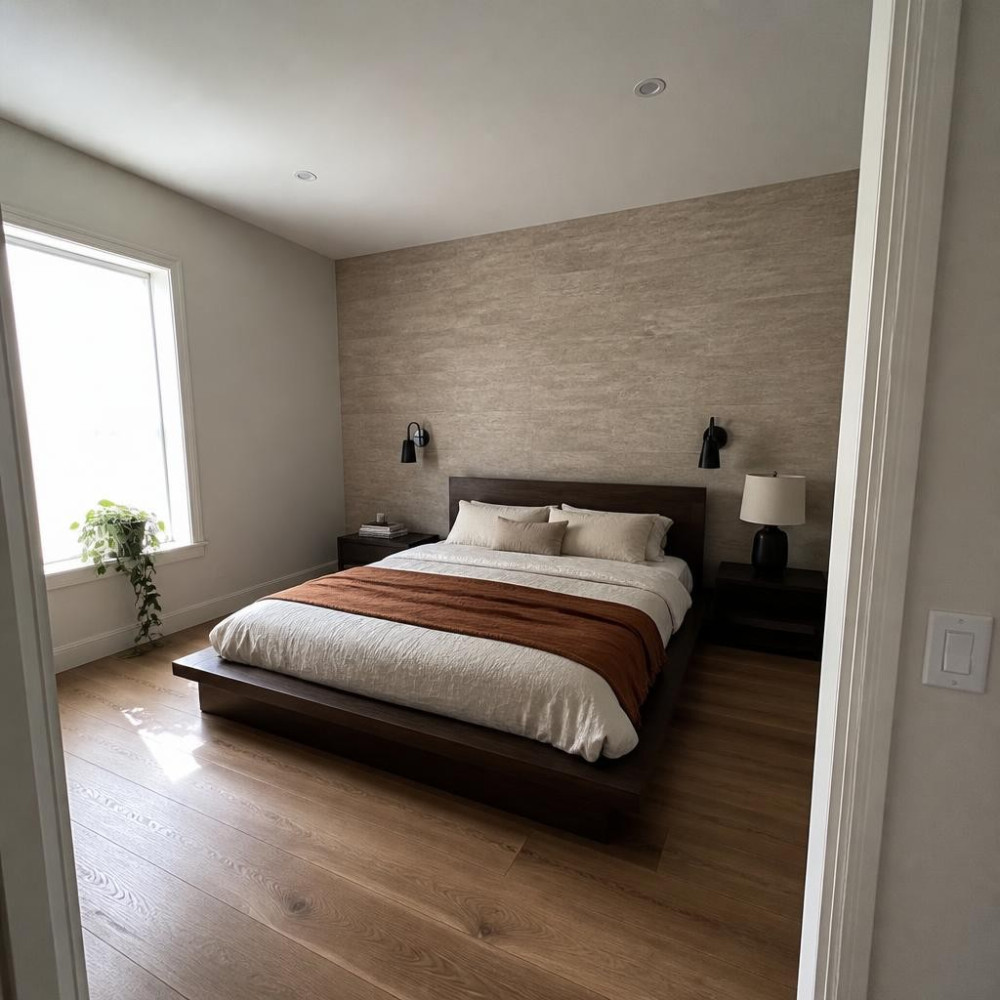
If actual stone or polished concrete walls are out of budget or out of scope, wallpaper that mimics those textures does a convincing job at a fraction of the complexity. It reads calm and grounded — no pattern, no color statement, just texture and material interest. This works especially well in rooms that lean toward a more masculine or minimal aesthetic, or in a space where the art, bedding, and furniture are doing the heavy lifting. The wall becomes a backdrop, not a feature, which is sometimes exactly what a room needs.
Tip: Choose a warm-toned concrete or travertine look over a cool grey one — grey concrete wallpaper can flatten a bedroom and make it feel clinical rather than calm.
Frequently Asked Questions
What wall should wallpaper go on in a master bedroom?
The wallpaper accent wall in a master bedroom almost always works best on the wall directly behind the bed — the headboard wall. It creates a natural focal point that anchors the bed as the center of the room. Avoid papered side walls unless the room has an unusual layout, and skip the window wall entirely since the light will compete with the wallpaper’s color and pattern.
Is peel and stick wallpaper good enough for a bedroom accent wall?
Peel and stick wallpaper has improved significantly and can work well on a bedroom accent wall, especially if you’re renting or testing a look before committing. The most important factor is your existing paint finish — it needs to be clean, fully cured, and not overly flat or chalky or the adhesive won’t hold. For a permanent installation in a home you own, traditional paste wallpaper still gives you a more polished result and longer lifespan.
How do I choose a wallpaper pattern that won’t look dated in a few years?
Wallpaper accent wall ideas that age best tend to use either classic patterns with a long history — botanicals, stripes, chinoiserie, textural grasscloth — or abstract designs in neutral colorways that don’t lean hard into a single trend moment. Avoid patterns that are tied too closely to one very specific aesthetic that’s peaking right now, because peak moments are usually followed by a correction. If you love a bold, trendy print, going with a removable peel-and-stick version is a reasonable hedge.
Can I wallpaper just one wall in a master bedroom, or does it look unfinished?
A single wallpapered accent wall in a master bedroom is a completely intentional and widely used design approach — it doesn’t look unfinished when it’s done with intention. The key is making sure the papered wall has a clear reason to be the feature wall, which in most bedrooms means it’s the one your bed sits against. Keeping the adjacent walls in a complementary paint color, rather than leaving them stark white, helps the single papered wall feel like a design decision rather than an incomplete project.
How much wallpaper do I need for a bedroom accent wall?
To figure out how much wallpaper you need for a master bedroom accent wall, measure the wall’s height and width in feet, multiply them together for square footage, and then add at least 15-20% for waste, trimming, and pattern matching. Wallpaper with a large pattern repeat requires even more — sometimes up to 30% extra — so always check the repeat measurement on the product listing before ordering. It’s far better to order slightly more than you need than to run short mid-installation with a pattern that may have gone out of stock.