This post contains affiliate links and is a member of the Amazon Services LLC Associates Program. If you make a purchase using one of these affiliate or Amazon links, I may receive compensation at no extra cost to you.
17 Stunning Master Bedroom Accent Wall Variations You’ll Want to Copy
Master bedroom accent wall variations are having a full-on identity moment right now, and honestly it’s about time. The flat, one-color-painted-headboard-wall that dominated every apartment in 2012 is done. What’s replacing it is far more interesting: tactile, layered, architectural — walls that feel like they were designed rather than defaulted into. Whether you’re working with a tiny primary suite or a sprawling room with 10-foot ceilings, there’s a headboard wall treatment here that fits your space, your budget, and your actual life.
This list covers 17 bedroom feature wall ideas across every material and finish worth considering in 2026 — limewash, shiplap, wood slat paneling, board and batten, wallpaper murals, Venetian plaster, fluted panels, and more. You’ll also get a bolded takeaway for each one so you can actually use this, not just pin it. A quick note before you scroll: nearly every designer agrees the headboard wall is the right wall to treat. It frames the bed, greets you when you walk in, and doesn’t stare back at you while you’re trying to sleep. Start there.
What Designers Are Saying
The conversation around master bedroom accent wall variations has shifted significantly heading into 2026 — and the most credible voices in the space are all landing on the same basic point: texture over flat color, always.
According to MeltFlex’s 2026 accent wall design guide, the accent wall “is not dead — it evolved.” The flat-painted single-color accent wall that dominated the 2010s is out, but textured accent walls — wood slats, limewash plaster, stone cladding, wallpaper murals, and architectural paneling — are more popular in 2026 than accent walls have ever been. That tracks with what we’re seeing on the ground. The specific treatment matters enormously now in a way it simply didn’t five years ago.
On the color and material side, designers are landing on warmth and earthiness rather than bold contrast. As interior designer and architect Daniel Chenin told AOL Lifestyle’s 2026 bedroom trend roundup, “Instead of a simple accent wall, entire rooms will be saturated in a single hue — clay pinks, dusty plums, and deep sages — with tonal shifts across walls, textiles, and furniture.” The idea isn’t to isolate one wall in a jarring color anymore — it’s to use a feature wall as the anchor for a fully considered tonal mood in the room. That’s a more sophisticated ask, but the results are dramatically better.
1. Limewash Plaster Headboard Wall
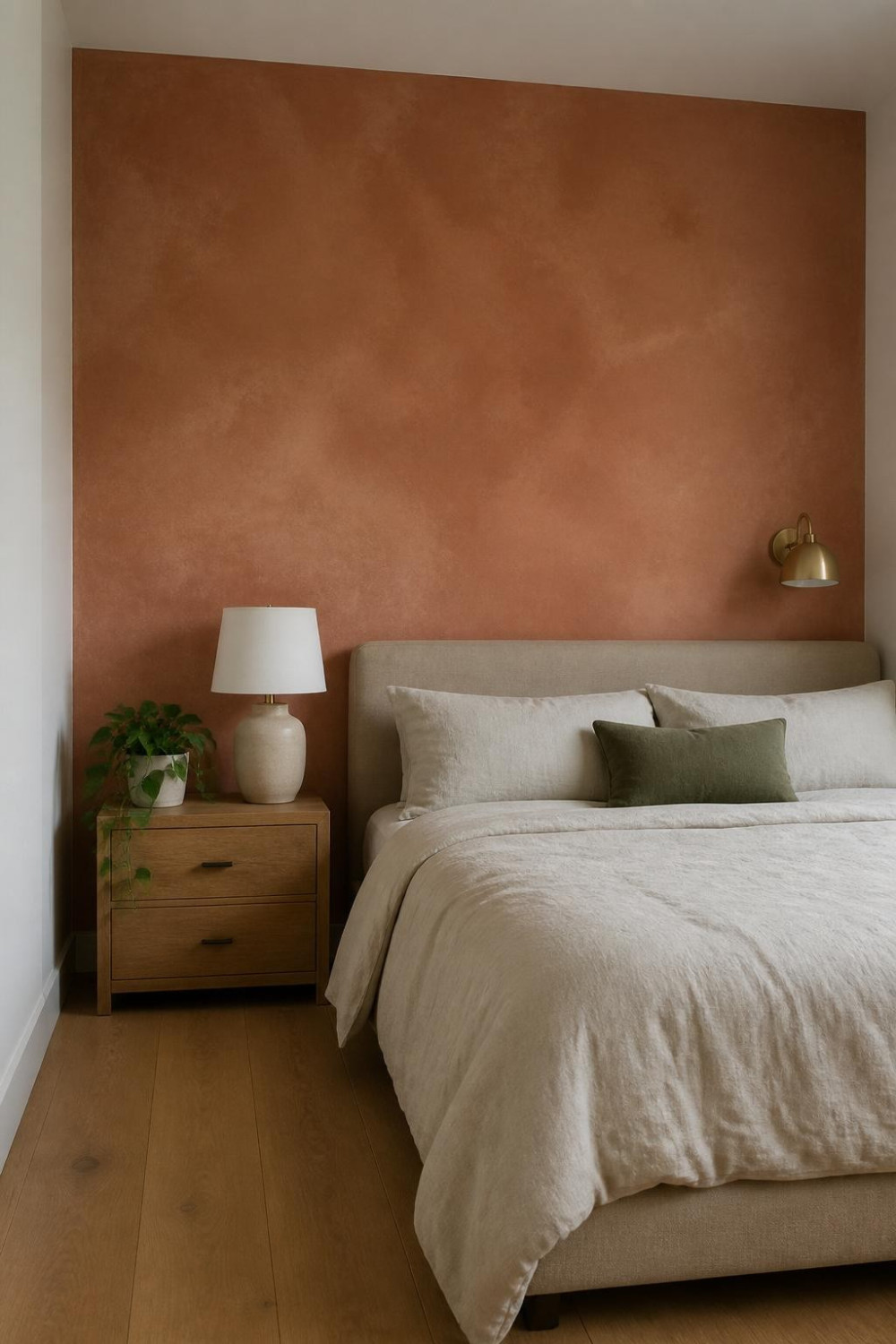
Limewash is the finish that keeps showing up everywhere, and there’s a real reason for that. It’s an ancient technique where diluted lime paint is layered onto a wall in brushed coats, creating a soft, cloudy texture that shifts with the light throughout the day. In a master bedroom, it reads as quiet luxury — almost fabric-like, never flat. It pairs beautifully with linen bedding, warm wood tones, and muted brass hardware without competing with any of them. It’s also low-VOC and breathable, which matters more than people realize in a room where you spend eight hours a night. Colors in earthy terracotta, sage, and warm white are the most popular for 2026 bedrooms.
Tip: Apply in two or three thin coats rather than one heavy pass — the variation between layers is exactly what makes it look expensive.
2. Vertical Wood Slat Panel Wall Behind the Bed
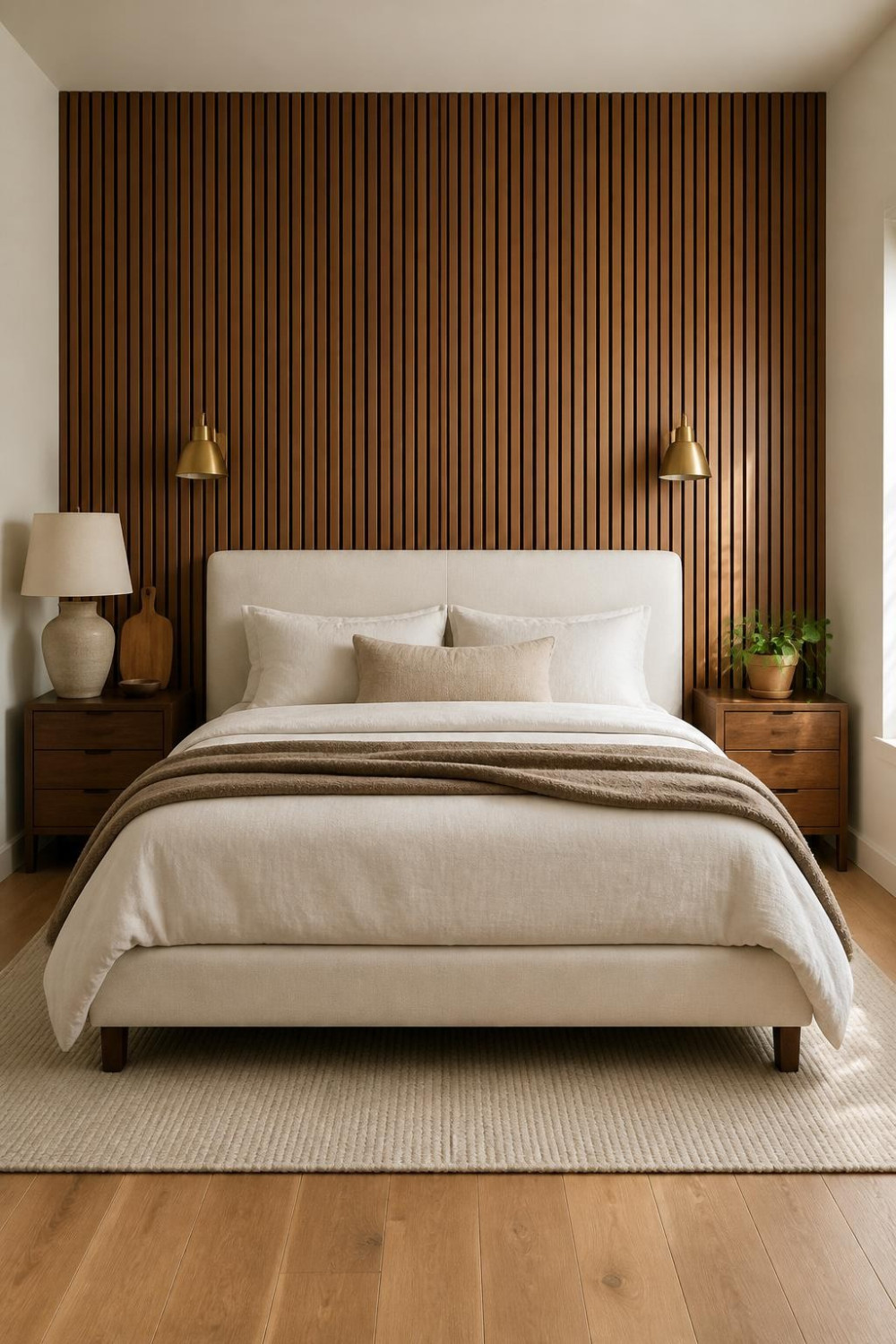
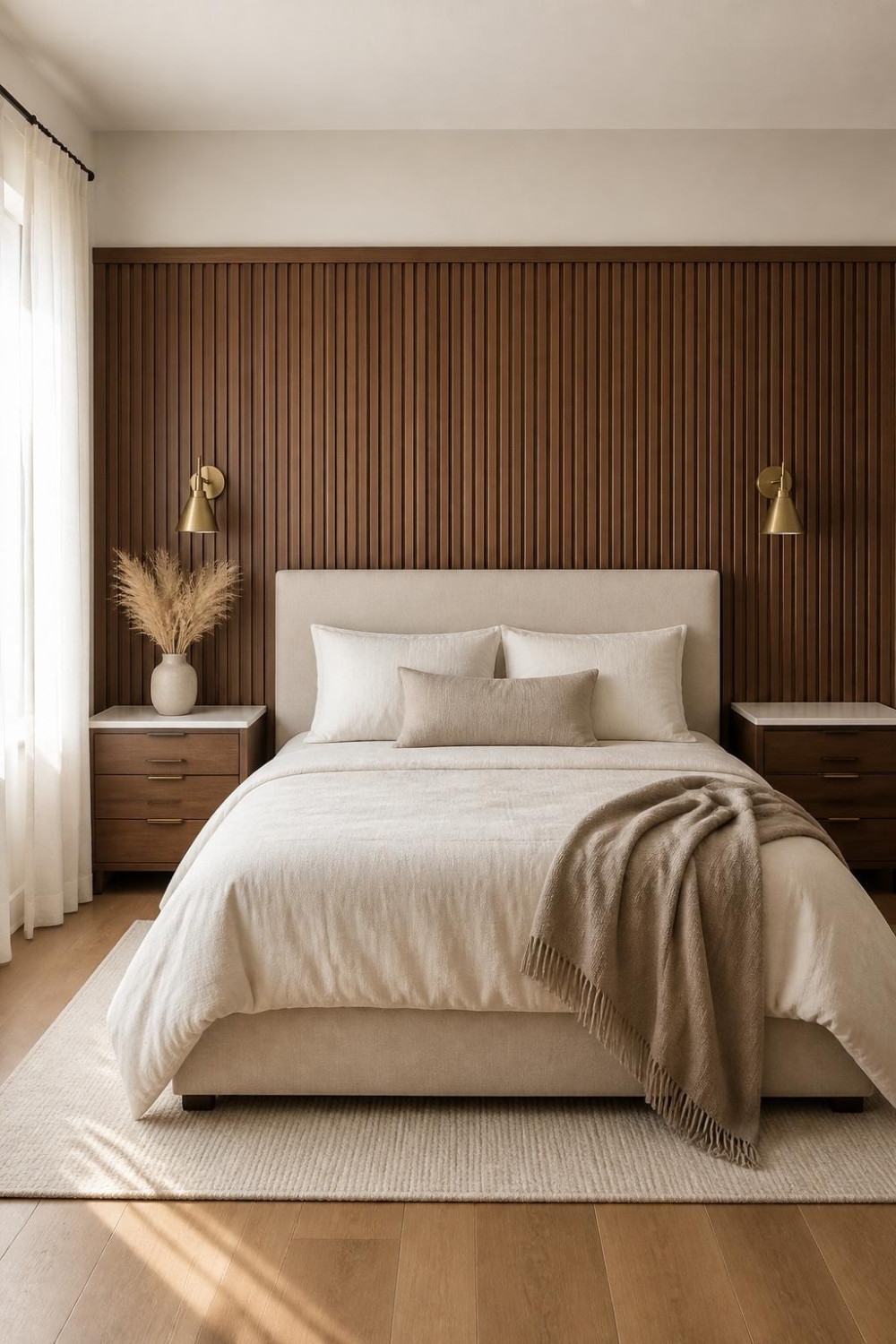
Wood slat walls are arguably the dominant master bedroom accent wall trend of 2026, and when you see a good one, it’s obvious why. Evenly spaced vertical slats — usually walnut, white oak, or MDF in a stained finish — create a rhythm on the wall that adds warmth without adding visual weight. The slats draw the eye upward, making low-ceiling rooms feel taller. They also have a secondary bonus: decent acoustic absorption, which is genuinely nice in a bedroom. You can buy pre-made slat panel kits now and install them in a weekend, which makes this one of the more approachable statement wall ideas for a primary suite.
Tip: Leave a 3/4-inch gap between the wall and slats so they cast a subtle shadow line — that’s what gives the wall its depth.
3. Moody Dark Paint with Architectural Molding — a Classic Bedroom Feature Wall Done Right
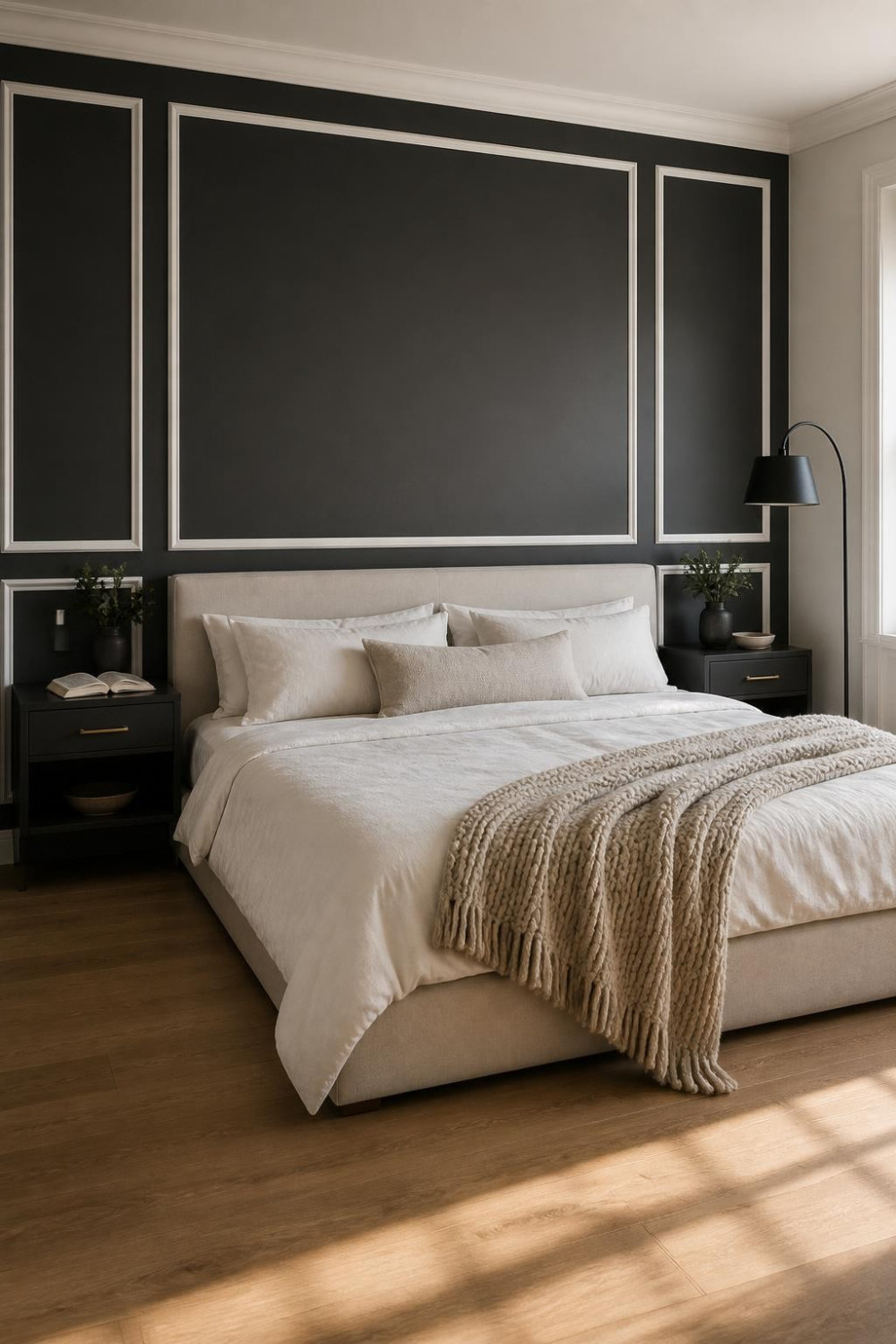
Dark paint on a headboard wall gets a bad reputation because it’s usually done halfway. One navy wall with three white walls — that’s the version that looks like you ran out of time. The version that works does two things: it picks a deep, complex color (Iron Ore, Tricorn Black, Inkwell, or a rich chocolate brown), and it adds architectural detail so the wall has surface interest beyond just the hue. Crown molding at the top, simple picture-frame paneling, or even a painted-on chair rail all give the eye somewhere to land. The result is cocooning and elegant rather than just dark.
Tip: Match your trim and molding to the wall color instead of keeping it white — it reads more intentional and genuinely luxurious.
4. Board and Batten Headboard Wall in a Saturated Color
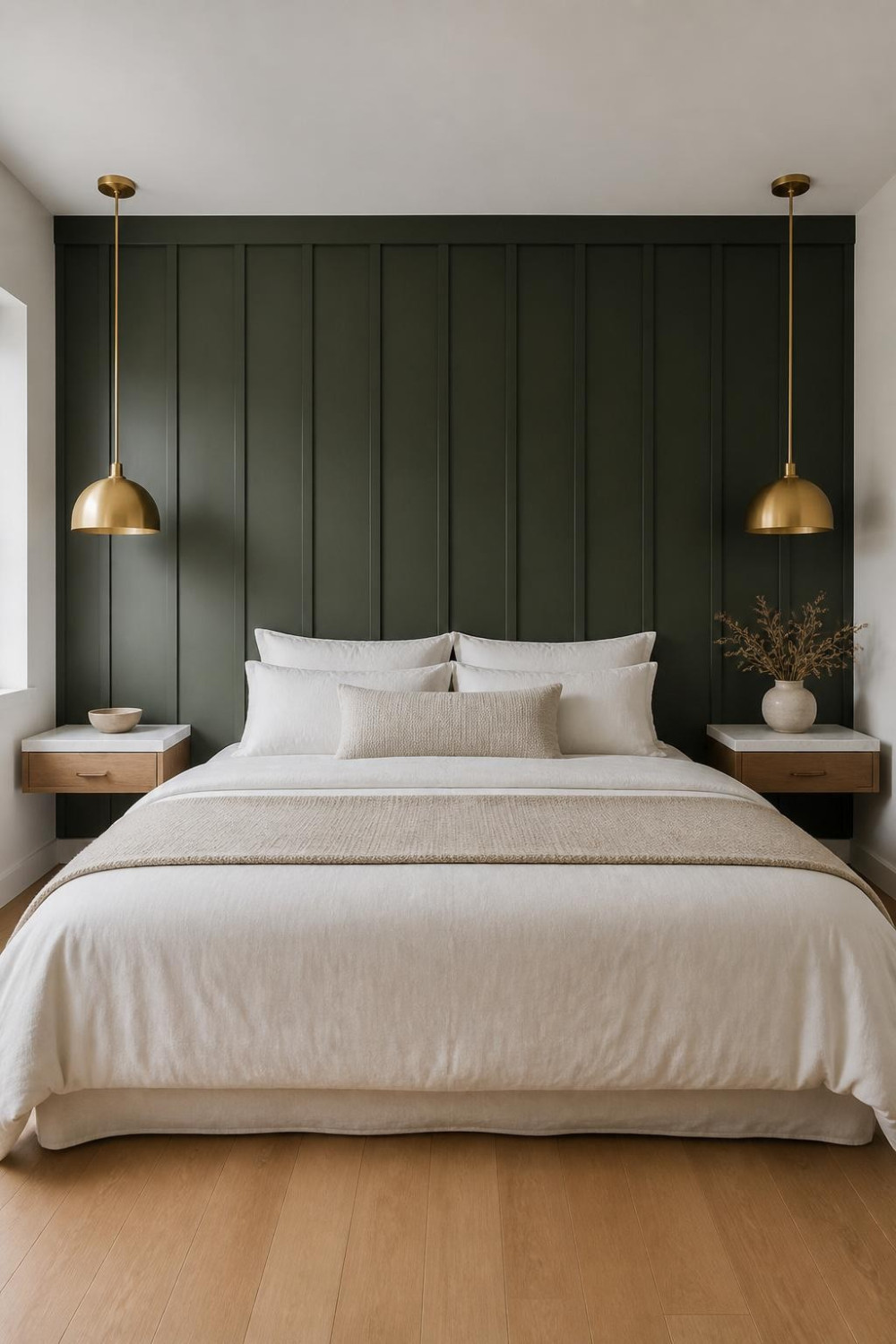
Board and batten is the treatment that keeps bridging the gap between farmhouse and contemporary — and when it’s painted in a deep, saturated color instead of the expected white, it becomes something else entirely. Forest green, navy, chocolate brown, or dusty plum on a board-and-batten wall behind the bed gives you architectural texture and color payoff at the same time. The vertical battens add dimension so it doesn’t fall into the flat-one-color trap that makes accent walls feel dated. It’s also one of the more DIY-friendly options on this list if you’re comfortable with a nail gun and a level.
Tip: Keep the batten spacing consistent — 8 to 12 inches apart reads cleanest, and symmetry from the center of the wall outward matters more than the exact measurement.
5. Venetian Plaster for a Bedroom Statement Wall with Subtle Sheen
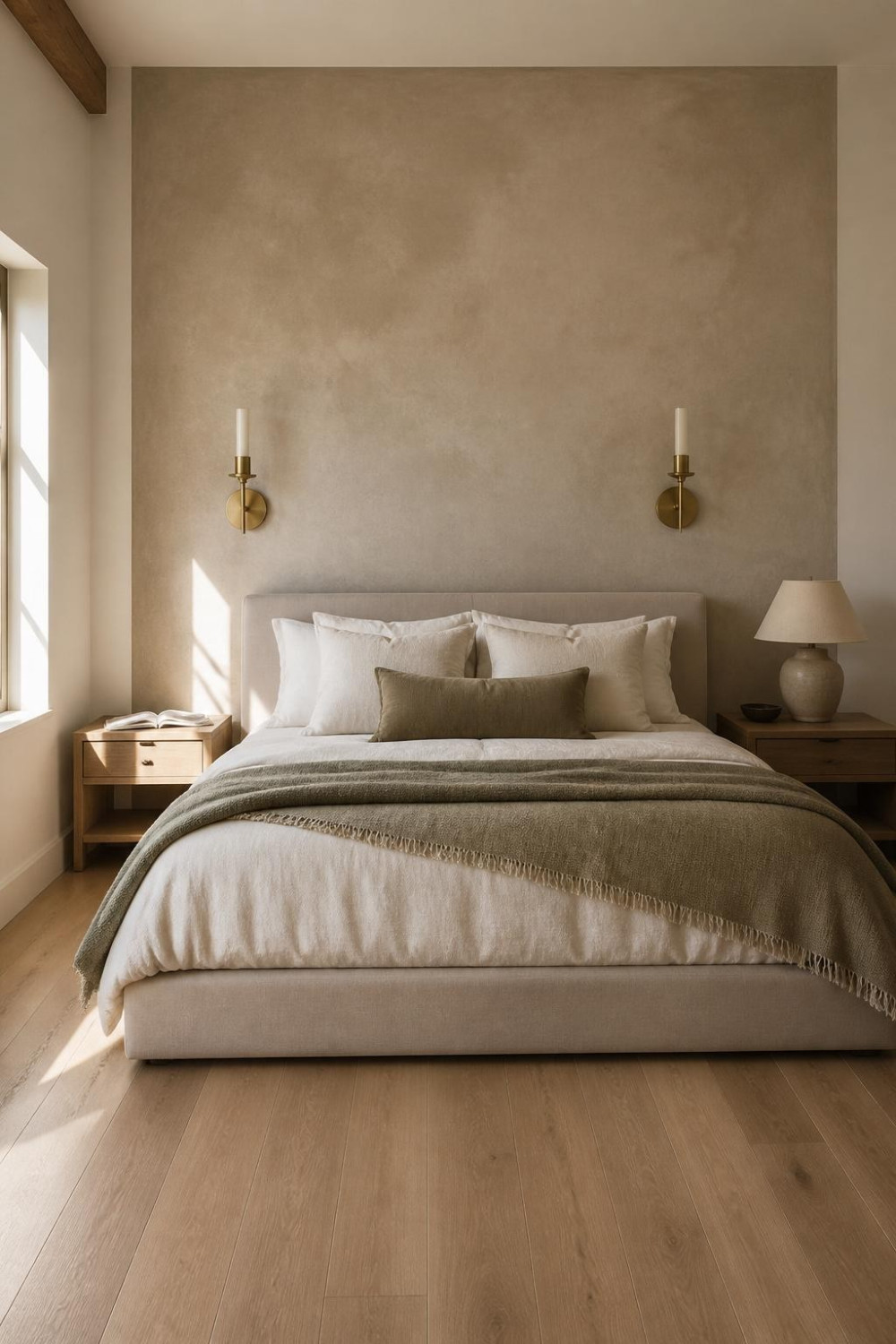
Venetian plaster is the elevated cousin of limewash, and it deserves its own slot because the finish is different enough to matter. Where limewash is soft and matte with a chalky depth, Venetian plaster is burnished to a low sheen that catches light and changes throughout the day. It’s more labor-intensive to apply correctly — usually a job for a skilled plasterer — but the result is a wall that genuinely looks like it belongs in a boutique hotel rather than a box-store bedroom. Neutral tones like warm greige, dusty blush, or creamy off-white work best in a primary suite because they add sophistication without pulling against your existing furniture.
Tip: Don’t try to DIY this one unless you’ve practiced — uneven burnishing is very obvious in raking light, and fixing it means re-doing the whole wall.
6. Shiplap Behind the Bed — the Farmhouse Bedroom Accent Wall That Actually Holds Up
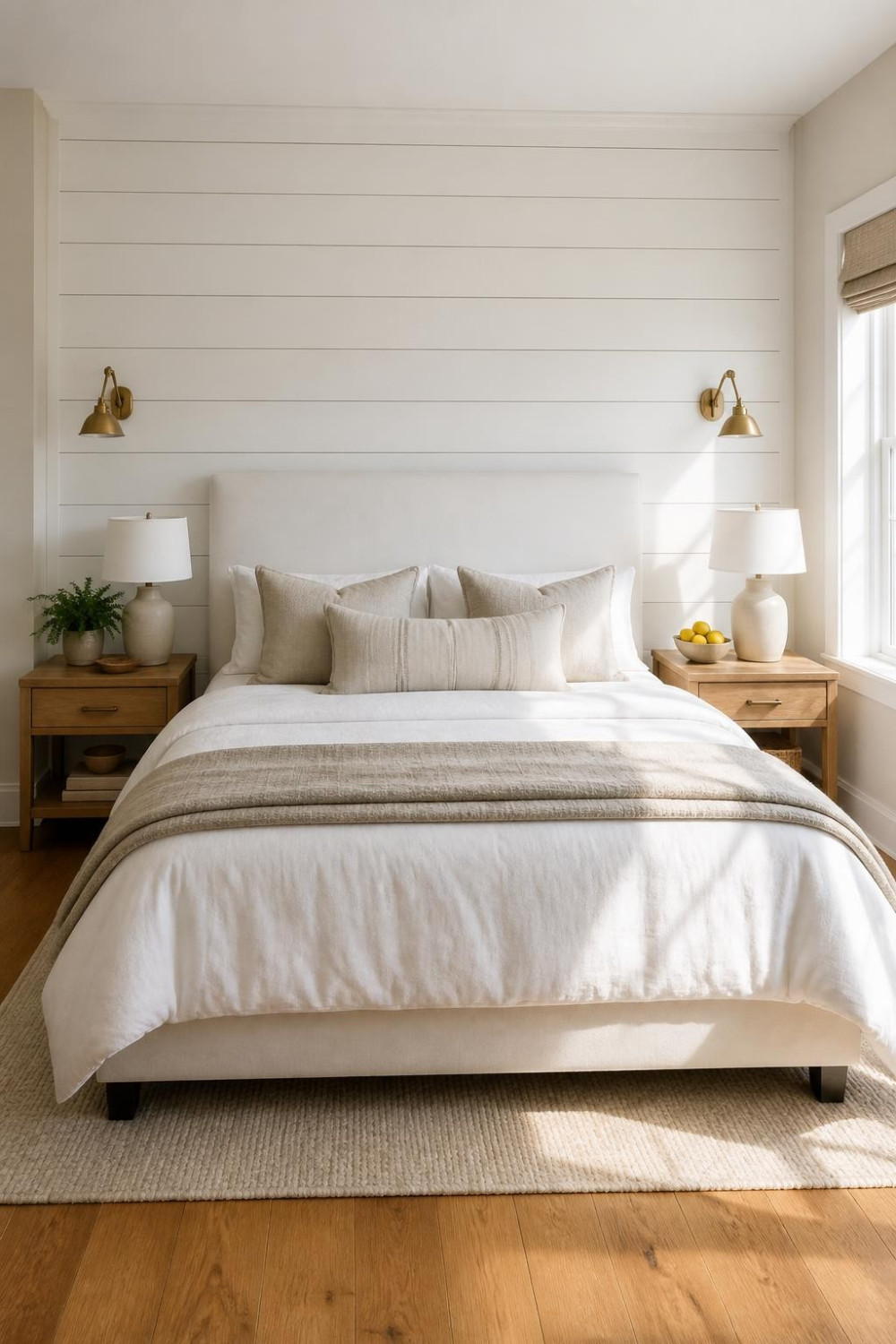
Shiplap has been declared over about fourteen times, and yet here it is. The reason it keeps surviving trend cycles is that it’s genuinely good — horizontal planks add texture, a slight shadow line between each board, and that particular quality of warmth that painted drywall never quite achieves. In a master bedroom, white-painted shiplap reads as coastal and airy. Dark-painted shiplap (try black, deep navy, or charcoal) reads as moody and sophisticated. The key is scale: go with a wider plank (4 to 6 inches) to avoid a fussy, cluttered look on the headboard wall.
Tip: White-painted shiplap on just the headboard wall with warm wood furniture throughout the room is one of the most consistently well-balanced primary suite looks out there.
7. Botanical Wallpaper Mural on the Headboard Wall
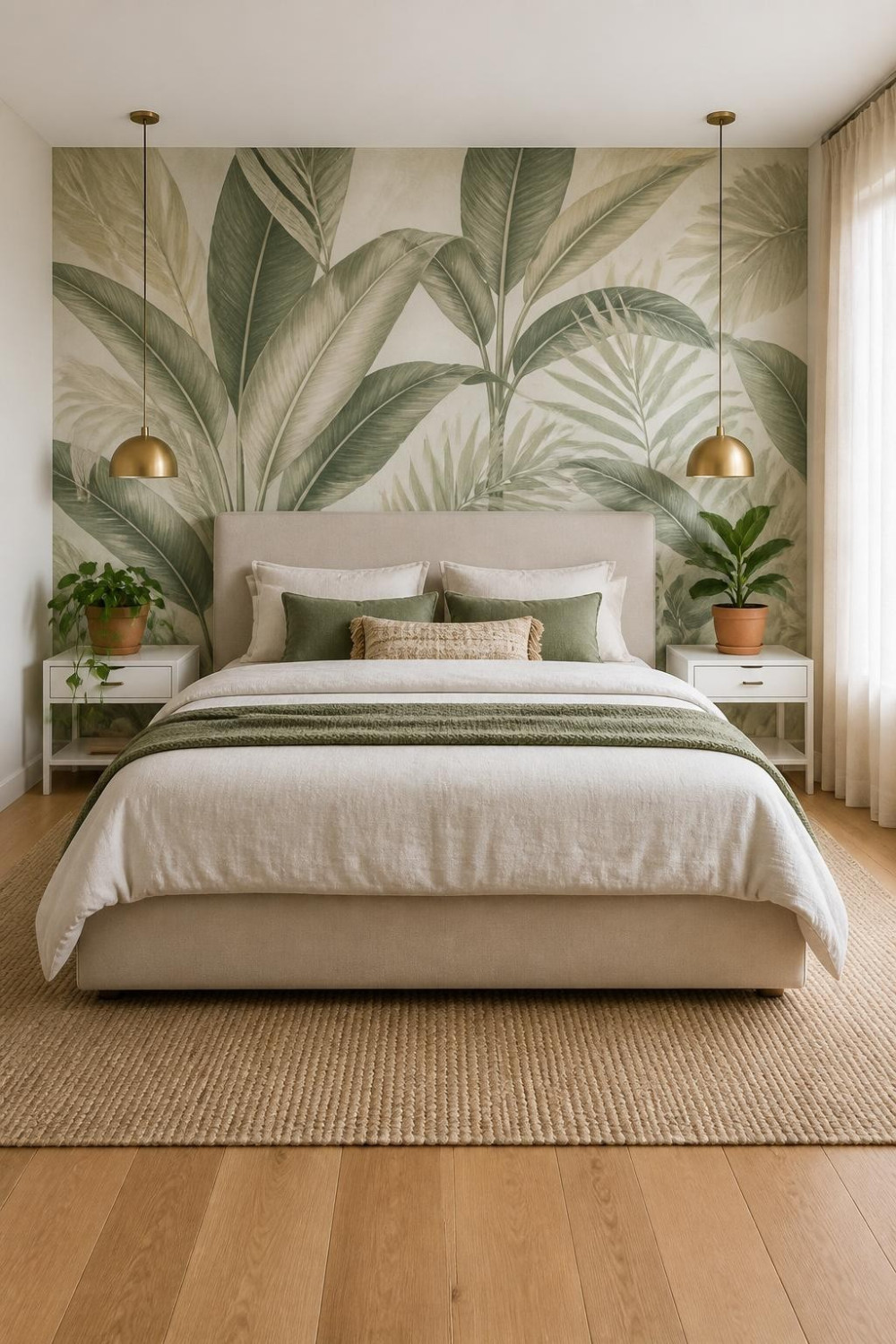
A full-wall mural behind the bed is one of those ideas that sounds maximalist but executes quietly when you pick the right image. Botanical prints — think large-scale tropical leaves, abstract watercolor botanicals, or soft blush florals — bring pattern and color without the repetition of traditional wallpaper, which can feel dizzying on a single wall. The mural functions as oversized art, framing the bed and eliminating the need for anything else on that wall. It’s also one of the fastest variations here: peel-and-stick mural wallpaper has become genuinely good, and you can do the whole headboard wall in an afternoon.
Tip: Scale matters more than color — choose a mural where the main motif (a large leaf, a branch, a bloom) is at least 18 inches wide so it reads as art, not fabric.
8. Fluted or Ribbed Panel Wall for a Sculptural Primary Suite
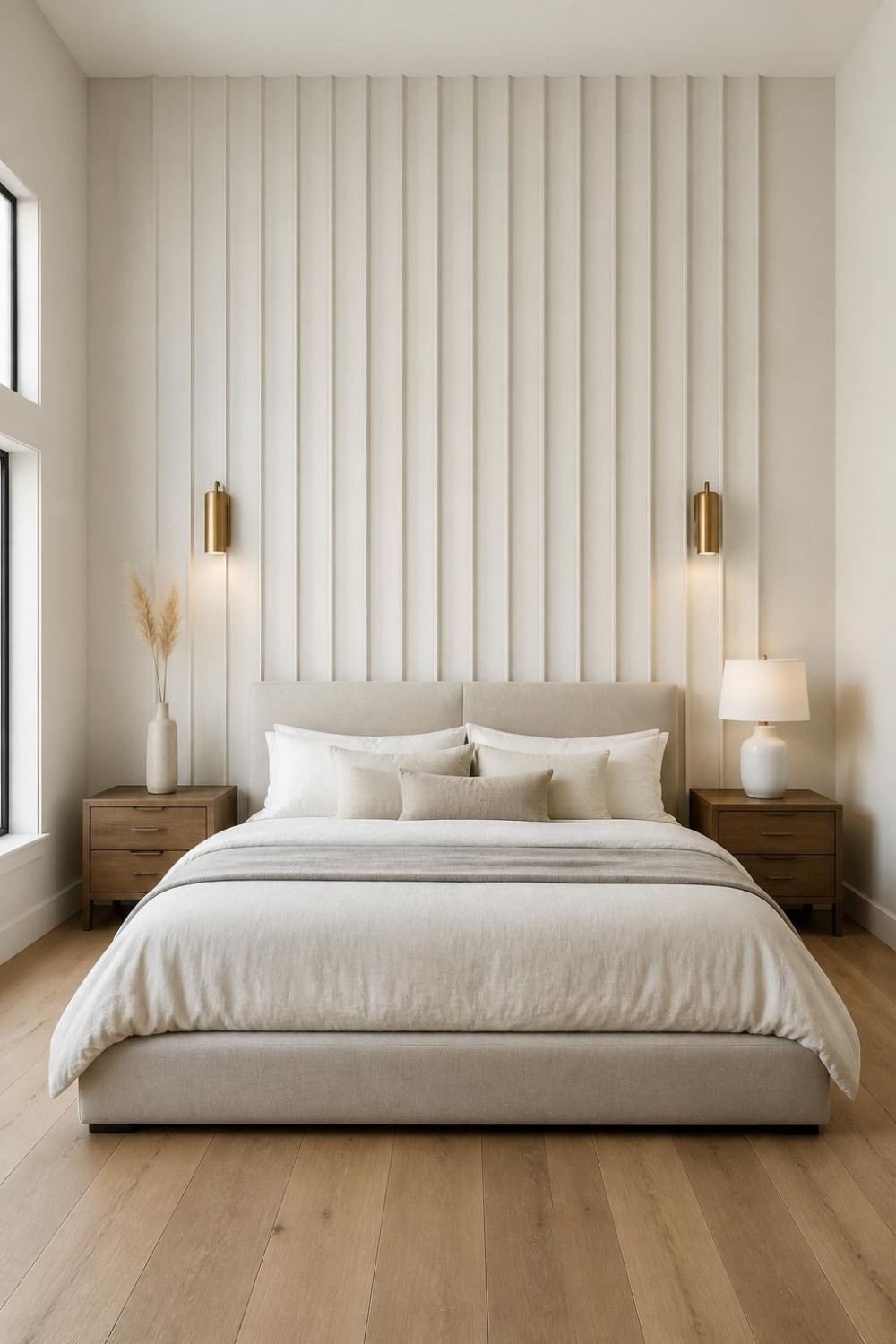
Fluted panels — those vertically ridged panels that look like a series of thin columns running floor to ceiling — have moved firmly out of commercial lobbies and into residential master bedrooms, and honestly they look incredible there. The ridges catch light differently at different times of day, creating a wall that feels almost three-dimensional. MDF fluted panels are available in easy-install kits now, and a full headboard wall can be done in a day. Paint them out in a warm white or a soft greige and they read as architectural and custom. Go with a darker stained wood version for something that edges toward moody luxury.
Tip: Paint your fluted wall the same color as the adjacent walls rather than contrasting — the texture already does the heavy lifting, and matching tones look more intentional.
9. Sage Green Painted Accent Wall — the Most Popular Bedroom Color in 2026
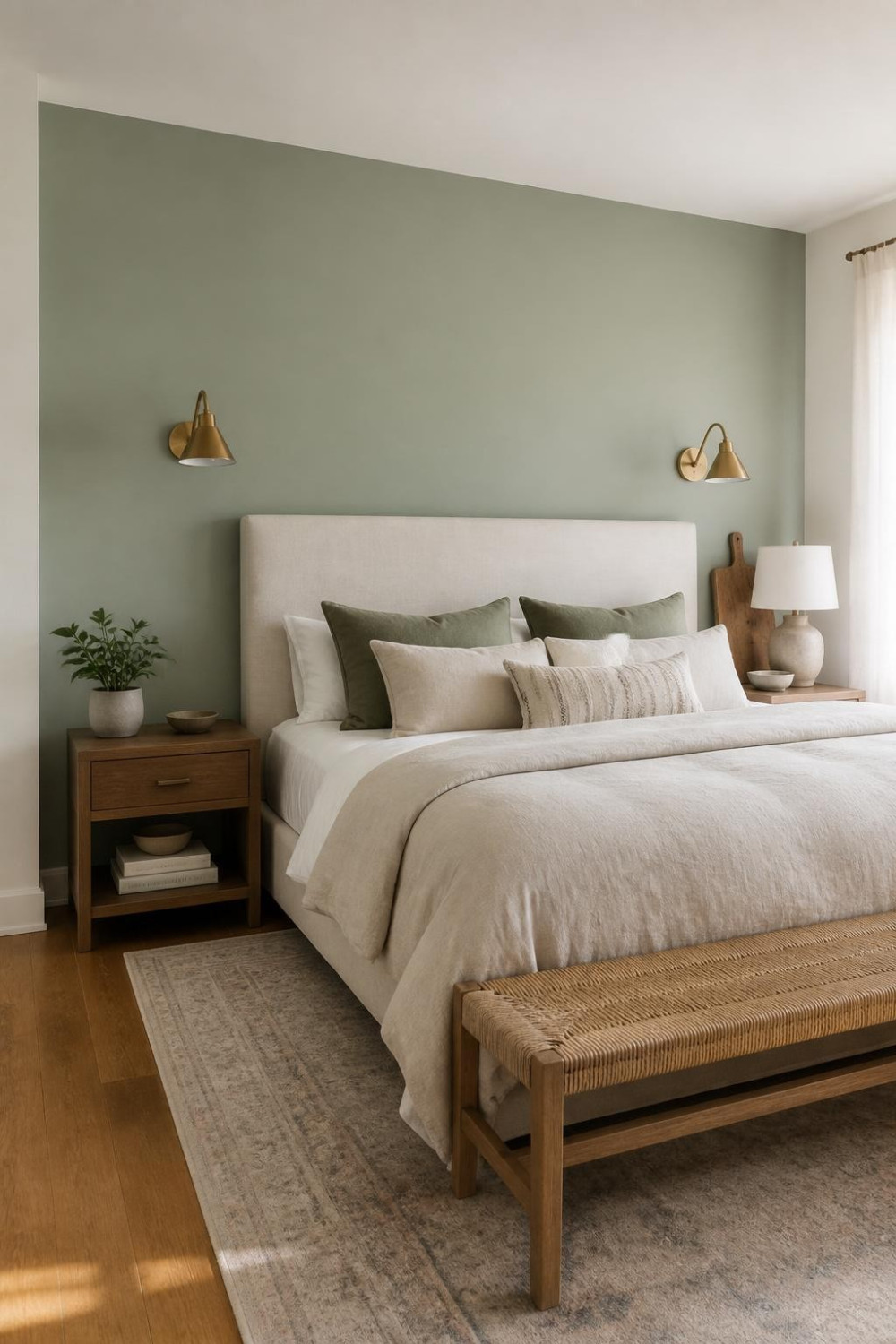
Sage green is having a legitimate moment and it’s not hard to see why. It’s calm without being boring, earthy without being heavy, and it sits comfortably next to warm whites, natural linen, and wood tones — which is basically the entire language of modern bedroom design right now. A sage green headboard wall works in both small and large primary suites because the hue doesn’t advance the way navy or deep green does. It’s one of the few colors that reads differently in daylight versus evening lamp light, picking up greener notes in the morning and shifting warmer at night.
Tip: Benjamin Moore’s Saybrook Sage HC-114 and Sherwin-Williams’ Softened Green SW 6178 are two of the most livable versions — neither reads blue, neither reads olive, they just read quiet.
10. Reclaimed Wood Plank Wall Behind the Headboard for Organic Texture
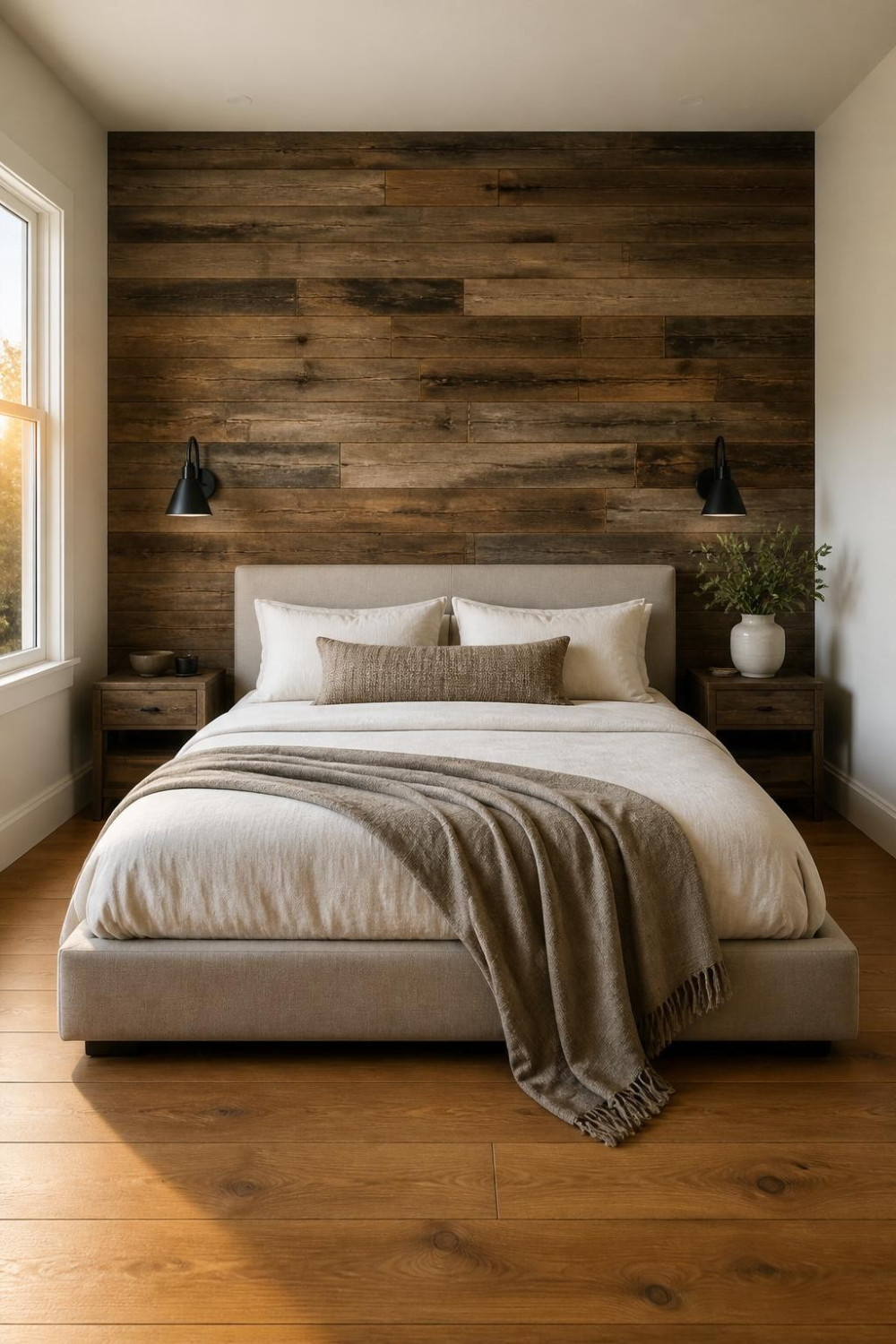
Reclaimed wood planks — rough, varied, aged — bring a texture that nothing synthetic really replicates. Each plank is different in tone and grain, which means the wall reads as collected and organic rather than patterned and planned. That quality of natural imperfection is precisely what makes it so visually rich in a master bedroom. It tends to work best in rooms that already lean warm: warm wood floors, natural fiber rugs, linen or cotton bedding. Pair it with matte black or oil-rubbed bronze hardware rather than brass to lean into the rawness.
Tip: Seal reclaimed wood with a clear matte finish — it keeps the rough texture and earthy tone while preventing dust from settling into the grain.
11. Geometric Trim Molding Wall — DIY-Friendly Architectural Detail
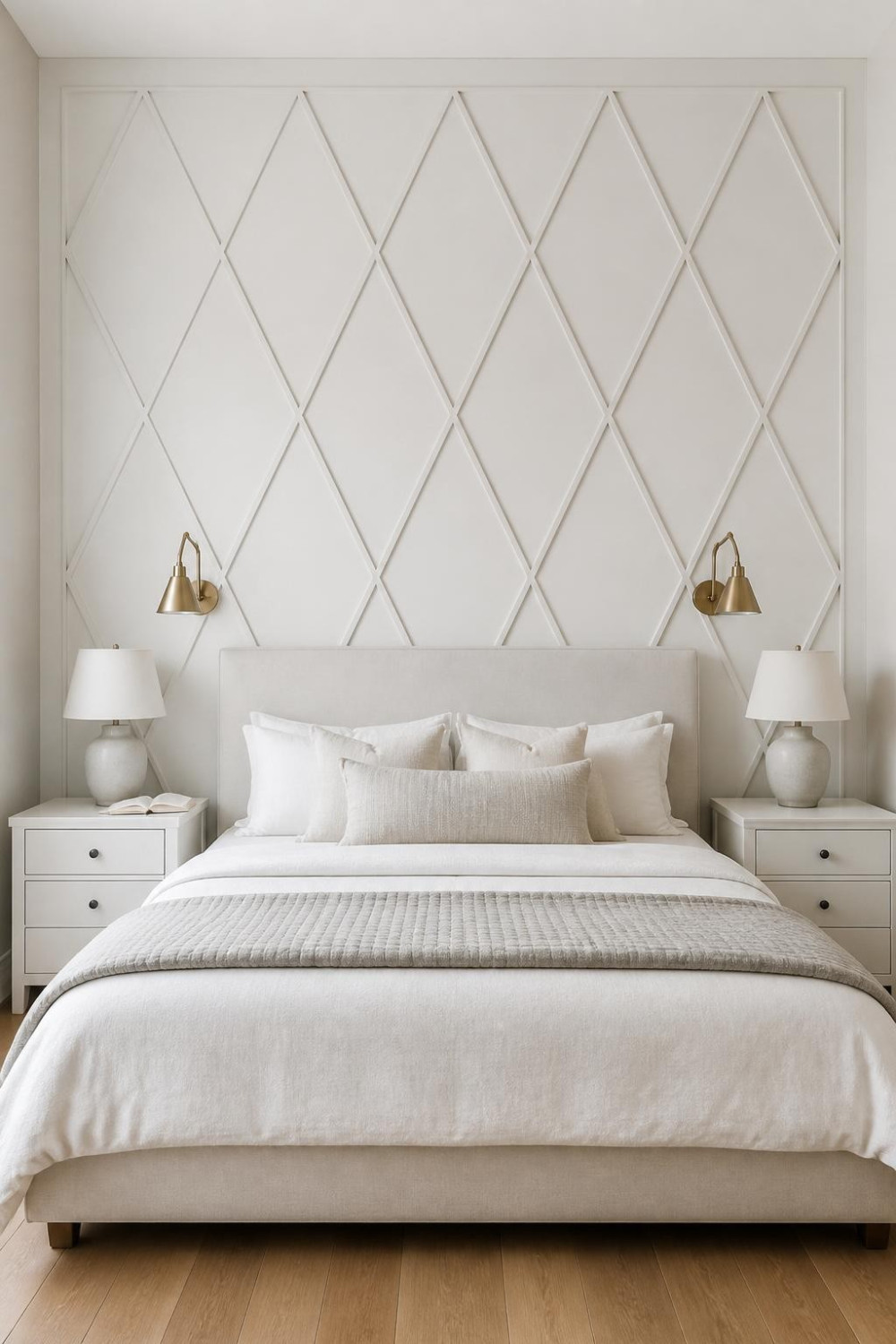
Geometric molding walls are what you get when you want the look of a custom built-in without the custom built-in price tag. The idea is simple: apply MDF strips or wood trim in a repeating geometric pattern directly to the drywall, then paint the whole surface one color so the shapes read as shadow and depth rather than applied decoration. Diamonds, hexagons, grid patterns, herringbone — all of them work. The paint-out step is critical. If the trim is a different color from the wall, it looks like craft project. If it’s all one tone, it looks like architecture.
Tip: Use a laser level to lay out your pattern before you commit a single nail — geometry is unforgiving and even a half-degree of tilt will read obviously once it’s on the wall.
12. Color-Drenched Accent Wall Extended to the Ceiling
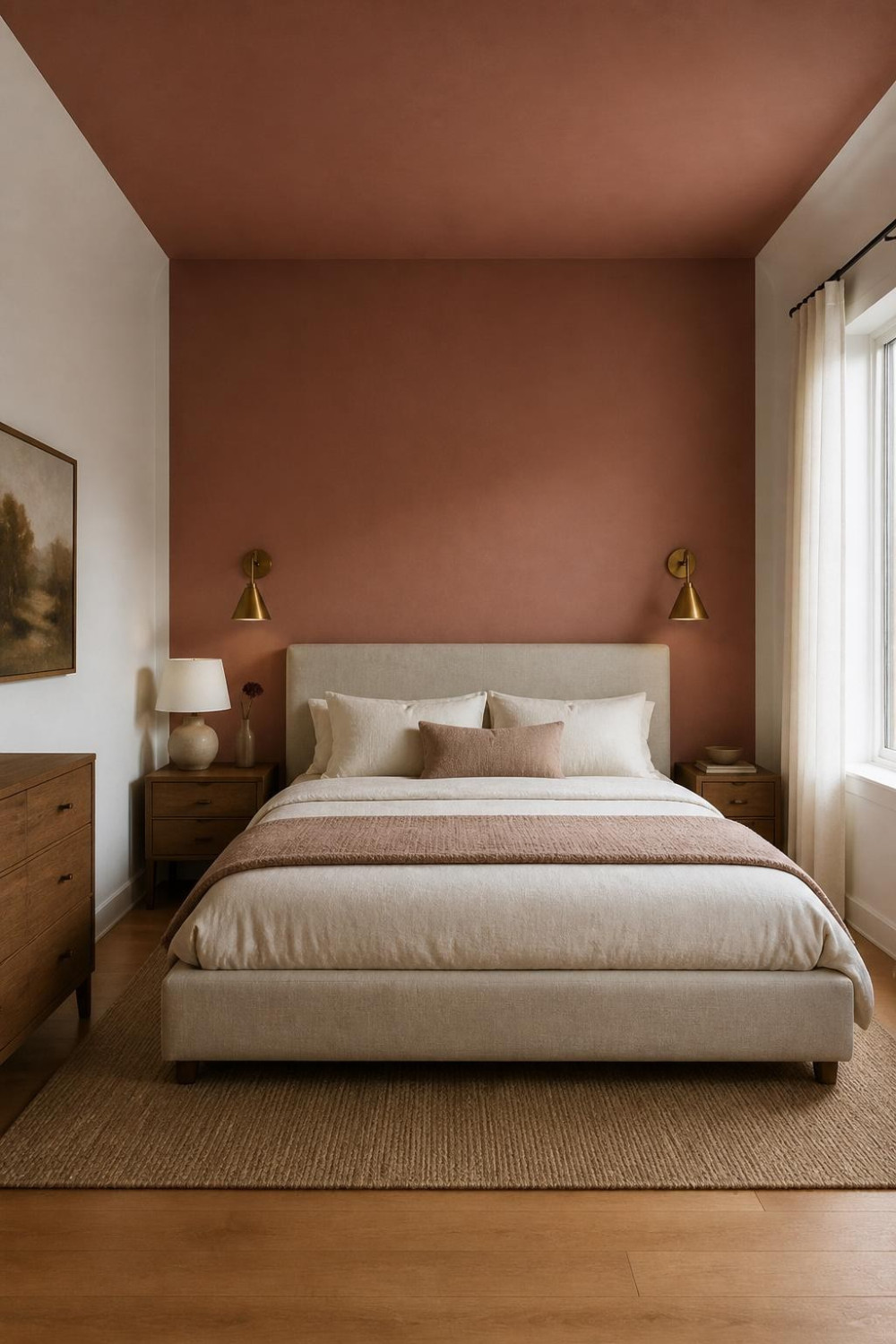
This one is really the accent wall’s evolution rather than its replacement. Instead of one saturated wall against three white ones, you take the headboard wall color and pull it up onto the ceiling — just over the bed, or across the entire ceiling — so the bedroom reads as wrapped and cocooning rather than choppy. Interior designer Daniel Chenin calls this approach a natural progression for 2026: rooms saturated in tonal shifts across surfaces rather than isolated pops of color. It works especially well in dusty plum, clay pink, or deep sage. The result is that you feel inside the color rather than just looking at it.
Tip: Use a slightly lighter value of the same hue on the ceiling than on the wall — it keeps the ceiling from feeling heavy while maintaining the wrapped, enveloping effect.
13. Stone Veneer or Stacked Stone Panel Behind the Bed
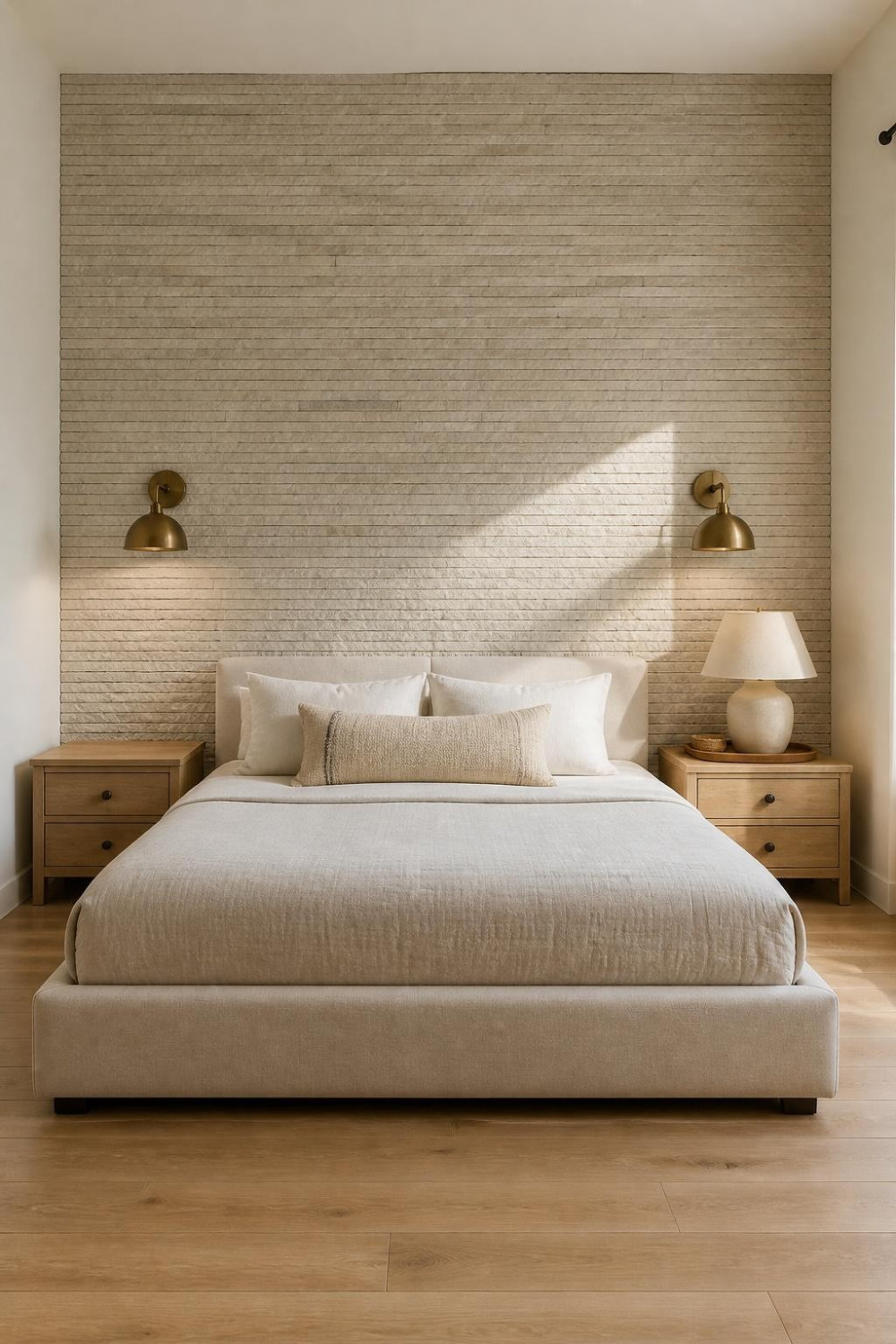
Stone veneer on the headboard wall is a bolder commitment than most of these ideas, but it’s genuinely stunning when it fits the room. Thin-cut stacked stone panels — limestone, slate, or a smooth quartzite in a stacked horizontal format — bring a raw, grounding quality that no painted finish can match. It’s heavy visually, so the rest of the room needs to stay restrained: simple bedding, minimal decor, clean furniture lines. Light-toned stone (pale limestone, whitewashed slate) works in bright rooms. Darker stone (charcoal slate, graphite quartzite) belongs in rooms with strong natural light to balance it.
Tip: Use full-height panels rather than a partial application — stone that stops halfway up the wall looks unfinished, not designed.
14. Wallpaper Box Treatment — Pattern Extended to the Ceiling for a Cocooning Effect
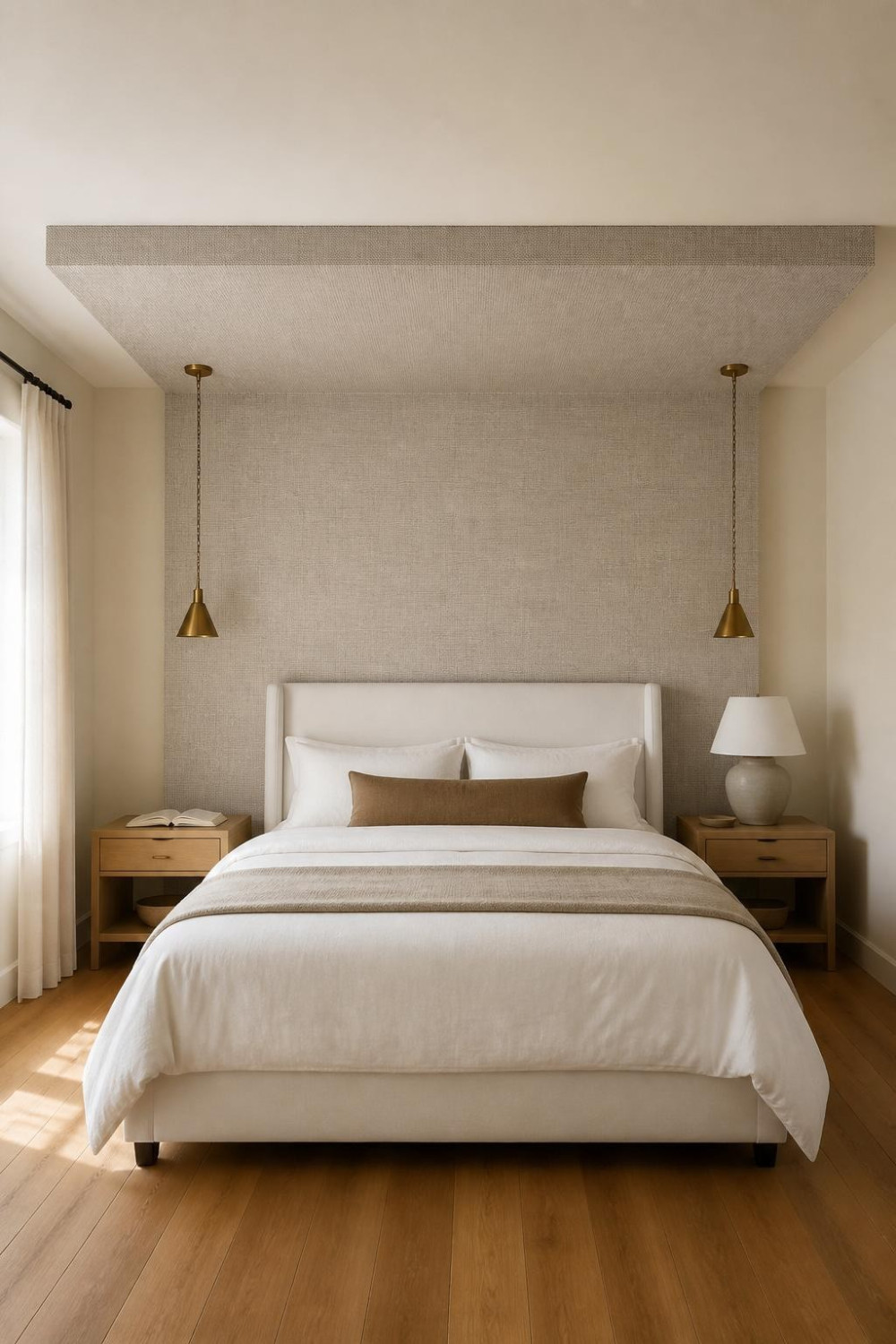
The wallpaper box trend takes a bold patterned wallpaper and wraps it not just on the headboard wall but across the ceiling directly above the bed, creating a canopy-like box of pattern. It feels theatrical without a canopy bed frame, and it works especially well in rooms with lower ceilings where a fabric canopy would feel suffocating. Subtle patterns — a small-scale linen texture, a tone-on-tone geometric, a soft painterly stripe — keep it livable. High-contrast or large-scale patterns feel more editorial, better for guest rooms than primary suites.
Tip: Stop the ceiling wallpaper at the edge of the bed’s footprint rather than running it to the wall — the defined box is what makes it feel intentional rather than overwhelming.
15. Painted Arch Detail on the Headboard Wall
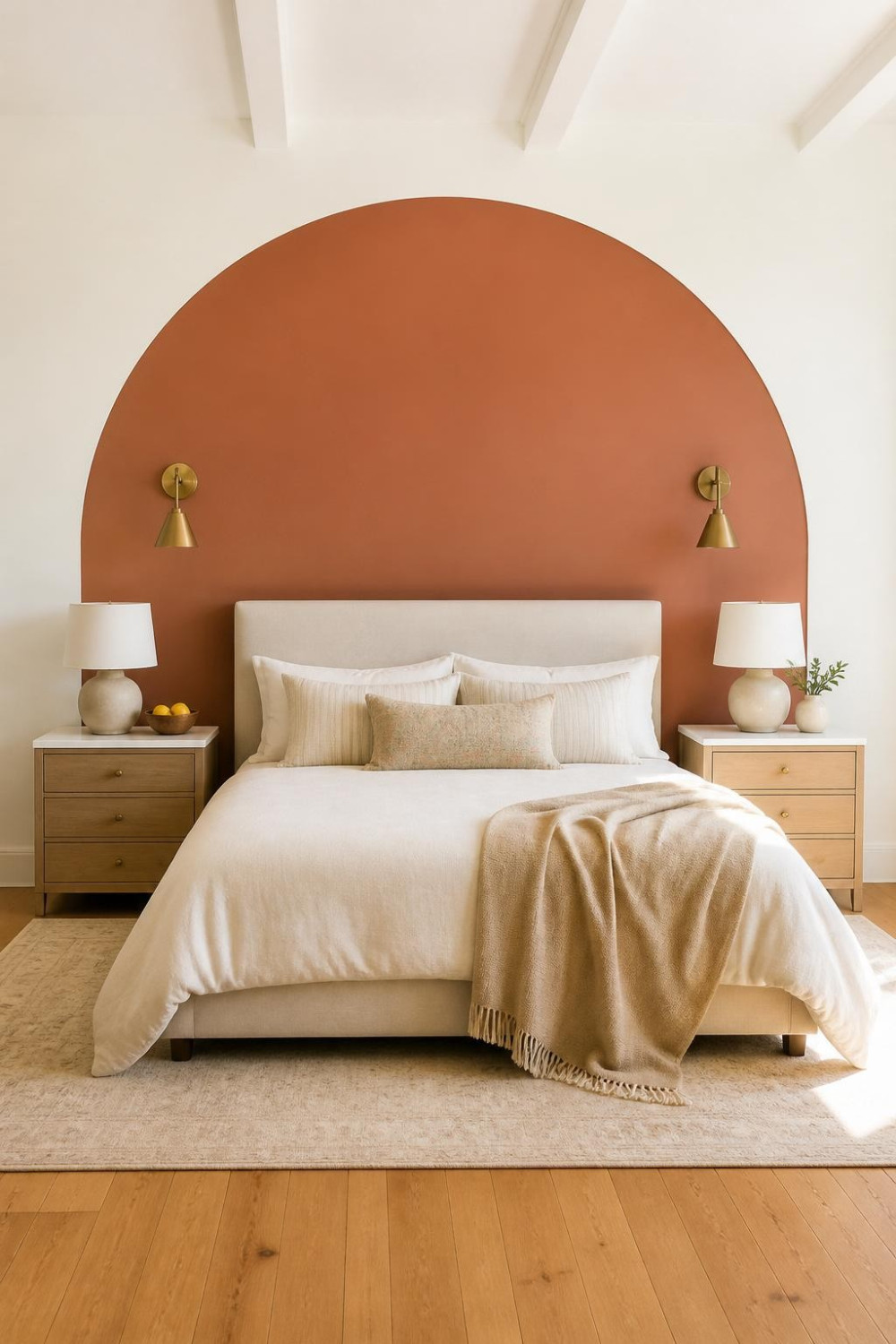
A painted arch framing the headboard is one of the most commitment-free statements on this list — it’s literally just paint, but it creates the impression of architectural detail that the room may not actually have. You tape out a large arch shape centered on the headboard wall, paint it in a contrasting or deeper color, and suddenly the bed has a built-in frame. The key is scale: the arch needs to be generously proportioned, ideally starting above the headboard height and reaching near the ceiling, or it reads like a shape rather than an architectural element. Deeply curved, round arches work best; pointed or squared arches fight against the softness a bedroom needs.
Tip: Use a piece of string and a pencil as a compass to trace your arch — it’s faster and more accurate than any tape-measure method and keeps the curve perfectly even.
16. Grasscloth or Natural Fiber Wallpaper as a Quiet Textural Accent Wall
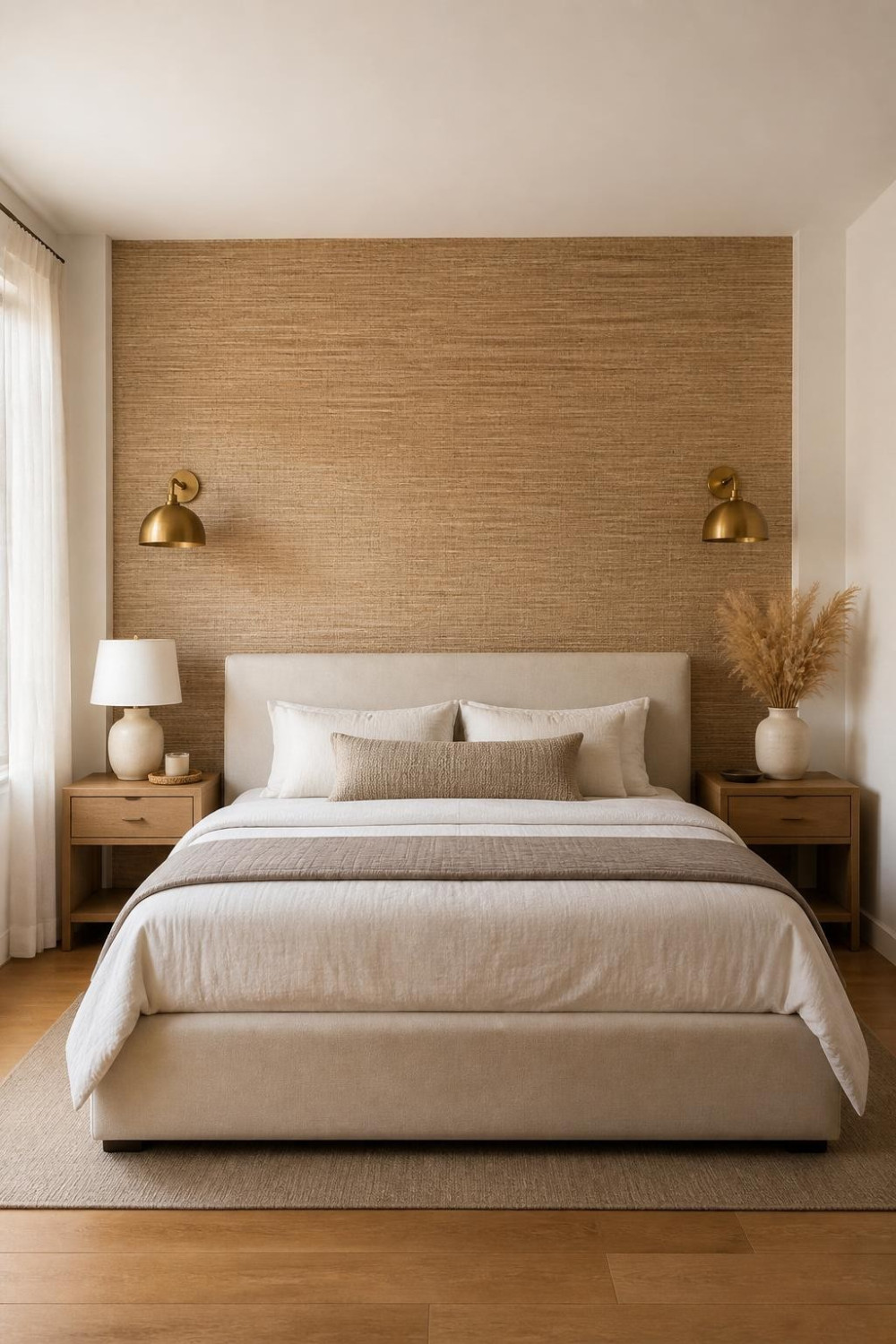
Grasscloth is one of those materials that photographers love and homeowners underestimate. Up close it reads as obvious texture — woven seagrass, jute, or sisal fibers on a paper backing — but from across the room it reads as a wall with depth and warmth that you can’t quite source. It doesn’t shout color or pattern, which is exactly its value in a bedroom. It’s neutral, tactile, and grounding. It’s also genuinely difficult to clean and will show water damage, so avoid it in humid climates or rooms with leaky windows. Natural fiber wallpapers in warm wheat, warm gray, or caramel work best in primary suites.
Tip: Order 15-20% extra grasscloth beyond your calculated square footage — natural fiber rolls have significant variation, and you’ll need matching material for any future repairs.
17. Mixed-Material Accent Wall — Wood Slats Over Limewash for Layered Depth
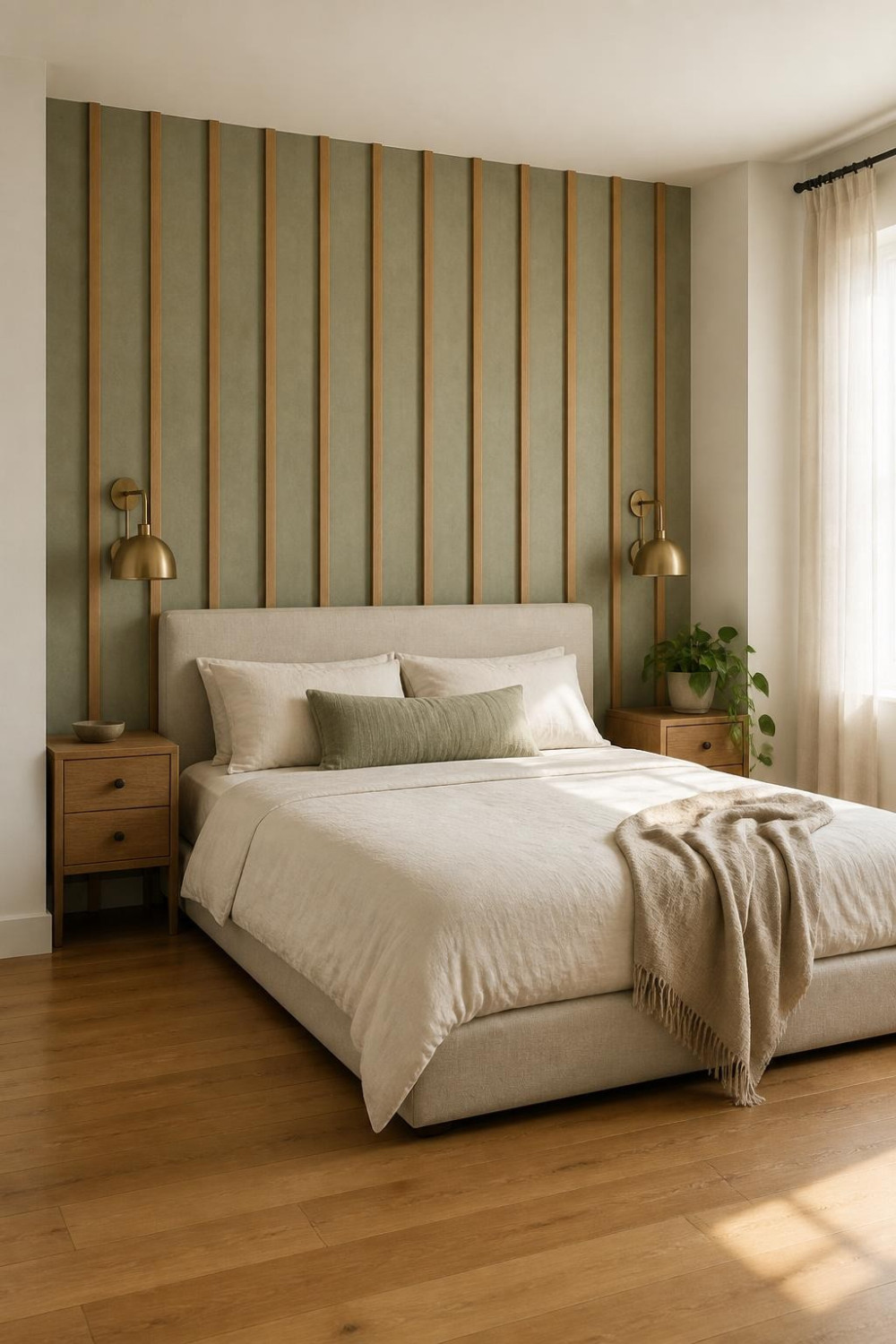
This is the most designer-forward variation on the list, and also the one that photographs most dramatically. The idea is to apply a limewash or plaster finish to the headboard wall first, then mount vertical wood slats over it, leaving gaps between the slats so the textured wall behind reads through. You get two finishes in one wall — the organic texture of the plaster and the warmth of the wood — and the layering makes the wall look like something you’d see in an Architectural Digest feature rather than a weekend project. It takes more time than either treatment alone, but the visual result is genuinely hard to achieve by any other method.
Tip: Use lighter-toned slats (white oak, blonde ash) over a darker limewash color so both layers stay readable — dark slats over dark plaster flattens the whole effect.
Frequently Asked Questions
What is the best wall for a master bedroom accent wall?
The headboard wall is almost always the best choice for a master bedroom accent wall. It’s the natural focal point of the room — the wall your eye lands on first when you walk in — and because you face away from it while sleeping, a dramatic treatment there adds visual impact without affecting your ability to wind down. Avoid treating a wall with windows or doors if you can, since the interruptions break the effect.
Are master bedroom accent walls still in style in 2026?
Yes, master bedroom accent wall variations are very much still relevant in 2026, but the style has evolved. The flat single-color painted accent wall against three white walls does feel dated now. What’s current and working well are textured treatments — limewash plaster, wood slat panels, fluted paneling, architectural molding, and patterned wallpaper — all of which add dimension and material interest rather than just a color contrast.
What colors work best for a bedroom accent wall in 2026?
Sage green is the single most popular bedroom accent wall color of 2026, but earthy terracotta, warm chocolate brown, dusty plum, deep navy, and charcoal are all strong performers. The broader shift is away from stark, high-contrast colors and toward what designers call ‘cocooning’ palettes — richer, warmer hues that make a primary suite feel wrapped and restful rather than bold and stimulating.
How do you make an accent wall look intentional rather than half-finished?
The key is to do one of two things: add texture or material interest so the wall isn’t just a flat color sitting awkwardly next to its white neighbors, or extend the treatment in a way that connects it to the rest of the room — pulling the ceiling color down into the wall, matching trim to the wall color, or flanking it with sconces or built-ins that acknowledge it as the focal point. A wall that’s been thought about looks very different from one that’s just been painted.
What’s the most budget-friendly master bedroom accent wall variation?
Peel-and-stick removable wallpaper is genuinely the most accessible option — a full headboard wall can cost under $100 in materials and be done in an afternoon with zero damage to the drywall underneath. Board and batten is the next most budget-friendly structural option, particularly as a DIY project, with materials typically running $150 to $300 for a standard headboard wall. Both options can look significantly more expensive than they cost when executed carefully.